 Save
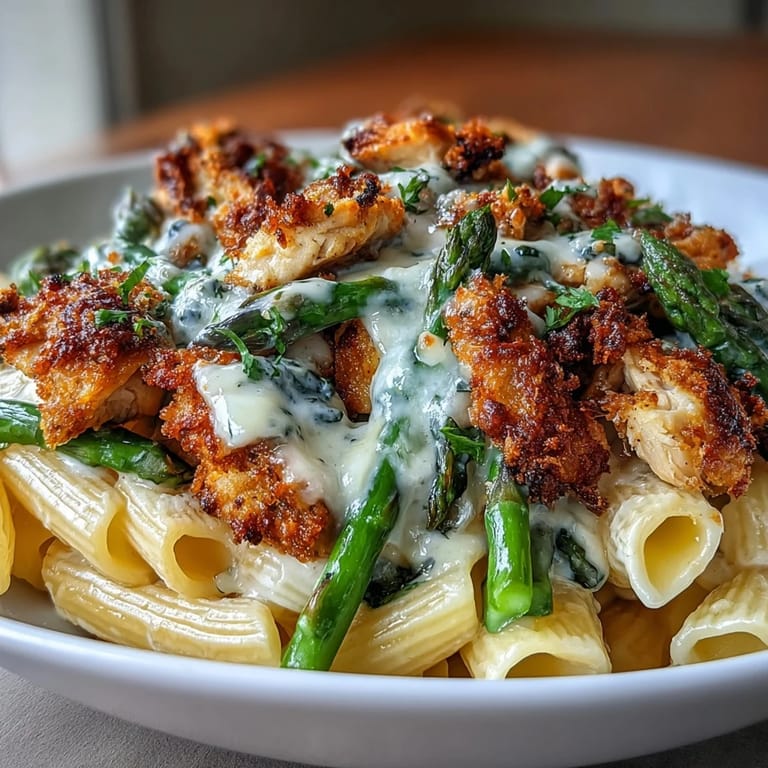
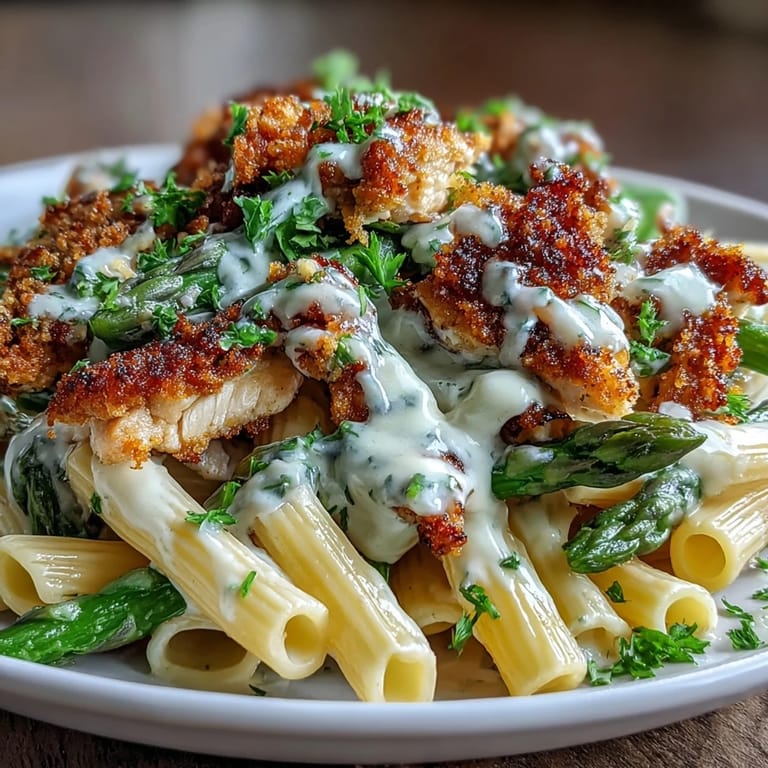
Save There's something about the sizzle of chicken hitting a hot pan that makes you feel like you've got dinner under control, even if you're making it up as you go. I stumbled onto this pasta combination one weeknight when I had asparagus going soft in the crisper drawer and a craving for something that felt both comforting and a little bit fancy. The magic happens when that golden, crispy asparagus topping meets the silky lemon cream—it's the kind of dish that tastes like you spent all day on it, even though you didn't.
I made this for my neighbor last spring when she'd just moved in, and I remember how her whole kitchen filled with the smell of roasting asparagus and garlic. She actually sat at my counter while I cooked, and we talked about how funny it is that the best dishes are often the ones you throw together because you didn't have a plan. She's asked for it at least four times since then, which tells you everything.
Ingredients
- Penne or rigatoni (340 g): These tube shapes are built to hold sauce, and they're sturdy enough to not get mushy when you're tossing everything together at the end.
- Boneless, skinless chicken breasts (2 large): Slicing them into strips instead of cooking them whole means they finish quickly and stay tender, which is the whole point of weeknight cooking.
- Fresh asparagus (1 bunch, about 300 g): Look for bright green spears that snap when you bend them, not limp ones that have been sitting around.
- Panko breadcrumbs (1/2 cup): Regular breadcrumbs get soggy, but panko stays crispy even when there's cream involved, which is why it matters here.
- Parmesan and Asiago cheese: Asiago brings a slightly nuttier, more complex flavor than straight Parmesan alone, but don't stress if you can only find one—they're friends.
- Heavy cream (1 cup): This is non-negotiable for the sauce, though you can use a mix of cream and half-and-half if you want to cut calories.
- Fresh lemon (zest and juice): Don't use bottled juice—the fresh stuff actually tastes like lemon instead of sadness in a bottle.
- Unsalted butter (2 tbsp): Room temperature or cold, it doesn't matter as much as making sure your pan is the right temperature when you add it.
- Fresh parsley (1/4 cup): This is your final flourish, the thing that makes people say 'wow' before they've even tasted it.
Tired of Takeout? 🥡
Get 10 meals you can make faster than delivery arrives. Seriously.
One email. No spam. Unsubscribe anytime.
Instructions
- Get your oven ready and start the pasta:
- Preheat to 200°C (400°F) and get a large pot of salted water boiling—this takes longer than you think, so do it first. Cook your pasta until it's al dente, which means it still has a tiny bit of resistance when you bite it, not mushy and soft.
- Roast the asparagus until it's golden and crispy:
- Toss the cut asparagus with olive oil and salt and pepper, then mix the panko, Parmesan, and Asiago in a separate bowl and sprinkle it all over. Roast for 10–12 minutes until the topping is golden and the asparagus is tender but still has some snap to it—this is your textural moment, so don't skip this step.
- Get the chicken golden on one side:
- While the asparagus is roasting, season your chicken strips and heat olive oil in a large skillet over medium-high heat. Cook until the chicken is golden and cooked through, about 5–6 minutes, then set it aside on a clean plate.
- Make the sauce and bring everything together:
- In that same skillet, melt butter and add minced garlic and lemon zest, cooking for about 1 minute until it smells incredible. Pour in your lemon juice and cream, bring it to a gentle simmer, then stir in the Parmesan until it's smooth and silky.
- Combine the pasta, chicken, and sauce:
- Add your cooked pasta and chicken back to the skillet and toss everything together, adding splashes of reserved pasta water if it looks too thick. The starch in that pasta water is what helps the sauce cling to everything instead of just pooling at the bottom.
- Finish with the asparagus and fresh parsley:
- Gently fold in your roasted asparagus with all that crispy topping still intact, then sprinkle fresh parsley all over everything before plating. This final step is where the dish goes from good to actually impressive.
 Save
Save The first time I made this for my family, my eight-year-old actually asked for seconds instead of moving straight to dessert, which has never happened before. That moment made me realize this dish hits a sweet spot between sophisticated and genuinely comforting—nobody feels like they're eating something too fancy, but everyone feels a little bit celebrated.
Making the Panko Topping the Star
The panko-and-cheese mixture is honestly more important than it seems because it's your entire textural contrast in the dish. I've learned that if you want maximum crunch, you can actually make a bigger batch of the topping and roast it separately on another corner of the baking sheet, then sprinkle some fresh on top right before serving instead of mixing it all into the pasta. This keeps that crispy element from getting lost in the cream sauce, and it looks intentional rather than accidental.
The Lemon Trick That Changes Everything
Using both zest and juice from a fresh lemon is what separates this from a generic cream pasta that tastes like heavy, one-note richness. The zest goes in early with the garlic so the citrus oils infuse into the butter, and then the juice comes in later to brighten the whole sauce right before it finishes. I once made this without the zest and used only juice, thinking it would be the same, and it absolutely wasn't—the dish tasted thinner and less interesting, so now I'm religious about both.
Timing and Sequence Secrets
The reason this comes together in under 45 minutes is because everything happens at the same time if you plan it right, but you have to be honest about what takes longest. The pasta water needs the most time, so start that first; meanwhile, get your asparagus ready and into the oven; then handle the chicken while you're waiting. By the time the chicken's done, the asparagus is usually ready too, and then it's just about pulling the sauce together, which is honestly the easiest part.
- Reserve your pasta water before you drain the pasta—this is the move that trips up most home cooks.
- Don't let the garlic brown when you're making the sauce, because bitter garlic ruins the brightness you've worked for.
- If the cream sauce seems too thick when you add the pasta, add the reserved pasta water slowly instead of panicking and adding too much at once.
 Save
Save This pasta has become my go-to when I want to cook something that feels a little special without the stress, and I hope it becomes that for you too. The combination of textures and flavors just works, and you'll probably find yourself making it more often than you planned.
Recipe FAQ Section
- → Can I use a different pasta shape?
Yes, penne and rigatoni work beautifully, but fusilli, farfalle, or ziti would also catch the creamy sauce well while maintaining texture.
- → What can I substitute for heavy cream?
Half-and-half creates a lighter sauce, though it won't be as rich. For dairy-free options, try full-fat coconut milk or cashew cream, adjusting lemon to taste.
- → How do I store leftovers?
Refrigerate in an airtight container for up to 3 days. The crispy topping will soften, but flavors deepen. Reheat gently with a splash of cream or pasta water to restore sauce consistency.
- → Can I make this vegetarian?
Absolutely—replace chicken with chickpeas, white beans, or sautéed mushrooms. The asparagus and Parmesan crust provide plenty of savory depth on their own.
- → Why roast asparagus with the topping?
Roasting concentrates asparagus's natural sweetness while the pano-Parmesan mixture creates a golden, crunchy crust that contrasts beautifully with the tender pasta and creamy sauce.
- → What wine pairs best?
Sauvignon Blanc or Pinot Grigio cut through the cream with crisp acidity, but an oaky Chardonnay complements the buttery richness if you prefer fuller-bodied whites.