 Save
Save There's a moment in late spring when asparagus shows up at the market and suddenly dinner feels lighter, brighter, more possible. I was standing in my kitchen one evening, staring at a bundle of green spears, when it hit me that crispy cheese and tender chicken could transform something so simple into something that tastes like you've been cooking for hours. This pasta came together almost by accident, but it's become the dish I reach for when I want to impress without the stress.
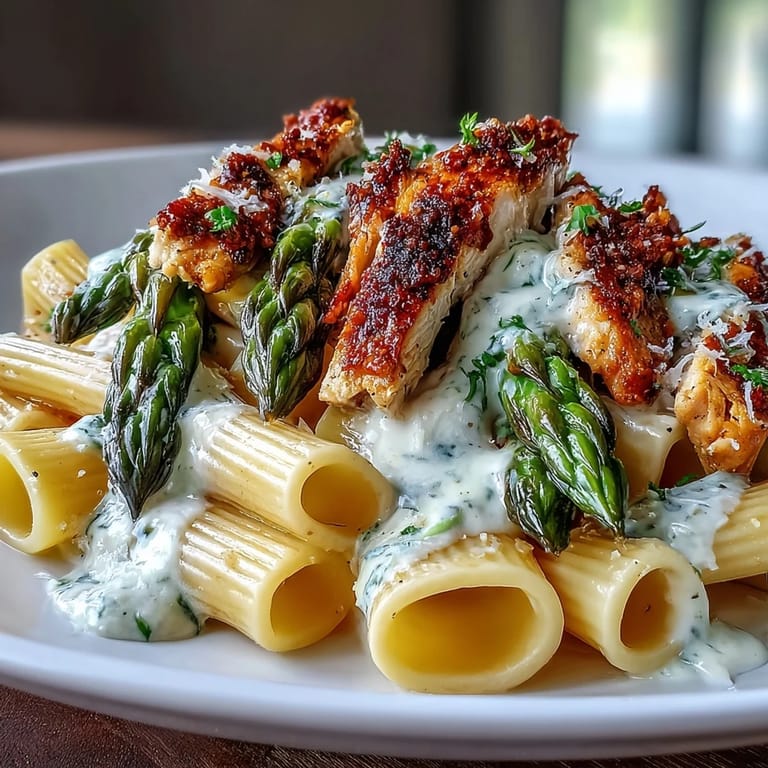
I made this for my partner on a random Wednesday, and watching them taste it—that pause before they smiled—told me I'd nailed something. The way the crispy asparagus catches the light and the sauce clings to every piece of pasta made the whole thing feel intentional, even though I'd thrown it together between work calls.
Ingredients
- Asparagus, about 400 g with woody ends trimmed: The key is roasting it hot enough to get those edges golden and slightly caramelized, which happens faster than you'd expect.
- 1 tablespoon olive oil for asparagus: Just enough to coat without drowning it, letting the cheese toast instead of steam.
- Salt and freshly ground black pepper: Don't skip the fresh pepper here; it makes a real difference in how bright everything tastes.
- 1/3 cup grated Asiago cheese and 1/3 cup Parmesan for asparagus: Asiago has a sharper edge than Parmesan alone, giving you complexity that works beautifully with the lemon.
- 1/2 teaspoon lemon zest: This little bit of zest on the asparagus before roasting infuses the cheese as it crisps.
- 2 medium boneless, skinless chicken breasts (about 400 g): Pound them to even thickness if you have time, so they cook evenly without drying out.
- Salt, pepper, and 1/2 teaspoon garlic powder for chicken: Keep it simple here so the chicken stays the supporting player, not the star.
- 1 tablespoon olive oil for searing: High heat in a good skillet is what gives you that golden crust that seals in the juices.
- 350 g penne or rigatoni pasta: The tube shape catches the sauce, which is exactly what you want for this creamy finish.
- 2 tablespoons unsalted butter: This builds the foundation of your sauce, and unsalted lets you control the salt level.
- 2 cloves minced garlic: Fresh garlic blooms when you hit it with hot butter, filling your kitchen with that unmistakable aroma.
- 1/2 cup low-sodium chicken broth and 1/2 cup heavy cream: The broth keeps things from being too heavy while the cream gives you that silky texture.
- 1/2 cup grated Parmesan for the sauce: Stir it in off heat or low heat so it melts smoothly instead of getting grainy.
- Juice of 1 lemon (about 2 tablespoons): Add this at the end to keep the brightness intact, not cooked away.
- Salt and pepper to taste: You'll adjust this as you go, which is why tasting matters.
- 2 tablespoons chopped fresh parsley, optional: A handful scattered on top brings a pop of color and freshness that matters more than you'd think.
Tired of Takeout? 🥡
Get 10 meals you can make faster than delivery arrives. Seriously.
One email. No spam. Unsubscribe anytime.
Instructions
- Get your oven ready and line a sheet:
- Preheat to 220°C (425°F) and line a baking sheet with parchment paper so your asparagus roasts instead of sticks. This temperature is hot enough to caramelize the cheese without burning it.
- Roast the asparagus until it's golden and crispy:
- Toss your trimmed asparagus with olive oil, salt, pepper, both cheeses, and lemon zest, then spread it in a single layer. Roast for 12–15 minutes, shaking the pan halfway through if you remember, until the edges are dark and the cheese is crispy like lace.
- Season and sear the chicken:
- Pat your chicken breasts dry, season them generously with salt, pepper, and garlic powder, then sear them in a hot oiled skillet for 4–5 minutes per side until the outside is golden and the inside is cooked through. Let them rest on a plate for 5 minutes so they stay juicy when you slice them.
- Cook your pasta until it's just shy of tender:
- Boil it in salted water until al dente, which means it has a slight firmness to it, then reserve half a cup of the starchy water before draining. This starch is your secret weapon for making the sauce silky.
- Build the sauce in the same skillet:
- Melt butter over medium heat, add minced garlic and let it sizzle for about a minute until it smells incredible, then pour in the chicken broth and heavy cream. Simmer for 2–3 minutes so the flavors start to marry, then stir in the Parmesan off heat so it melts smoothly.
- Bring everything together with the pasta:
- Add the drained pasta to the sauce along with the lemon juice and half your reserved pasta water, tossing gently so every piece gets coated. Add more pasta water a little at a time if you need to, since you want a sauce that clings but isn't thick.
- Add the chicken and asparagus and warm through:
- Gently fold in your sliced chicken and the chopped roasted asparagus, stirring just enough to combine and let everything heat through. Taste and adjust your salt and pepper.
- Serve while everything is still warm:
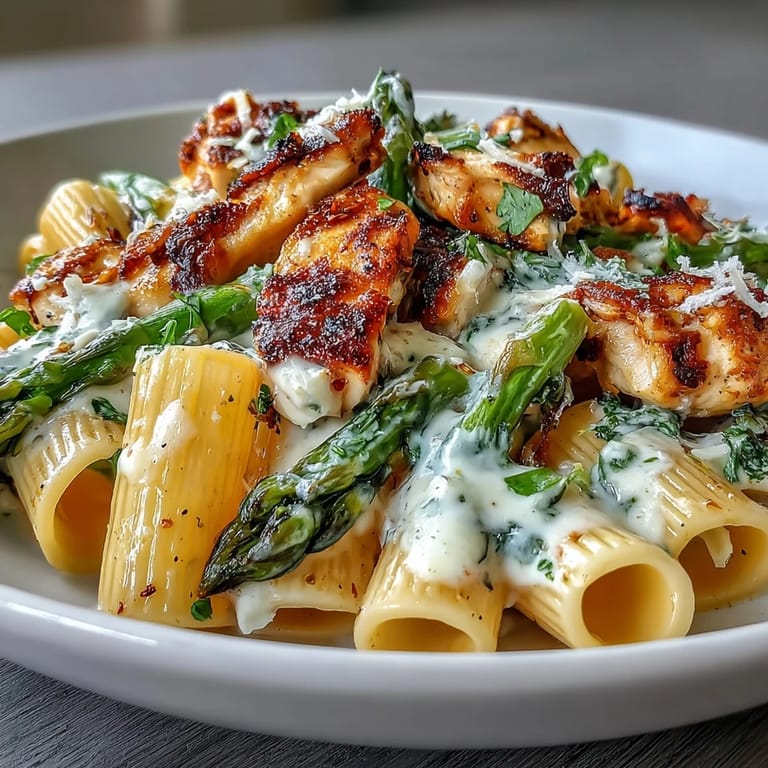
- Plate it up immediately, scatter fresh parsley on top if you have it, and maybe add a crack of black pepper and extra Parmesan. This is best eaten right away while the asparagus still has that crisp.
 Save
Save The first time a friend told me this was better than what they'd ordered at a restaurant, I realized it wasn't just about technique—it was about caring enough to get each component right. That's when cooking shifts from following instructions to actually cooking with intention.
Why Texture Matters Here
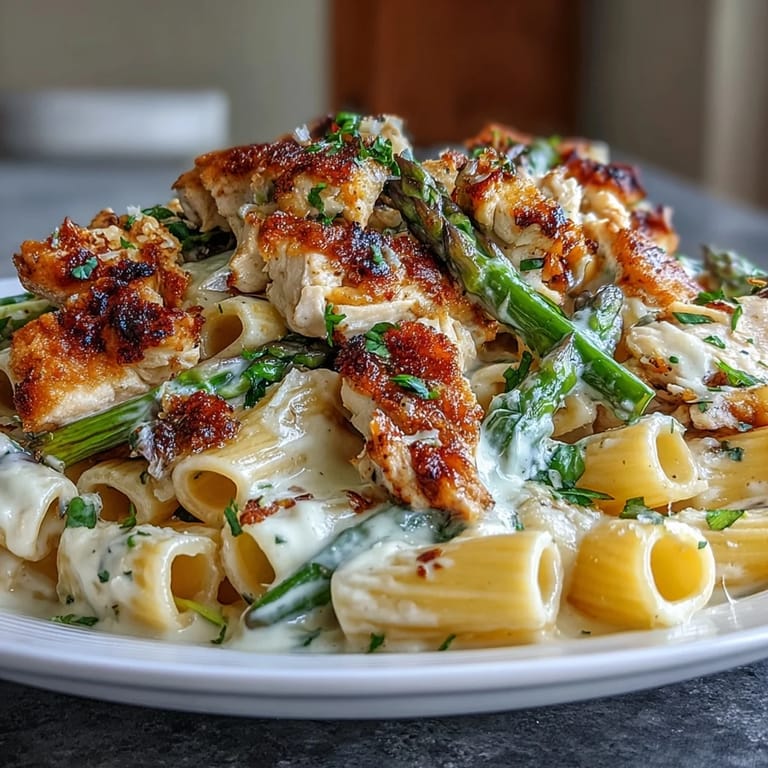
What makes this dish sing is the interplay between creamy sauce, crispy cheese-coated asparagus, tender chicken, and al dente pasta. Every component stays true to itself, nothing gets lost in the sauce. The asparagus especially—you want it roasted until the edges are almost caramelized, then chopped into pieces that still have a little snap, not soft throughout.
The Lemon Finish and Why It's Non-Negotiable
I learned this the hard way when I made a version without fresh lemon juice and it tasted flat, like something was missing. The acidity of the lemon doesn't just add flavor; it wakes up everything on the plate and keeps the cream from feeling heavy. Add it at the very end so the brightness doesn't cook away, and taste as you go because you might want more or less depending on your lemons.
Swaps and Flexibility
If you can't find Asiago, extra Parmesan works beautifully and gives you a different flavor profile that's still delicious. Some nights I add a pinch of chili flakes for a gentle warmth, and it pairs with the lemon in an unexpected way. You can also use whatever pasta shape you have on hand as long as it's sturdy enough to hold the sauce.
- A crisp white wine like Sauvignon Blanc or Pinot Grigio alongside this is practically required, not optional.
- If you're making this for someone with dietary needs, the structure works even if you swap cream for crème fraîche or use gluten-free pasta.
- Leftover sauce reheats gently on the stovetop with a splash of pasta water or broth to loosen it back up.
 Save
Save This dish has become something I make when I want to feel like I'm really cooking, not just following a recipe. It's the kind of meal that tastes fancy but doesn't demand your entire evening.
Recipe FAQ Section
- → What makes the asparagus crispy?
Roasting the asparagus at high heat (220°C/425°F) creates a golden, slightly crispy exterior from the melted Asiago and Parmesan coating while keeping the interior tender.
- → Can I use a different pasta shape?
Yes, rigatoni, ziti, or even fusilli work well. Choose shapes with ridges or tubes that catch and hold the creamy sauce effectively.
- → How do I prevent the cream sauce from separating?
Keep the heat at medium or lower when adding cream, and stir continuously. Avoid boiling vigorously, which can cause the dairy to break.
- → What can I substitute for Asiago cheese?
Extra Parmesan works perfectly. Alternatively, aged Pecorino Romano or a sharp provolone can provide similar salty, nutty depth.
- → Is the lemon flavor overpowering?
No, the lemon provides brightness without overwhelming. The juice and zest balance the rich cream sauce, enhancing rather than dominating the dish.
- → Can I make this ahead?
Roast asparagus and cook chicken up to a day in advance. Store separately and combine with freshly made sauce and pasta for best texture.