 Save
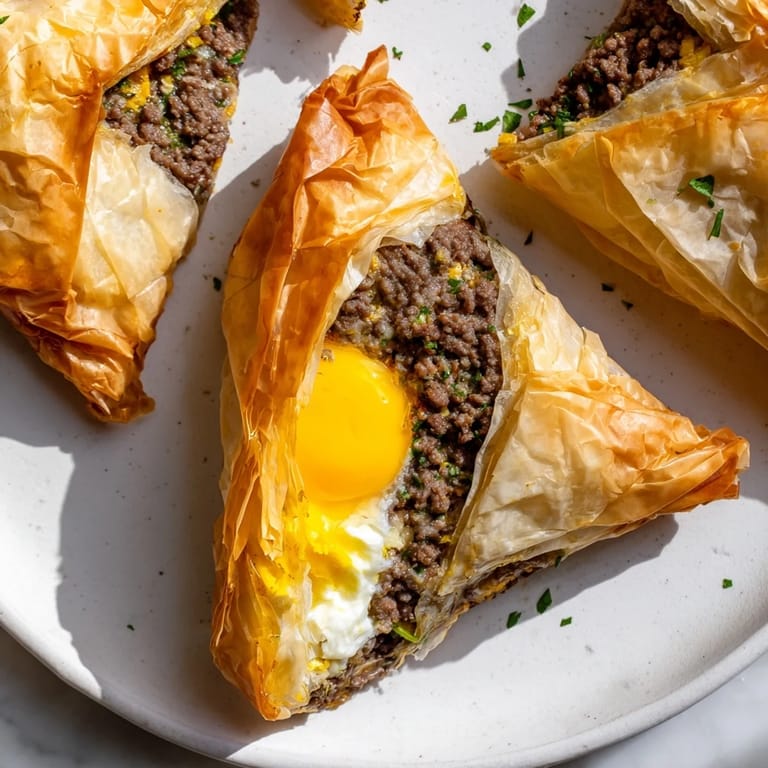
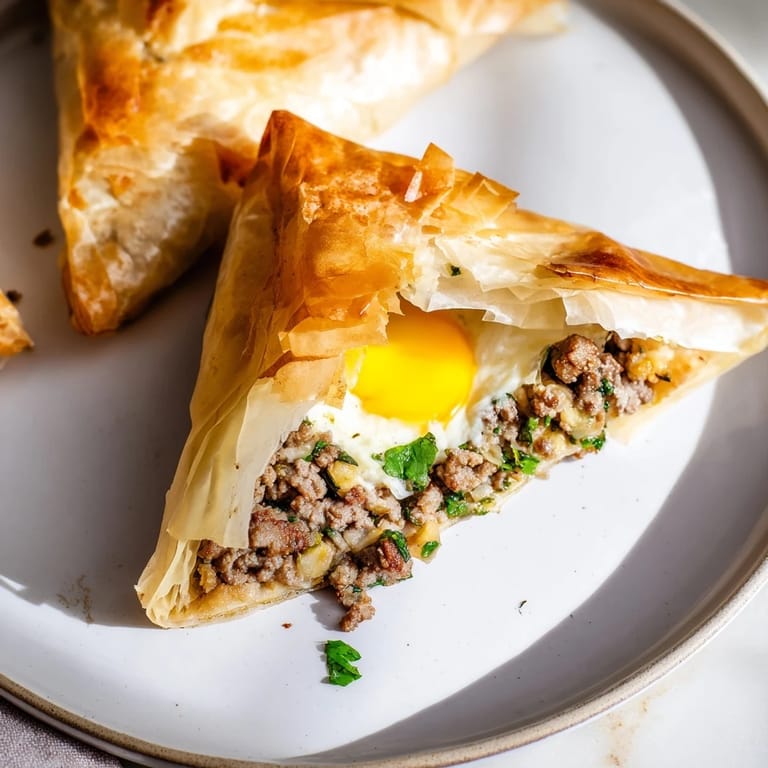
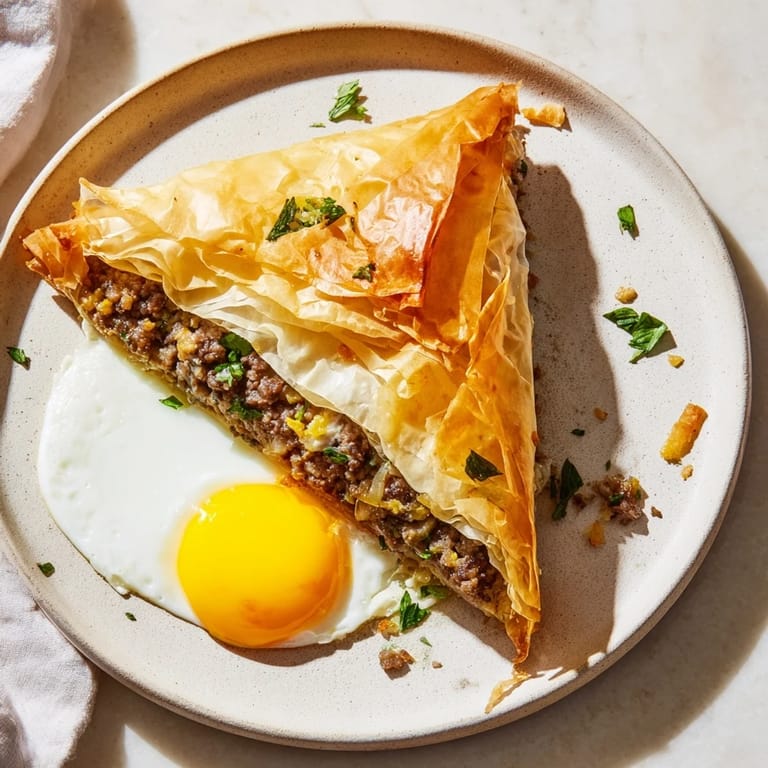
Save The first time I bit into a brik at a tiny stall in Tunis, I understood why people queue for these things. That shattering phyllo gave way to warm, runny yolk meeting spiced meat, and I was hooked. Years later, I still chase that exact moment—the contrast of crispy and soft, the way the egg yolk becomes your sauce. Making them at home turned out to be simpler than I expected, though my first attempt taught me patience with phyllo sheets and respect for hot oil. Now they're my go-to when I want something that feels restaurant-worthy in under an hour.
I made these for my neighbor who'd just returned from Tunisia, nervous she'd judge my technique. When she closed her eyes after the first bite and smiled, I knew the phyllo had come out right. She brought back harissa the next week, and now that's become our inside joke—the brik that started a friendship over shared spice preferences.
Ingredients
- Ground beef or lamb (120 g): Use whatever is fresher at your market; lamb gives earthiness, beef is approachable and plays well with the spices.
- Small onion, finely chopped: This sweetens as it cooks and becomes the flavor base—don't skip it or rush the sautéing.
- Fresh parsley, chopped (1 tbsp): Added at the end to keep it bright and alive; dried won't capture that same freshness.
- Ground cumin (1 tsp): The signature warmth of North African cooking—toast it briefly in a dry pan first if you want to deepen the flavor.
- Ground coriander (1/2 tsp): Adds a subtle citrus note that balances the richness of the egg and meat.
- Salt and black pepper: Season conservatively at first; you can always taste and adjust.
- Phyllo pastry sheets (4 large): Handle these like they're made of gossamer—they tear easily but seal beautifully when brushed with water.
- Large eggs (4): Room temperature eggs are easier to work with and cook more evenly inside the pastry.
- Gruyère or mozzarella cheese (4 tbsp, optional): Adds a creamy, salty layer that luxurious versions include; skip it if you want to keep things purist.
- Sunflower or vegetable oil for frying: You need enough to submerge the pastries—about 3–4 cm depth—so don't be shy with the pour.
Tired of Takeout? 🥡
Get 10 meals you can make faster than delivery arrives. Seriously.
One email. No spam. Unsubscribe anytime.
Instructions
- Brown the meat filling:
- Warm a bit of oil in your skillet and let the onions soften until they're translucent and sweet-smelling, about 3–4 minutes. This matters—rushing it means the filling tastes raw and sharp. Add the ground meat and break it apart as it browns, stirring in the cumin, coriander, salt, and pepper until the whole pan smells like a spice market.
- Cool and finish the filling:
- Once the meat is cooked through, pull it off the heat and fold in the fresh parsley while it's still warm enough to brighten the flavors. Let it cool for a few minutes—you don't want to cook the egg when you add it.
- Assemble your first brik:
- Lay your phyllo sheet on a clean, dry surface (moisture is phyllo's enemy). If your sheets are gossamer-thin, layer two together. Spoon 2–3 tablespoons of meat filling onto the center, then use your finger to push a small indent into the filling—this is where the egg will nestle.
- Crack the egg gently:
- Crack your room-temperature egg directly into that little well, keeping the yolk intact if possible. If you're using cheese, add a tablespoon now for richness.
- Fold and seal:
- Fold the phyllo up and over the filling to create a triangle or rectangle shape—either works, whatever feels natural. Wet your fingertip with water and run it along the exposed edges of phyllo, then press firmly to seal. A little water goes a long way here; too much makes the phyllo soggy.
- Get your oil ready:
- Pour oil into your frying pan to a depth of about 3–4 cm and bring it to medium-high heat. Test the temperature with a tiny piece of phyllo scrap—it should sizzle immediately and turn golden in seconds, not sit there smoking.
- Fry until golden:
- Carefully slide your sealed brik seam-side down into the hot oil. It'll start crisping right away, which is the moment you realize why people queue for these. Fry for 2–3 minutes until the bottom is deep golden, then flip gently and fry the other side for another 2–3 minutes.
- Drain and serve:
- Fish them out with a slotted spoon and let them drain on paper towels for just a minute—you want to eat them while they're still crispy and the egg inside is warm. Serve immediately with lemon wedges squeezed over the top.
 Save
Save There's a particular magic in serving something hot and crispy to someone and watching their face transform at that first bite. A brik does that every single time.
The Phyllo Sheet Philosophy
Phyllo gets a fearful reputation, but the truth is simpler: these sheets want to be treated gently and kept covered. I used to buy phyllo and stress about it for days, convinced I'd tear everything, but the sheets are actually surprisingly forgiving if you're calm about it. Room temperature phyllo is easier to work with than cold, and a light touch beats any amount of fumbling. The moment you stop thinking of phyllo as delicate and start seeing it as malleable, everything changes.
Variations Worth Exploring
While the meat version is the classic, I've experimented with tuna when the season shifts and I want something lighter, and once I made a potato version that surprised me with how satisfying it was. The same building technique works for all of them—the magic is always in that hot oil and the egg nestled in the center. You can also play with the spices; a pinch of harissa adds a serious kick, and some versions include a bit of caraway or fennel if you want to go deeper into North African flavors. The filling is really your canvas once you understand the basic structure.
Serving and Storage Wisdom
These shine when eaten immediately, still steaming and shattering under your teeth. If you're making them ahead for a gathering, you can prepare the filled pastries up to 2 hours before frying and keep them refrigerated, covered loosely with plastic wrap; just fry them when guests arrive. The contrast of crispy exterior and warm interior is really what makes them special, so I never try to reheat them—make them fresh, or don't make them at all.
- Serve alongside lemon wedges and maybe a simple green salad if you want to balance the richness.
- A small dish of harissa or hot sauce on the side appeals to anyone who wants to add extra heat.
- These pair beautifully with Tunisian mint tea if you're building a whole experience, or simply with a cold drink to cut through the deep-fried richness.
 Save
Save Making brieks has taught me that some of the most impressive food comes from simple techniques and respect for a few key moments. That shattering sound when someone bites through is yours to deliver.
Recipe FAQ Section
- → What kind of meat works best for the filling?
Ground beef or lamb both provide a rich, savory base that pairs well with traditional spices like cumin and coriander.
- → Can the brik be made without cheese?
Yes, cheese is optional and traditional versions sometimes omit it, focusing on the flavorful meat and egg combination.
- → How do you keep the phyllo from tearing during assembly?
Handle phyllo sheets gently and, if very thin, use two layers stacked together to reinforce the pastry before folding.
- → What oil is best for frying the brik?
Sunflower or vegetable oil with a high smoke point ensures even frying and crisp texture without overpowering flavors.
- → How can I add a spicy kick to the filling?
Incorporating a pinch of harissa paste or chili flakes into the meat mixture adds a traditional, warming heat.