 Save
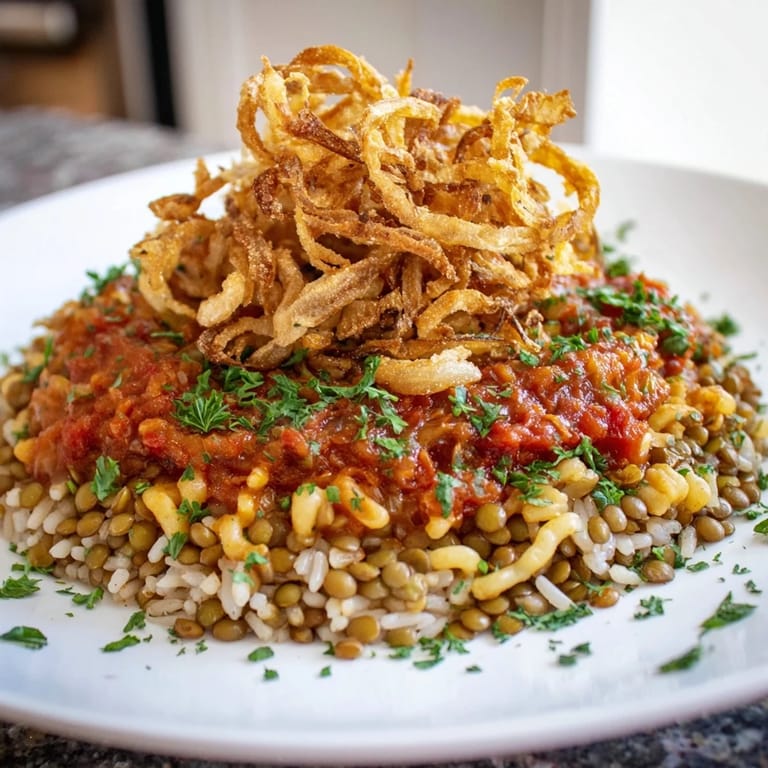
Save The first time I tasted koshari was at a cramped street stall in Cairo, perched on a plastic stool while vendors shouted orders around me. What struck me wasn't just the flavors—it was how this humble, layered dish managed to feel both chaotic and perfectly balanced on the same plate. Years later, I realized I was chasing that exact feeling every time I cooked it at home: the way soft lentils mingle with fluffy rice, how crispy onions shatter between your teeth, and how that spiced tomato sauce ties everything together like a warm conversation.
I remember making this for a group of friends during a chaotic dinner party where everything else had gone wrong—the main dish burned, the wine arrived late. But when I pulled out this koshari, something shifted. People stopped talking and just ate, then asked for more. That's when I understood: koshari isn't fancy, but it has a quiet confidence that makes people feel taken care of.
Ingredients
- Medium-grain rice, 1 cup: Rinsing it matters more than you'd think—it removes excess starch so each grain stays separate and light.
- Brown or green lentils, 1 cup: These hold their shape beautifully during cooking, unlike red lentils which turn mushy.
- Elbow macaroni or ditalini pasta, 1 cup: Small shapes work best; they nestle into the layers without overpowering.
- Water, 2 cups for rice and 3 cups for lentils: Use vegetable broth if you have it—it adds a subtle depth you'll notice.
- Salt, divided: A little in each component prevents a flat-tasting final dish.
- Olive oil, 2 tablespoons: The base for your sauce; good quality makes a quiet difference.
- Large onion, finely chopped: This becomes the flavor foundation—don't rush the sautéing step.
- Garlic cloves, 4 minced: Added after the onion so it doesn't burn and turn bitter.
- Crushed tomatoes, 1 can (15 oz): The heart of the sauce; canned is reliable and consistent year-round.
- Tomato paste, 1 tablespoon: This concentrates the tomato flavor and deepens the sauce beautifully.
- Ground cumin, 1 teaspoon: The signature spice that makes people ask what that warm, earthy note is.
- Ground coriander, 1/2 teaspoon: Subtler than cumin, it adds complexity without announcing itself.
- Chili flakes, 1/2 teaspoon: Optional but recommended—a whisper of heat rather than a shout.
- Sugar, 1 teaspoon: Balances the acidity of the tomatoes; trust this.
- Black pepper, to taste: Freshly ground is worth the extra step.
- Large onions for crisping, 2: Thinly sliced so they fry evenly into golden shards.
- All-purpose flour, 1/2 cup: Creates a light, crispy coating for the onions.
- Vegetable oil, for frying: Use neutral oil with a high smoke point.
- White vinegar, 1/4 cup: The garlic vinegar adds a bright, acidic counterpoint to the richness.
- Garlic cloves for vinegar, 2 minced: Raw garlic in vinegar becomes mellowed and sweet over ten minutes.
- Fresh parsley, chopped: A green finish that signals springtime, even in winter.
Tired of Takeout? 🥡
Get 10 meals you can make faster than delivery arrives. Seriously.
One email. No spam. Unsubscribe anytime.
Instructions
- Simmer the lentils until tender:
- Cover them with 3 cups of water and bring to a rolling boil—you'll hear the shift in sound as bubbles get bigger. Reduce to a gentle simmer and let them cook for 20 to 25 minutes until they're soft enough to press gently with a spoon but still holding their shape. Drain them and set aside; they'll cool slightly while you work on the other components.
- Cook the rice until fluffy:
- Combine your rinsed rice with 2 cups of water and a pinch of salt in a separate pot. Bring it to a boil, then cover and drop the heat to low—you want just a whisper of steam, not a rolling boil. After 15 to 18 minutes, when all the water is absorbed, fluff it with a fork and let it rest for a few minutes; this keeps the grains distinct.
- Prepare the pasta until just al dente:
- In a large pot of salted boiling water, cook your macaroni or ditalini until it's tender but still has a slight firmness when you bite it. Drain it thoroughly and set it aside; you don't want excess water diluting your final dish.
- Build your tomato sauce with patience:
- Heat olive oil over medium heat and add your finely chopped onion, stirring until it turns translucent and softens—about 5 minutes of gentle cooking. Add the minced garlic and let it warm through for just a minute, being careful not to burn it. Stir in the crushed tomatoes, tomato paste, cumin, coriander, chili flakes if using, and sugar, then season to taste with salt and pepper. Let this simmer uncovered for 15 to 20 minutes, stirring occasionally, until it thickens and the flavors meld into something that smells like home.
- Fry the onions until they shatter:
- Toss your thinly sliced onions with flour and salt until they're evenly coated, then carefully place them into hot vegetable oil in a deep skillet over medium-high heat. They'll hiss and pop as they hit the oil; fry them in batches for about 5 to 7 minutes each until they're deep golden and crispy. Drain them on paper towels immediately so they stay crisp and don't absorb excess oil.
- Make the optional garlic vinegar:
- In a small bowl, combine the white vinegar with minced garlic and chili flakes if desired. Let this sit for 10 minutes while you finish everything else—the garlic will mellow and the flavors will marry.
- Assemble your bowl with intention:
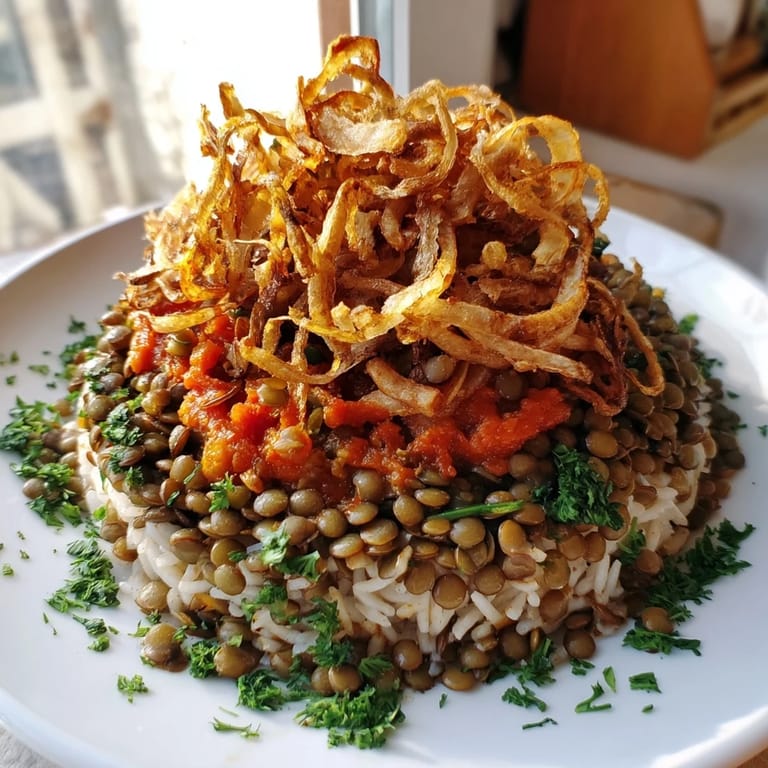
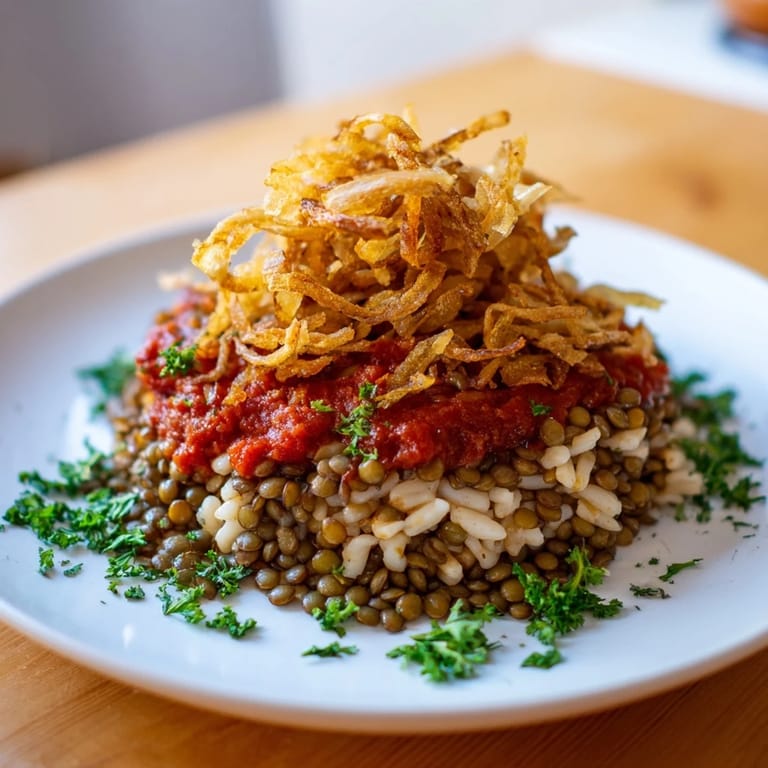
- In a bowl or on a shared platter, layer the fluffy rice first, then the cooked lentils, then the pasta. Spoon generous amounts of that fragrant tomato sauce over the top, then shower it with those crispy onions so they stay crackling. A drizzle of garlic vinegar if you made it, a handful of fresh parsley, and you're ready to eat.
 Save
Save There's a moment when you're assembling the bowl, layering all these humble components, that koshari stops being just food. It becomes a small act of generosity toward yourself or whoever is about to eat it. The simplicity is the point.
The Story Behind the Layers
Koshari emerged from Egypt's multicultural history—rice from Indian cuisine, pasta from Italian influence, and spices from Middle Eastern tradition, all coming together on the streets of Cairo in the late 1800s. What began as a way to stretch ingredients and feed crowds has become something iconic, proof that the best dishes often come from necessity and creativity colliding. When you make it, you're cooking a little piece of that history.
Why Texture Matters More Than You Think
The genius of koshari is textural: soft lentils, fluffy rice, tender pasta, then suddenly those crispy onions that shatter between your teeth, followed by the brightness of vinegar. Without the crispy onions, it's just a warm bowl. With them, it becomes something you'll think about days later. This is why I never skip that step, and why I always fry them fresh rather than making them ahead.
Making It Your Own
Once you understand the structure, koshari becomes a canvas. I've seen people add chickpeas for extra protein, use orzo instead of macaroni for a different mouthfeel, or adjust the spice level to match their mood. The beauty is that it's forgiving—it wants to be played with. Some nights I make it mild and comforting; other nights I add extra chili flakes and garlic vinegar because I need something with more edge.
- Try whisking a raw egg into the rice if you want extra richness, stirring it through while the rice is still hot.
- Serve with extra sauce and vinegar on the side so people can adjust their own bowls to preference.
- Leftover components keep separately in the fridge for three days, so you can reassemble fresh bowls without starting from scratch.
 Save
Save Koshari is the kind of dish that reminds you that food doesn't need to be complicated to be satisfying. Make it, eat it with people you care about, and notice how it brings everyone to the table.
Recipe FAQ Section
- → What types of grains are used in the dish?
The dish includes medium-grain rice, brown or green lentils, and small elbow macaroni or ditalini pasta, providing varied textures and flavors.
- → How is the tomato sauce flavored?
The sauce is made by sautéing onions and garlic, then simmering crushed tomatoes with tomato paste, ground cumin, coriander, chili flakes, and a touch of sugar for balanced taste.
- → What is the purpose of the crispy fried onions?
Crispy fried onions add a crunchy texture and savory depth that complements the tender grains and saucy components.
- → Can the heat level be adjusted?
Yes, chili flakes are optional and can be adjusted or omitted according to your preferred spice level.
- → Are there any vegan-friendly features?
This dish is naturally vegan, relying on plant-based ingredients like lentils, rice, pasta, and vegetables for a nourishing meal.