 Save
Save My first proper fish and chips didn't come from a recipe book—it came from standing in a steamy kitchen at my mate's flat on a Friday night, watching him work through the double-fry method with the kind of confidence I'd never seen before. He kept muttering about how most people rush it, how the temperature matters more than anything else, and somehow that stuck with me. Years later, I finally understood what he meant when I nailed that crispy exterior while keeping the fish impossibly tender inside.
There's something about pulling golden fish and chips out of hot oil that makes everyone stop talking and just pay attention. I made this for my family during one of those rare summer evenings when we all happened to be home at the same time, and I watched my dad take that first bite with his eyes closed—not because it was fancy, but because it tasted exactly like something he remembered from his childhood in England. That's when I realized this dish isn't really about technique, it's about that moment when food carries you somewhere.
Ingredients
- White fish fillets (cod or haddock): Stick with boneless, skinless fillets around 150g each—they fry evenly and stay tender instead of drying out in the hot oil.
- All-purpose flour and cornstarch: The cornstarch is the secret that gives you that extra crunch; don't skip it or you'll wonder why your batter feels flat.
- Baking powder: Just a teaspoon creates tiny air pockets that make the batter light and crispy rather than dense and heavy.
- Cold sparkling water: Cold is essential—warm liquid activates the flour too early and ruins the texture, and sparkling water adds a subtle lift that beer sometimes overpowers.
- Russet or Maris Piper potatoes: Maris Piper are starchy enough to develop that perfect fluffy interior, though russet works beautifully too.
- Sunflower or vegetable oil: These handle high heat without burning, unlike olive oil which would taste wrong here anyway.
- Malt vinegar: It's tangy without being aggressive, and it cuts through the richness in a way that feels completely right.
Tired of Takeout? 🥡
Get 10 meals you can make faster than delivery arrives. Seriously.
One email. No spam. Unsubscribe anytime.
Instructions
- Soak and prepare your potatoes:
- Cut your potatoes into thick fries and soak them in cold water for at least 15 minutes—this removes excess starch so they fry up fluffy instead of gluey. Pat them completely dry before they hit the oil, because any water left behind will cause dangerous splattering and create steam pockets that ruin crispness.
- First fry at low temperature:
- Heat your oil to 150°C (300°F) and fry the potatoes in batches for about 4-5 minutes until they're just tender but still pale. This initial fry cooks the interior without browning the outside, and it's the step most people skip that makes all the difference.
- Build your batter while chips rest:
- Whisk together flour, cornstarch, baking powder, salt, and pepper in a large bowl. Gradually add your cold sparkling water, whisking slowly until you have a thick, smooth batter that clings to the back of a spoon—think pancake batter consistency, not watery.
- Second fry for crispness:
- Increase your oil temperature to 190°C (375°F) and fry the chips again in batches for 2-3 minutes until they turn golden and crispy. You'll hear the sizzle change pitch when they're done—that's your signal to pull them out and drain them on paper towels before sprinkling with sea salt.
- Prepare and coat your fish:
- Pat your fish fillets dry with paper towels to remove any surface moisture, then dust them lightly with flour—this helps the batter grip the fish. Dip each fillet into the batter, letting the excess drip off for a moment so you get a thin, even coating.
- Fry the fish until golden:
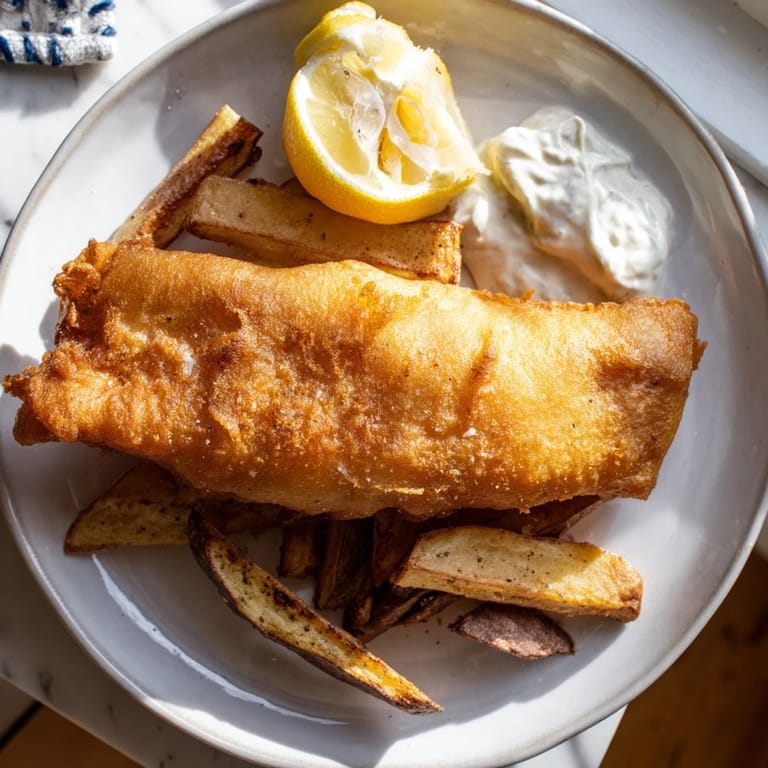
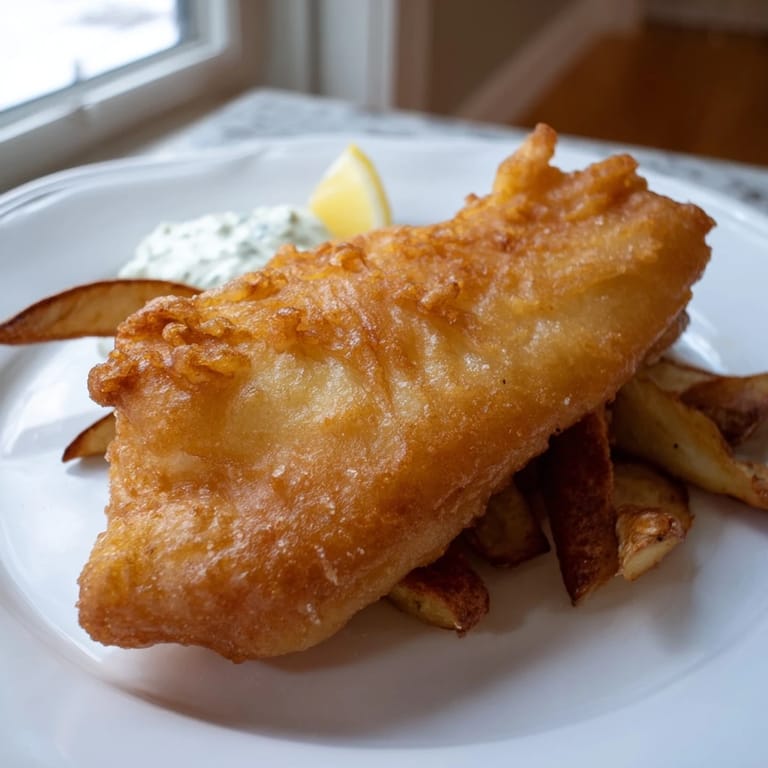
- Carefully lower each battered fillet into the 190°C oil and cook for 5-7 minutes, turning once, until the exterior is deep golden brown and crispy. The batter should feel firm and shatter when you bite it, while the fish inside stays moist and flaky.
- Serve immediately:
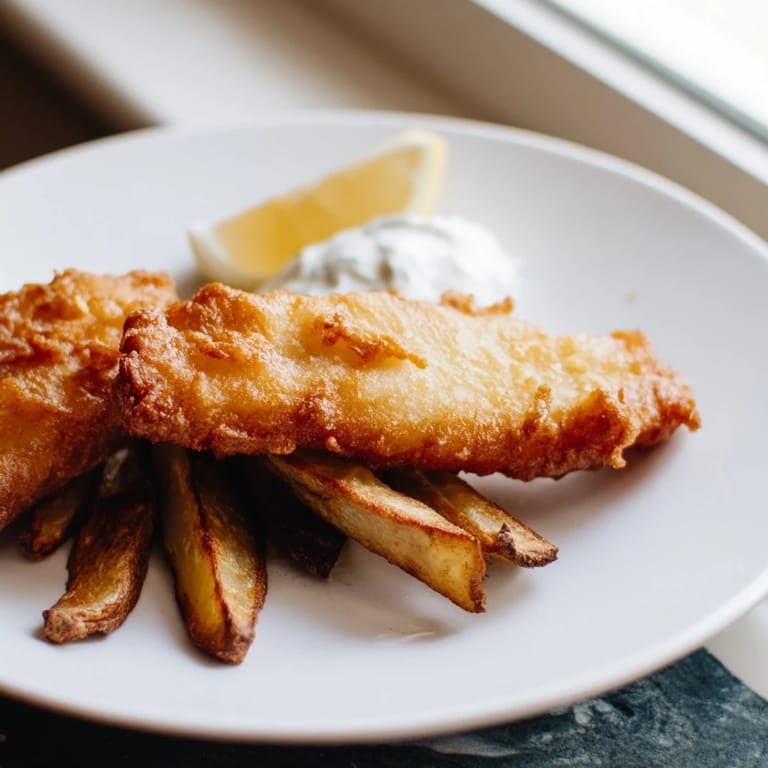
- Transfer your fish and chips to a paper towel-lined plate to drain briefly, then serve right away with malt vinegar or lemon wedges. The moment the oil cools below the fish's surface is the moment you lose that perfect crispy exterior.
 Save
Save I once tried to impress someone by attempting to deep fry everything at once, and I watched the oil temperature plummet as soon as the first batch hit it—the result was pale, soggy, and completely forgettable. It taught me that patience with this dish isn't optional, it's what separates a real meal from something that just tastes like regret.
The Secret of Temperature Control
Temperature is everything in fish and chips, and it's the one thing that separates home cooks from people who consistently nail it. The 150°C first fry feels too gentle, like nothing's happening, but that's exactly when the potato is softening from the inside out without the outside browning. When you jump to 190°C for the second fry, the outside crisps instantly while the inside stays tender—if your oil isn't quite hot enough, you'll end up with soggy chips, and if it's too hot, the outside browns before the inside cooks through. I learned this by burning more than a few batches before I finally invested in a proper thermometer instead of guessing by watching the oil shimmer.
Why Your Batter Matters
The batter is what transforms plain fish into something that tastes like pub food, and the trick is keeping it cold and keeping it simple. I used to add eggs to mine thinking it would make it richer, but all that did was make it heavy and greasy—the cold sparkling water and baking powder alone create enough lift and crispness without any help. Some people swear by beer, and honestly, a good pale ale does add a subtle yeasty depth, but if you're new to this, start with sparkling water because it's more forgiving and you can always adjust later once you understand how the batter behaves.
Making This Meal Feel Like Celebration
Fish and chips works equally well as a casual weeknight dinner or something that feels special without any extra effort—it's just about the quality of the moment you create around it. Serve it with malt vinegar, maybe some tartar sauce on the side, and if you're feeling it, a simple mushy pea situation that takes five minutes to make. The real magic happens when people eat it hot, when the contrast between the crispy batter and tender fish is still alive on the plate, and when you sit down and actually taste what you've made instead of rushing through it.
- Warm your plates before serving so the food doesn't lose heat the moment it lands.
- Have your malt vinegar and lemon ready before you start frying, so nothing sits waiting.
- Make this when you have time to enjoy it, not when you're trying to eat and run.
 Save
Save This is the kind of food that reminds you why cooking matters, why standing in front of a hot pan with purpose is somehow more satisfying than ordering takeaway. Make it when you want to feel like you've created something real.
Recipe FAQ Section
- → What type of fish is best for battering?
Cod or haddock are ideal choices due to their firm, flaky texture that holds up well during frying.
- → Why soak the potatoes before frying?
Soaking removes excess starch, preventing the fries from sticking and ensuring a crisper finish.
- → How do I achieve a crispy batter?
Using cold sparkling water or beer in the batter and frying at the correct temperature helps create a light, crunchy coating.
- → Why double-fry the chips?
Frying twice cooks the potatoes through and then crisps the exterior for that perfect texture contrast.
- → What can I serve with the fish and chips?
Malt vinegar, lemon wedges, tartar sauce, or mushy peas add complementary flavors and textures.