 Save
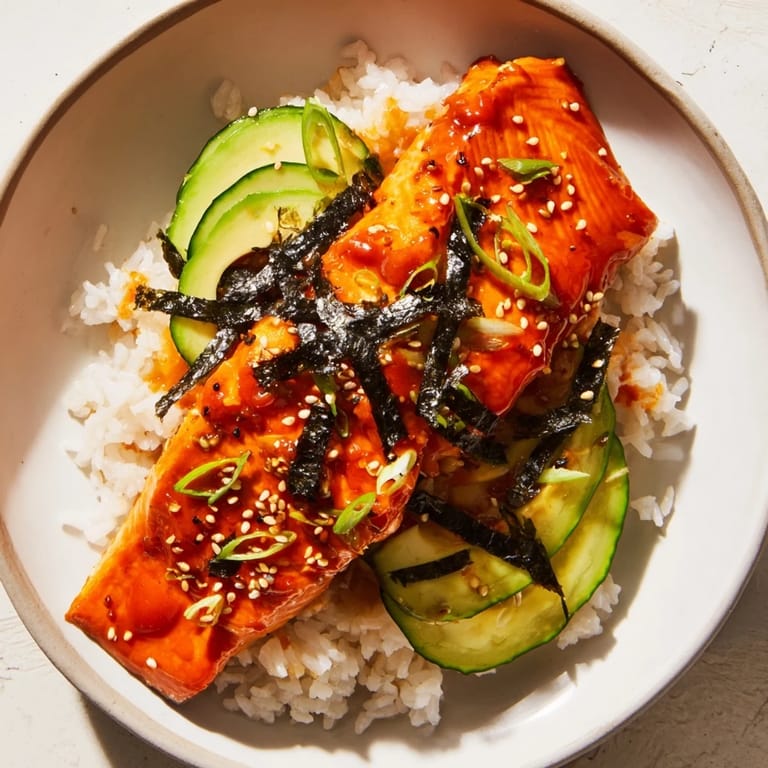
Save I discovered this bowl on a Tuesday afternoon when I was craving something bright and comforting but didn't want to spend hours in the kitchen. The idea hit me while squeezing an orange, watching the juice drip into my palm—what if I mixed that citrus with the gochujang paste sitting in my fridge? That spark of curiosity led to this sticky, glossy salmon that somehow feels both restaurant-worthy and deceptively simple to make.
I made this for my roommate on her birthday, and she sat there quietly for a moment before asking for the recipe—which felt like the highest compliment possible. There's something about a bowl this colorful and intentional that makes people slow down and actually taste their food instead of rushing through lunch.
Ingredients
- Salmon fillets (150g each): Look for fillets with vibrant color and no fishy smell; skin-on tastes richer, but removing it makes plating cleaner.
- Gochujang: This Korean chili paste brings heat and umami depth that plain hot sauce can't match—keep a jar around.
- Fresh orange juice: Bottled won't give you the same brightness; freshly squeezed makes a real difference in the glaze.
- Soy sauce: Use regular or low-sodium depending on your salt preference; it's the flavor backbone here.
- Honey: Balances the spice and helps the glaze caramelize in that final broil.
- Rice vinegar: Cuts through richness and adds subtle tang without overpowering the other flavors.
- Toasted sesame oil: The real deal—untoasted versions taste flat and lifeless by comparison.
- Fresh ginger and garlic: Minced small so they dissolve into the glaze rather than being chunky.
- Short-grain rice: Stickier than long-grain and catches the glaze beautifully; sushi rice works too if that's what you have.
- Cucumber: Thin slicing keeps it refreshing rather than watery or mealy.
- Avocado: Add it just before serving so it stays creamy instead of browning.
- Nori sheets: Those roasted seaweed strips add briny crunch and make this feel intentional.
- Sesame seeds and scallions: These finish the bowl with texture and a fresh onion bite.
Tired of Takeout? 🥡
Get 10 meals you can make faster than delivery arrives. Seriously.
One email. No spam. Unsubscribe anytime.
Instructions
- Get your oven ready and prep:
- Preheat to 200°C (400°F) and line your tray with parchment paper so cleanup is effortless later. This is when you should also measure out all your glaze ingredients so you're not scrambling once the salmon goes in.
- Season and position the salmon:
- Pat the fillets dry with paper towels, then season both sides generously with salt and pepper. Lay them skin-side down on the prepared tray, leaving a little space between them so heat circulates evenly.
- Whisk together the magic glaze:
- In a small bowl, combine gochujang, orange juice, soy sauce, honey, rice vinegar, sesame oil, ginger, and garlic. Whisk until everything is smooth and there are no gochujang lumps hiding at the bottom—this is your canvas.
- First glaze and bake:
- Using a brush, coat the salmon with about half the glaze, being generous so it pools slightly on top. Slide into the oven for 12–14 minutes; the salmon is done when it flakes easily with a fork and looks opaque through the thickest part.
- Prep your bowl components:
- While the salmon bakes, cook your rice if you haven't already, slice your cucumber, cut your avocado, and tear the nori into strips. Everything should be ready to assemble the moment the salmon comes out.
- Optional sticky finish:
- If you want that glossy, caramelized look, brush the remaining glaze on the cooked salmon and slide it under the broiler for 1–2 minutes. Keep your eye on it—this part happens fast and you want glaze, not charred edges.
- Build your bowl:
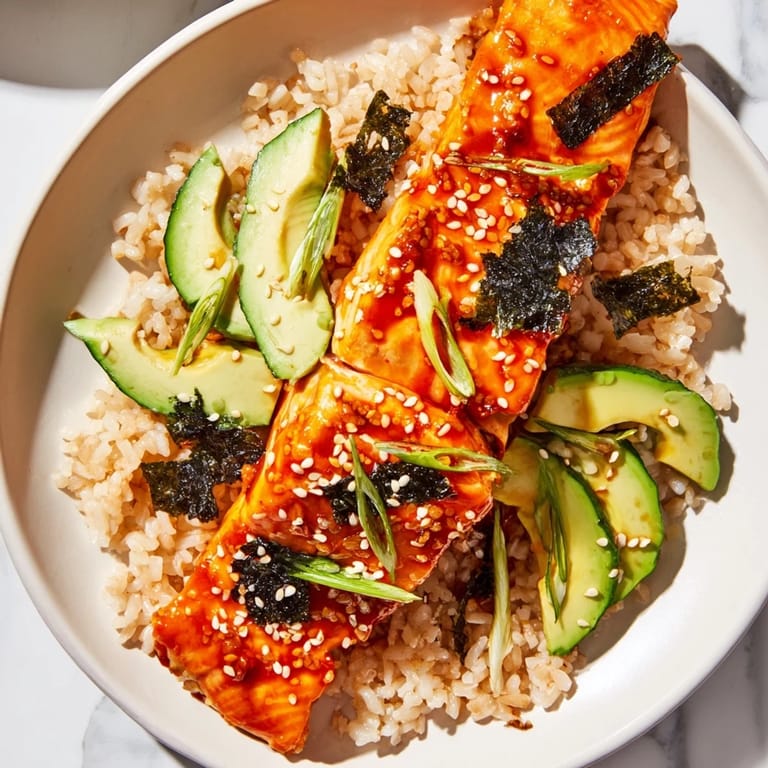
- Divide warm rice between two bowls, then top each with a salmon fillet. Arrange cucumber slices, avocado, and nori strips around the rice, then scatter sesame seeds and scallions over everything.
- Serve immediately:
- Eat while the salmon is still warm and the rice is fluffy—the contrast between warm and cool elements is part of what makes this work.
 Save
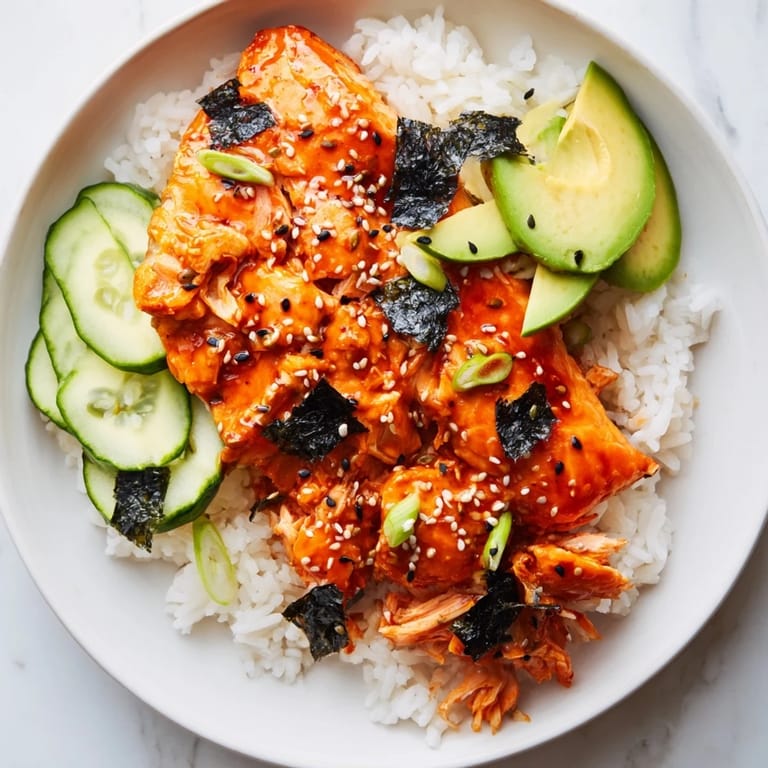
Save What I love most about this bowl is how it taught me that fusion food doesn't have to be complicated—it just has to be honest. Mixing Korean gochujang with bright citrus and serving it over rice felt like bridging two parts of my cooking life, and somehow it worked.
Why This Glaze Works
The magic happens when sweetness, heat, and acid collide in the right proportions. Gochujang brings earthiness and spice, honey softens it into something almost candy-like, and orange juice keeps everything from feeling heavy or one-dimensional. Rice vinegar adds invisible brightness—you don't taste it directly, but without it the glaze would feel flat. The sesame oil whispers rather than shouts, adding toasted depth that makes people ask what's in there.
Building Your Bowl
The arrangement matters more than people think. I arrange components in sections so every bite has something different—never just salmon, always salmon plus cucumber plus avocado plus the creamy rice underneath. The warm rice against cool cucumber against creamy avocado creates texture and temperature contrast that makes eating interesting. Think of it less like a recipe and more like a composition where each element has its own space but they all belong together.
Make It Your Own
The beauty of a bowl format is flexibility without chaos. I've made this with baked tofu when salmon wasn't in the budget, added pickled ginger for extra zing, and once threw in shredded carrots just because they were there. The glaze stays the glaze—that's your anchor—but everything else can shift based on what's in your kitchen or what you're craving that day.
- Swap salmon for firm tofu, extra-thick shrimp, or even thinly sliced chicken breast if you want to stretch it differently.
- Add pickled ginger, shredded carrot, blanched edamame, or kimchi for more color and complexity.
- Pair it with crisp white wine like Sauvignon Blanc or simply drink cold ginger tea alongside.
 Save
Save This bowl reminds me why I cook in the first place—not for perfection, but for those quiet moments when good food brings calm to a busy day. Make it, enjoy it, and don't worry about making it fancy.
Recipe FAQ Section
- → What is gochujang and how does it affect the flavor?
Gochujang is a Korean chili paste that balances heat with a subtle sweetness and umami depth, creating a rich, spicy glaze when combined with orange juice and honey.
- → Can I use a different type of rice for the bowl?
Short-grain rice works best for its sticky texture, but medium-grain or jasmine rice can be used as alternatives for a slightly different mouthfeel.
- → How do I get the salmon to have a sticky glaze finish?
Brushing the salmon with the glaze before baking and then briefly broiling it in the final 1–2 minutes helps achieve a shiny, sticky coating.
- → Are there vegetarian substitutions for this dish?
Firm tofu can replace the salmon as a plant-based alternative, allowing the glaze and toppings to shine with a similar texture.
- → What toppings add the best texture contrast to the salmon bowl?
Crisp cucumber slices, creamy avocado, toasted sesame seeds, and roasted nori strips provide a refreshing crunch and balance the rich glazed salmon.