 Save
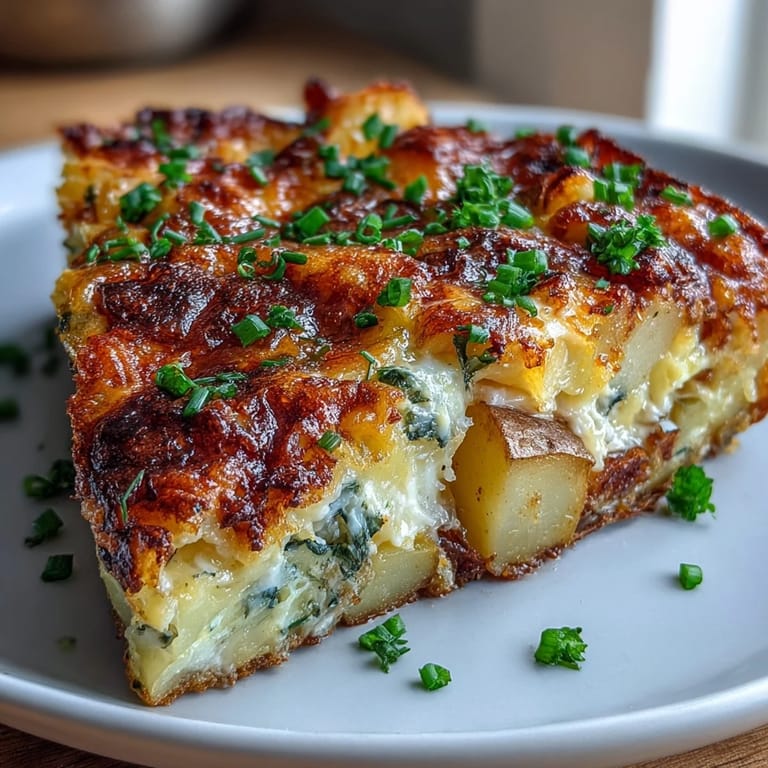
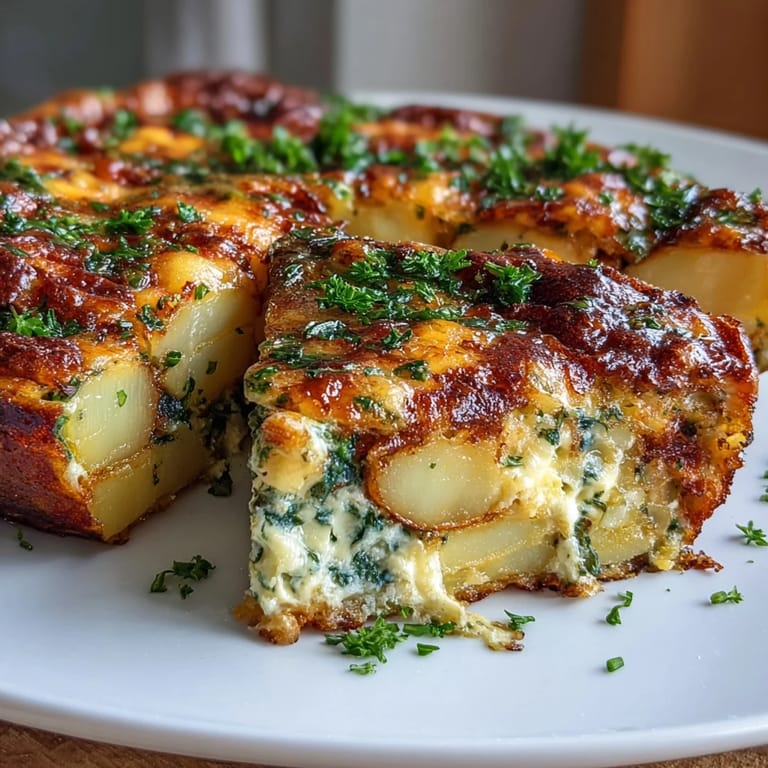
Save My neighbor knocked on my kitchen door one Sunday morning with a basket of spring onions from her garden, and I suddenly remembered why frittatas exist—they're the answer to when you have a few good things but no real plan. Waxy potatoes, fresh onions, eggs from the farmer's market, and a wedge of sharp cheddar transformed into something golden and puffy that fed four of us while we lingered over coffee. That casual breakfast taught me that the best meals don't require fussing; they require paying attention to what's in front of you.
I made this for a small dinner party during that awkward week when spring finally arrived but the kitchen still felt cold, and everyone got quiet when they took their first bite—the kind of quiet that means something's working. The bright green of those spring onions against the golden cheese reminded someone at the table of something their grandmother used to make, and suddenly we were all trading stories about potato dishes from different kitchens. Food does that sometimes; it becomes a bridge between memories.
Ingredients
- Waxy potatoes (300 g): Use thin slices so they cook through before the eggs set; waxy varieties hold their shape better than floury ones.
- Spring onions (4): Separate the whites from the greens—the whites cook into the potatoes while the greens scatter through the eggs for a fresh bite.
- Mature Cheddar cheese (100 g): Don't skimp on quality here; a good sharp cheddar melts beautifully and adds real depth without tasting artificial.
- Whole milk (60 ml): This keeps the eggs creamy rather than rubbery; it's a small detail that changes everything.
- Large eggs (6): Room temperature eggs whisk smoother and incorporate air more easily.
- Olive oil (2 tbsp): A good oil carries flavor into every bite; don't use the cheapest bottle.
- Salt and black pepper: Taste as you go; the cheddar adds saltiness, so go easy at first.
Tired of Takeout? 🥡
Get 10 meals you can make faster than delivery arrives. Seriously.
One email. No spam. Unsubscribe anytime.
Instructions
- Get your oven ready:
- Preheat to 190°C (375°F) so the heat is waiting when you need it.
- Sear the potatoes:
- Heat olive oil in your ovenproof skillet over medium heat, add the thinly sliced potatoes with a pinch of salt, and let them soften and turn golden at the edges—about 8 to 10 minutes. You're listening for a gentle sizzle, watching for that moment when they release easily from the pan.
- Wake up the spring onions:
- Add just the white parts and cook for another minute or two until they smell sweet and a bit softer. This layer of flavor matters more than you'd expect.
- Build the egg mixture:
- In a separate bowl, whisk together the eggs, milk, salt, and pepper until smooth and frothy. Stir in half the grated cheddar and all the green parts of the spring onions; this gives you pockets of color and freshness throughout.
- Combine gently:
- Pour the egg mixture over the potatoes and give it a gentle stir so nothing settles into one corner. You want the vegetables distributed so every slice gets a bit of everything.
- Crown it with cheese:
- Sprinkle the remaining cheddar evenly across the top; it'll melt into golden pools and create a savory crust.
- Bake until set:
- Transfer to the oven for 12 to 15 minutes—the center should be just firm when you give the skillet a gentle shake, and the top should puff slightly and turn pale golden. If it's still jiggling in the middle, give it another minute or two.
- Rest and slice:
- Let it cool for 5 minutes (this makes slicing cleaner), then cut into wedges and serve warm or at room temperature, whatever your day calls for.
 Save
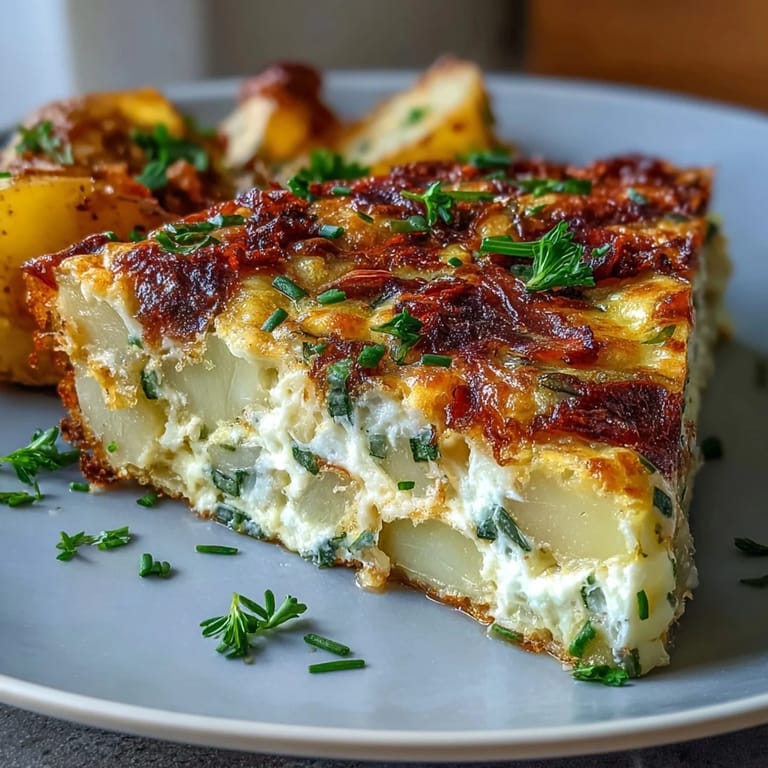
Save My eight-year-old nephew asked for seconds, which sounds small until you know he's the kind of kid who says everything tastes like "just potatoes" or "just eggs." Watching him understand that these things together became something different felt like a tiny victory in the kitchen.
Why This Works for Brunch
There's something about a frittata that makes a casual morning feel intentional—you're not scrambling eggs or flipping omelets; you're baking something that stays whole and can be sliced like a pie. It bridges breakfast and lunch in a way that sits comfortably on any table, and you can make it an hour ahead and reheat it without apology. People always seem surprised that something this good didn't take hours.
Making It Your Own
This is the kind of dish that welcomes additions without falling apart—cooked bacon crumbled through the eggs, sautéed mushrooms folded in, even smoked salmon scattered on top before serving all work beautifully. Gruyère brings an earthier note, feta adds tang, and goat cheese turns everything brighter. The formula stays the same; only the details shift. Serve it with a simple salad dressed in sharp vinegar and good olive oil, tear into some crusty bread, and watch how quickly the plate empties.
The Small Details That Matter
The secret to a frittata that doesn't taste rubbery is understanding that carryover cooking happens—the eggs keep setting after you pull it from the oven, so stopping just before the center is completely firm means you'll hit that creamy sweet spot. Room temperature eggs whisk into tiny bubbles that make the whole thing lighter and fluffier; it's a detail that seems trivial until you taste the difference. Think of every step as a small decision that adds up to something greater than its parts.
- If your skillet isn't ovenproof, finish the top under the broiler instead, watching carefully so the cheese doesn't burn.
- Leftovers keep for three days and taste just as good cold as they do warm, so don't hesitate to make this for meal prep.
- A nonstick skillet makes life easier, but a well-seasoned cast iron creates the most beautiful golden crust.
 Save
Save This frittata lives somewhere between comfort and lightness, between simple and elegant—exactly where the best meals tend to settle. Make it when you want to feel like you've cooked something real without spending your whole morning doing it.
Recipe FAQ Section
- → What type of potatoes work best in this dish?
Use waxy potatoes as they hold their shape well and provide a tender texture after cooking.
- → Can I substitute Cheddar with other cheeses?
Yes, cheeses like Gruyère, feta, or goat cheese work well and add unique flavors.
- → How do I ensure the frittata sets properly?
Bake until the center is puffed and set—about 12 to 15 minutes at 190°C (375°F).
- → Is it necessary to separate the spring onion parts?
Yes, cooking the white parts first softens them, while the green parts mixed in provide fresh flavor and color.
- → Can I prepare this using non-dairy milk?
Whole milk is recommended for richness, but non-dairy alternatives can be used with slight texture differences.
- → What accompaniments pair well with this dish?
A simple salad and crusty bread complement the flavors and round out the meal beautifully.