 Save
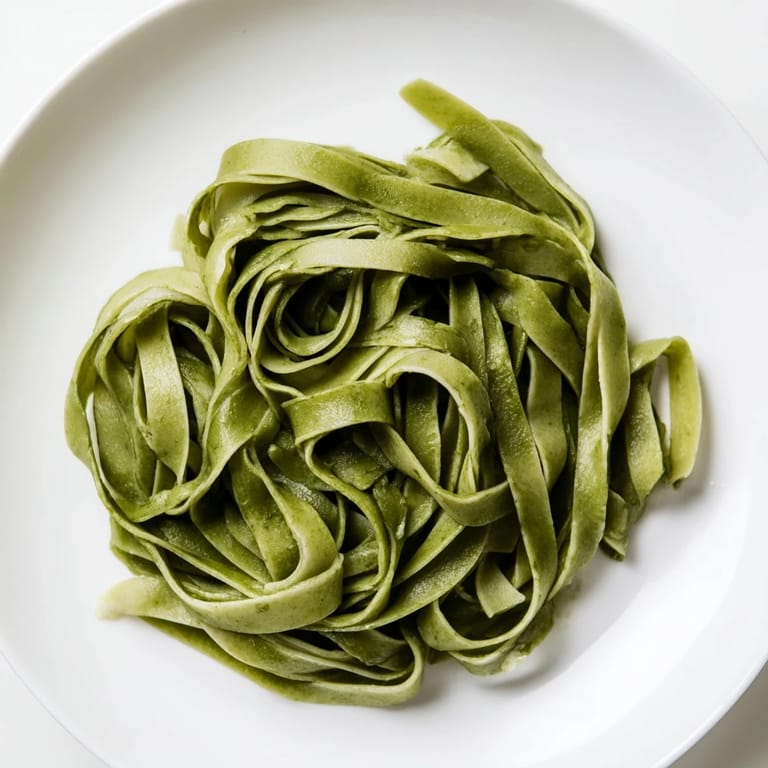
Save My kitchen was impossibly quiet one afternoon when a friend dropped off a bundle of just-picked spinach from her garden, still dewy and vibrant. I'd never made pasta from scratch before, but watching those bright leaves wilt in boiling water felt like the beginning of something I needed to understand. The moment I squeezed out the moisture and saw that vivid green purée, I knew this dough would be different—alive in a way store-bought pasta could never be. That first batch taught me that homemade pasta wasn't about perfection; it was about feeling the dough respond to my hands and trusting the process.
Years later, I made this for a small dinner where someone mentioned they'd never had homemade pasta before. Watching their face when they bit into those tender strands—somehow both delicate and substantial—reminded me why I keep flour and eggs on hand. It wasn't just dinner; it was proof that slowing down and making something by hand creates moments that matter in ways convenience never can.
Ingredients
- Fresh baby spinach: 100 g of bright, tender leaves create that distinctive color and add subtle earthiness—blanch it fast so it doesn't turn muddy and dull.
- Large eggs: Two eggs bind everything together and give the dough richness; they need to be at room temperature so they incorporate smoothly.
- Italian 00 flour: This ultra-fine flour is worth seeking out because it creates that silky, tender pasta texture you can't replicate with all-purpose.
- Semolina flour: Optional, but adds a slight grip to the dough and makes it less likely to stick—think of it as insurance if you're nervous.
- Fine sea salt: A half teaspoon seasons the dough evenly; coarser salt won't dissolve as well and creates uneven pockets.
Tired of Takeout? 🥡
Get 10 meals you can make faster than delivery arrives. Seriously.
One email. No spam. Unsubscribe anytime.
Instructions
- Blanch and squeeze:
- Boil spinach for just 30 seconds—any longer and it loses that bright color and develops a bitter edge. Squeeze it until your hands hurt a little; pasta dough is sensitive to moisture, and wet spinach will make everything sluggish.
- Purée until smooth:
- A food processor makes this foolproof, turning the spinach into fine jade paste that distributes evenly. If you're chopping by hand, take your time and go fine enough that you don't see little flecks in the dough.
- Create the well:
- Mound your flour on a clean counter, make a crater in the center, and imagine you're building a little dam—this is where the magic begins.
- Gradually incorporate:
- Using a fork, gently draw flour from the walls of your well into the wet center, working carefully so the eggs don't escape. This patience pays off.
- Knead until elastic:
- Once a shaggy mess forms, get your hands in and knead for 8 to 10 minutes—you'll feel it transform from rough to smooth and spring back when you press it. This is where the dough develops strength and character.
- Rest the dough:
- Wrapping it tightly and letting it sit for 30 minutes allows the gluten to relax and the flavors to marry together, making rolling infinitely easier.
- Roll and shape:
- Use a pasta machine if you have one, passing the dough through progressively thinner settings until it's almost translucent. A rolling pin works too, though it demands more arm strength and patience.
- Cook fresh:
- Salted boiling water and just 1 to 2 minutes—fresh pasta cooks faster than you expect, and that tender texture is the whole point.
 Save
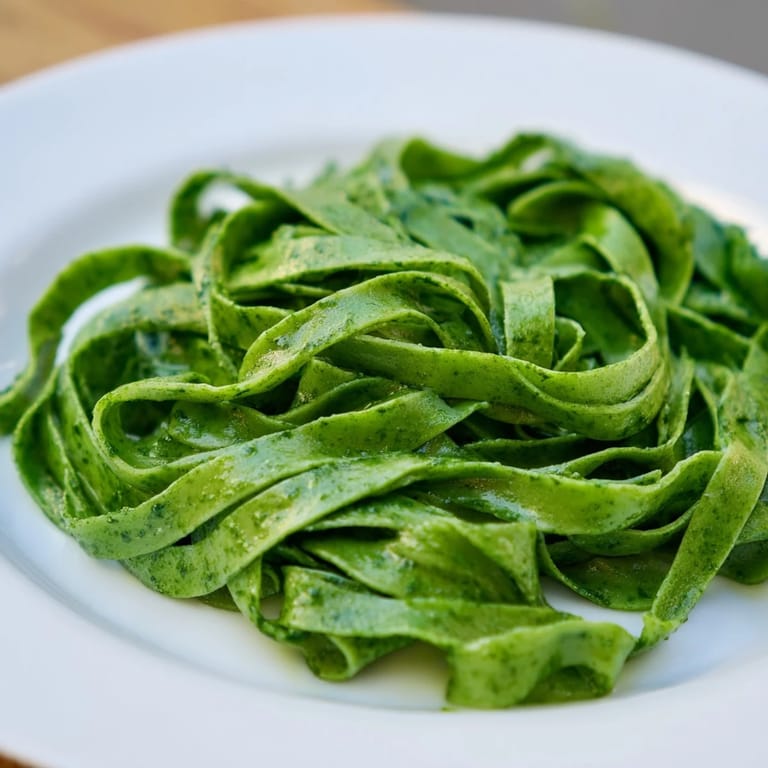
Save I remember standing at my kitchen counter at six in the evening, exhausted from work, when the smell of boiling salted water and fresh spinach dough hit me all at once. In that moment, making pasta felt less like cooking and more like reclaiming something I'd rushed past for too long. That green dough, still warm, became the thing that made me want to sit down and eat deliberately instead of standing at the sink.
Why Fresh Pasta Changes Everything
Dried pasta has its place, but fresh pasta exists in a different category entirely—it's tender, it absorbs sauce differently, and it somehow tastes more like eggs and flour than the industrial version ever could. The moment you make it yourself, you understand why nonnas guarded their pasta recipes like state secrets. Once you've felt the dough come together under your hands, store-bought feels like a shortcut you'll reserve only for hectic Tuesday nights.
Shapes and What They're Best For
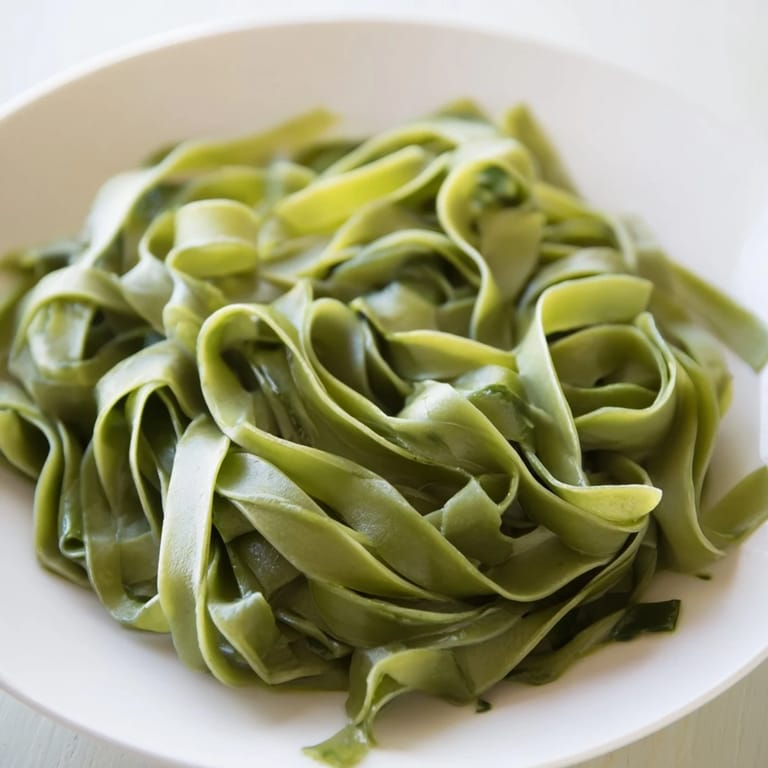
This dough works beautifully thin for delicate fettuccine that clings to light, buttery sauces, or thick enough for ravioli where the wrapper holds pockets of filling. I've stretched it into lasagna sheets for winter baking and curled it into tagliatelle for simple tomato sauce. The same dough transforms depending on what shape you coax it into—that's the quiet power of understanding the fundamentals.
Make-Ahead Wisdom and Storage
The dough keeps for up to 24 hours wrapped tightly in the refrigerator, and honestly, cold dough is actually easier to work with because it doesn't warm up and become slippery under the machine. You can also freeze it for a couple of weeks—just thaw gently at room temperature before rolling. The beauty of making dough ahead is that you can roll and cut it fresh whenever hunger strikes, with dinner on the table in minutes.
- Let refrigerated dough come to room temperature for about 10 minutes before rolling so it's not brittle.
- Dust your work surface and the dough generously with flour or semolina so nothing sticks during shaping.
- If you're not cooking immediately after cutting, lay shaped pasta on a parchment-lined tray, let it dry for an hour, then freeze in an airtight container.
 Save
Save This dough is your gateway to understanding that homemade pasta isn't complicated—it just asks for presence and a little attention. Once you've made it once, you'll reach for it again and again, until it becomes as natural as scrambling eggs.
Recipe FAQ Section
- → How do I prepare the spinach for the dough?
Blanch the spinach in boiling water for 30 seconds, then drain and rinse with cold water. Squeeze out excess moisture before finely chopping or pureeing.
- → Can I substitute flours in the dough?
Yes, part of the 00 flour can be replaced with whole wheat flour for a nuttier flavor and added texture.
- → What is the purpose of semolina flour?
Semolina adds a slightly coarse texture which helps with dough firmness and can improve the final bite.
- → How long should I knead the dough?
Knead by hand for 8–10 minutes until the dough is smooth and elastic. Adjust flour or water to get the right consistency.
- → What shapes can this dough be used for?
This dough works well for fettuccine, ravioli, lasagna sheets, tagliatelle, tortellini, or any desired pasta shape.
- → Can the dough be stored before use?
Yes, wrap tightly and refrigerate for up to 24 hours before rolling and cutting.