 Save
Save My neighbor Maria handed me a jar of homemade guava paste one afternoon, and I stood in my kitchen for ten minutes just smelling it before opening the lid. The fragrance was almost floral, sweet but with this underlying tartness that made my mouth water. She'd made it from guavas growing wild in her yard, and watching her describe the process—how the mixture transforms from loose pulp to something glossy and thick—made me determined to try it myself. That first batch didn't go perfectly, but something about standing over a simmering pot, stirring constantly while the kitchen filled with that distinctive guava perfume, felt like a small ritual I didn't know I needed.
I made this for a potluck where everyone brought something store-bought, and I brought a wooden board with sliced guava paste, aged Manchego, and crackers. The first person who tried it got quiet for a moment, then immediately asked for the recipe. There's something about feeding people something handmade and unexpected that changes the whole energy of a gathering. By the end of the night, people were slicing it thin, piling it on crackers, and asking if I sold it.
Ingredients
- Ripe guavas (1 kg / 2.2 lbs): The quality of your guavas matters more than you'd think—look for ones that yield slightly to pressure and smell fragrant, not ones that smell like nothing at all. If you can find pink or red guavas, they'll give your paste a more beautiful color.
- Granulated sugar (450 g / 2 1/4 cups): This might seem like a lot, but sugar is what transforms the guava pulp into paste and helps it set properly. You'll adjust this based on how sweet your guavas naturally are.
- Fresh lemon juice (2 tbsp): This brightens the sweetness and prevents the paste from tasting one-note; it's the secret that makes people say the flavor is complex.
- Water (120 ml / 1/2 cup): Just enough to help the guavas break down without making the final paste watery.
Tired of Takeout? 🥡
Get 10 meals you can make faster than delivery arrives. Seriously.
One email. No spam. Unsubscribe anytime.
Instructions
- Prepare and soften:
- Wash your guavas under cool water, trim off the knobby ends, and cut each one into quarters. If you want an ultra-smooth paste, you can spend a few minutes picking out seeds, but honestly, the strainer does most of that work later. Put the guava quarters into your largest pot with the water, bring everything to a boil, then cover and let it simmer gently for 15 to 20 minutes until the guavas collapse and smell even more fragrant.
- Strain into velvet:
- Once the guavas have cooled just enough to handle, push them through a food mill or fine mesh strainer, letting the silky pulp fall into a clean pot while seeds and skins stay behind. This step transforms chunky guava mush into something that already looks like it belongs in a pastry shop.
- Combine and calculate:
- Measure your resulting guava puree because this determines your sugar ratio—for every cup of puree, you'll use about one cup of sugar, though you can adjust based on taste. Stir the puree with the sugar and lemon juice in the pot, making sure everything is evenly combined before the heat goes on.
- The long, slow transformation:
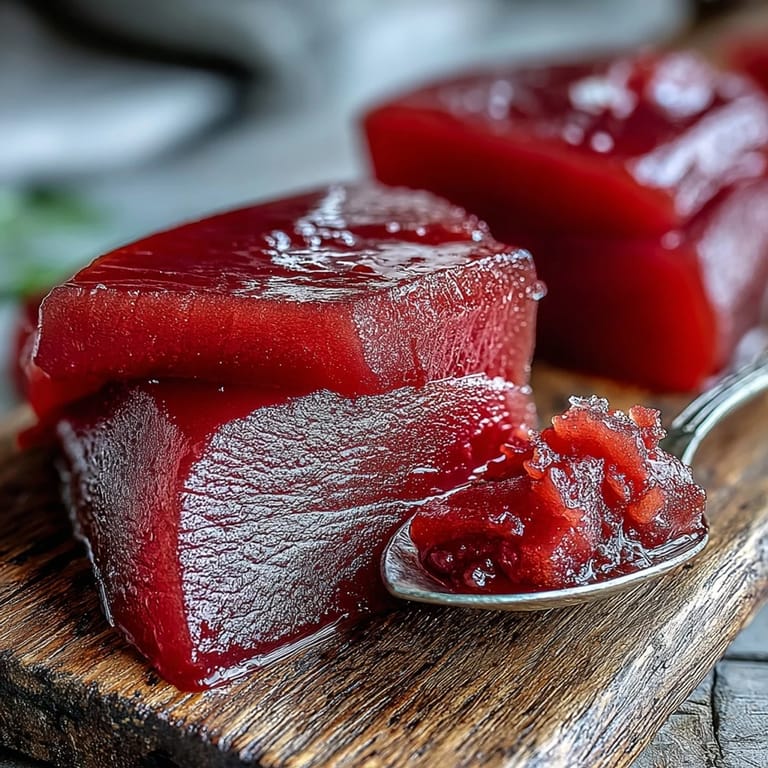
- Turn the heat to low and stir almost constantly for 40 to 50 minutes, which I know sounds tedious but it's actually meditative once you settle into it. The mixture will darken slightly, become glossy, and eventually pull away from the sides of the pan when you drag your spoon across the bottom—that's when you know it's ready.
- Set and cool:
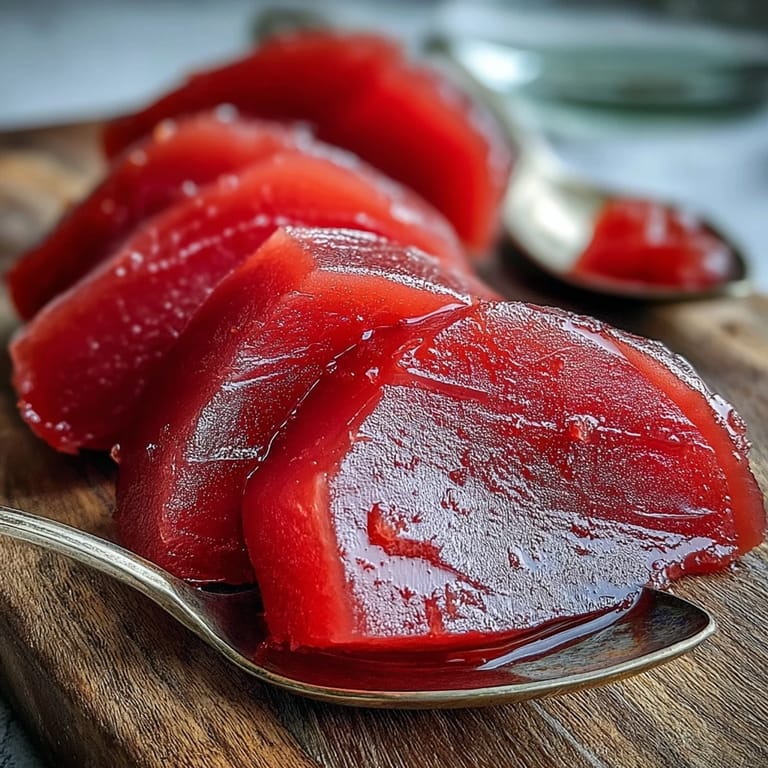
- Pour the thick, shining paste into a parchment-lined loaf pan or baking dish, smooth the top with a spatula, and let it sit at room temperature for two to three hours until it firms up enough to unmold. You'll be tempted to cut into it earlier, but patience here makes the difference between paste and something that actually slices cleanly.
 Save
Save My friends who grew up with guava paste told me it's the kind of thing their grandmothers made during fruit season, and making it yourself connects you to that tradition in a quiet way. It's not fancy or complicated, but there's something grounding about turning fresh fruit into something that lasts months in the refrigerator, something you can eat slowly and remember the afternoon you made it.
Why This Works as a Condiment
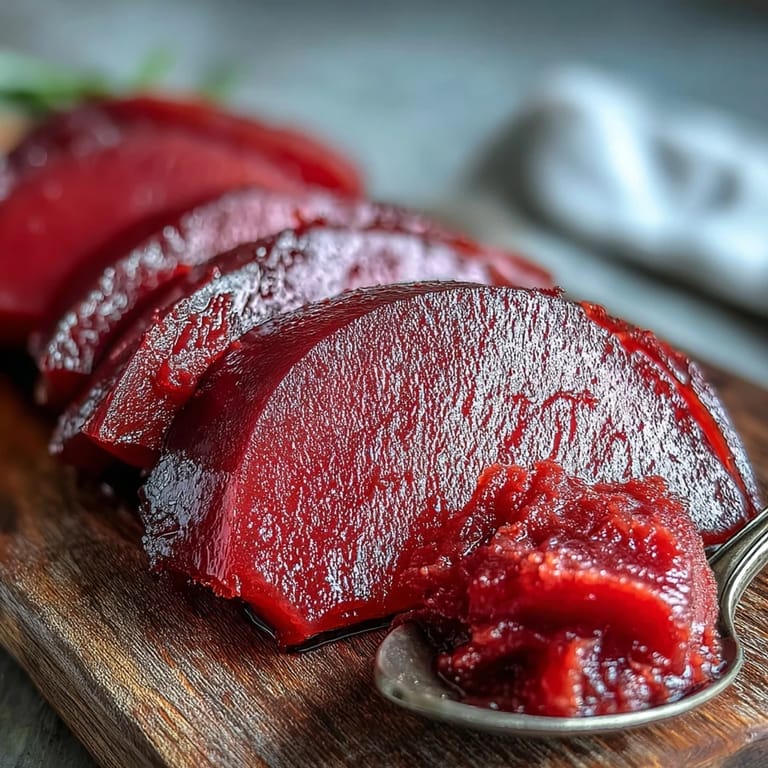
Guava paste sits in that perfect middle space between jam and candy, dense enough to slice and serve alongside cheese without falling apart, but still soft enough to spread on warm pastries or swirl into yogurt. It's the kind of thing that makes a simple cheese board feel intentional, and it tastes expensive even though it costs maybe three dollars in ingredients. The tartness of the lemon keeps it from becoming cloying, which is why you can eat it with something salty without your mouth getting tired.
Storage and Shelf Life
Once your paste is completely cool and set, turn it out onto a cutting board and slice it however thick or thin feels right—some people like thin slices for cheese boards, others cut thicker chunks for snacking. Store it in an airtight container in the refrigerator where it'll keep for up to three months, though honestly it rarely lasts that long once people know you have it. If you want to be fancy, you can wrap slices individually in parchment and layer them in a box, which makes excellent gifts that look more impressive than homemade.
Flavor Pairing Ideas
The first time I understood guava paste was when I tasted it with sharp Manchego cheese—the saltiness and age of the cheese against the sweet-tart paste creates this balance that feels almost surprising. But it works just as well with young fresh cheeses like queso fresco, with smoked meats, on top of vanilla ice cream, or crumbled into pie dough before baking. The versatility is part of why making a batch feels worth the time.
- Pair with aged cheddar and dark crackers for an unexpectedly sophisticated snack.
- Spread a thin layer on buttered toast with a pinch of sea salt for an easy breakfast that feels luxurious.
- Use as a filling in empanadas, hand pies, or between shortbread cookies for something that tastes homemade in all the right ways.
 Save
Save Making guava paste taught me that some of the best things to have in your kitchen aren't shortcuts or clever techniques—they're just simple transformations that remind you why cooking matters. Slice a piece cold from the refrigerator on an ordinary Tuesday and suddenly your afternoon tastes a little more deliberate.
Recipe FAQ Section
- → How do I know when the guava paste is ready?
The paste is ready when it becomes thick, glossy, and pulls away from the sides of the pan. A spoonful should hold its shape rather than spread.
- → Can I use frozen guavas?
Yes, frozen guavas work well. Thaw completely before cooking and adjust cooking time slightly as they may release more liquid.
- → Why remove the seeds?
Removing seeds creates that signature smooth texture. Seeds can be hard and disrupt the velvety consistency essential for quality guava paste.
- → How long does this keep?
Properly stored in an airtight container in the refrigerator, guava paste keeps for up to 3 months. The high sugar content acts as a natural preservative.
- → What's the best way to serve it?
Slice thinly and pair with Manchego or cream cheese on crackers, use as a filling for pastries and empanadas, or melt slightly to glaze roasted pork dishes.