 Save
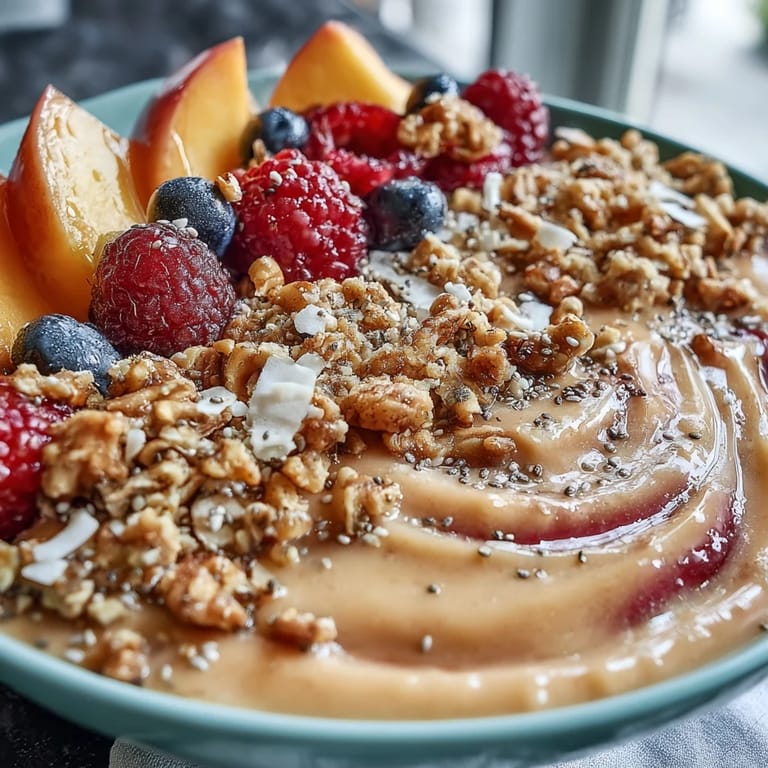
Save I discovered this bowl on a muggy morning when my freezer held nothing but frozen bananas and I'd splurged on the most fragrant guavas at the market. What started as improvisation became something I now crave whenever the sun feels too bright and my body needs something cool and alive. The moment the blender whirred and that pale pink cream emerged, I knew I'd stumbled onto something special. My partner wandered into the kitchen mid-blend, drawn by the tropical aroma, and by the time I'd topped the bowl, they were already asking for their own. That's when I realized this wasn't just breakfast—it was a small ritual.
Last summer, I made these for a friend who'd just moved back to the city and was feeling homesick for tropical weather. She took one spoonful and her whole face softened—not because it was perfect, but because it tasted like warmth and escape. We ate ours slowly on her small balcony, talking until the smoothie bowl melted slightly and we didn't even care. That's when I understood: this bowl is as much about pausing as it is about nourishing yourself.
Ingredients
- Ripe mango, peeled and diced (1 cup): Choose mangoes that yield slightly to pressure—they should smell sweet at the stem, not hard and flavorless.
- Ripe guava, peeled and seeded (1 cup): Guavas can be tricky to find, but once you do, seek out ones with a yielding skin and fragrant aroma; the seeds are edible but slightly gritty, so many prefer to remove them for smoothness.
- Frozen banana, sliced (1 small): Freezing bananas yourself weeks ahead means you always have the secret ingredient that transforms a thin smoothie into something luxurious and creamy.
- Greek yogurt or coconut yogurt (1/2 cup): Greek yogurt adds tang and protein, but coconut yogurt keeps things vegan and surprisingly rich.
- Coconut water or almond milk (1/2 cup): Coconut water brings subtle mineral sweetness, while almond milk is the steadier choice if you want neutral creaminess.
- Honey or agave syrup (1 tablespoon, optional): Taste before adding—ripe fruit often has enough natural sweetness.
- Granola (1/2 cup): This is where texture lives; buy good granola or make your own because stale granola becomes sad granola.
- Fresh mixed berries (1/4 cup): Blueberries stay firm longest, strawberries add brightness, raspberries add delicate tartness—choose what your mood needs.
- Unsweetened coconut flakes (2 tablespoons): Toast them lightly in a dry pan first if you want more pronounced coconut flavor without extra fat.
- Chia seeds (1 tablespoon, optional): They add subtle crunch and stay dry on top if you eat immediately.
- Fresh mint leaves (optional, for garnish): Mint transforms this from just healthy into an experience.
Tired of Takeout? 🥡
Get 10 meals you can make faster than delivery arrives. Seriously.
One email. No spam. Unsubscribe anytime.
Instructions
- Blend the tropical base:
- Combine your mango, guava, frozen banana, yogurt, coconut water, and sweetener in the blender. Start on low speed, then increase to high—you want the texture thick enough that a spoon stands up in it, not drinkable like a regular smoothie. This takes about ninety seconds of blending, and you'll hear the motor work slightly harder as it churns through the frozen banana.
- Transfer to bowls:
- Pour the thick smoothie into two bowls, dividing evenly. Use a spatula or the back of a spoon to gently smooth the surface—this creates a better canvas for your toppings and looks intentional.
- Build the toppings:
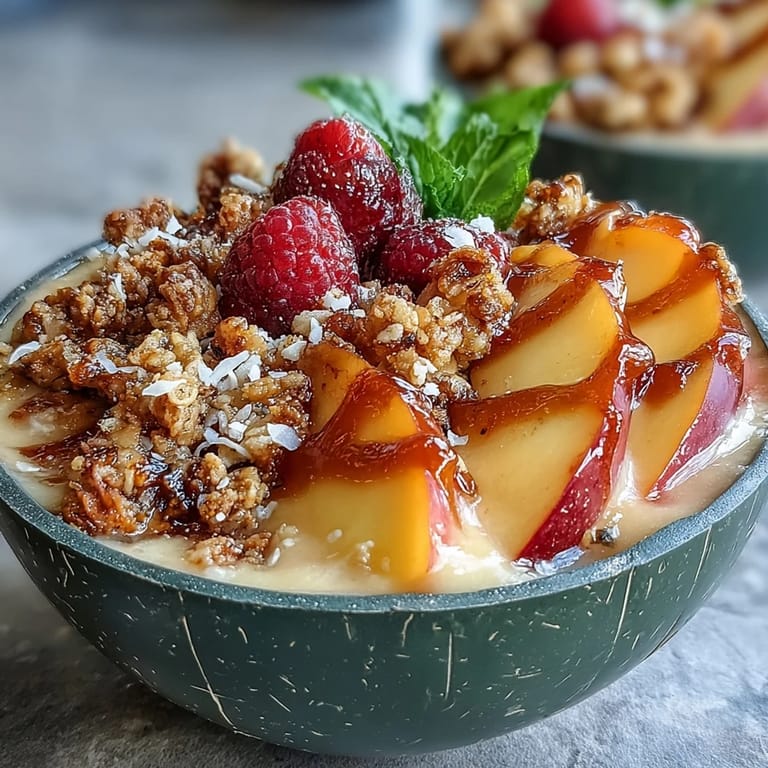
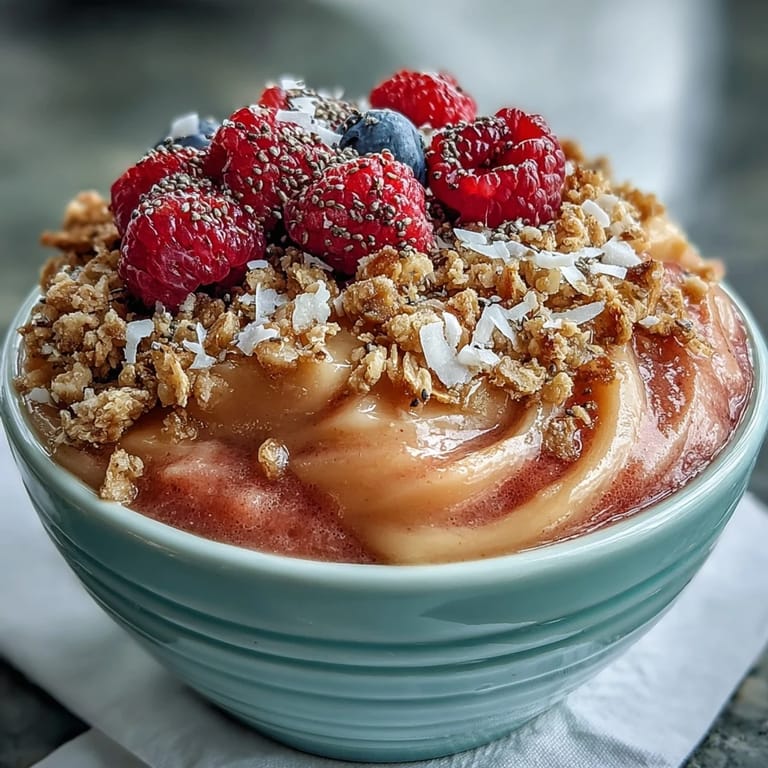
- Sprinkle granola first, then berries, then coconut flakes, then chia seeds in whatever pattern feels right. There's no wrong way, but scattering them strategically means every spoonful catches something different.
- Finish and serve:
- Tear a few mint leaves over the top if you have them, then serve immediately while the smoothie base is still cold and the granola is still crisp. This is not a make-ahead bowl—it's a now-or-never moment.
 Save
Save There was a morning when I made this for myself before anyone else was awake, sitting at the kitchen counter in that quiet hour when the world still feels full of possibility. I ate it slowly, noticing how the chill of the smoothie felt grounding and how each topping added a different reason to keep going. Food doesn't always need an audience to matter—sometimes it's enough that you showed up for yourself.
When Guava Isn't Available
I've learned to be flexible with tropical fruits because they're temperamental and seasonal. If guava eludes you, an extra cup of mango creates a richer, more straightforward flavor, while pineapple brings a brighter tartness that some mornings feel exactly right for. Passion fruit pulp works beautifully too if you can find it, adding complexity and elegance without requiring any extra work. The bowl won't be identical, but it'll still feel like summer in a bowl.
The Protein and Vegan Question
I started adding protein powder because I noticed the original bowl left me hungry by mid-morning, and vanilla protein dissolves almost invisibly while adding substance. For vegan versions, coconut yogurt surprised me—it's creamier than I expected and adds almost as much richness as Greek yogurt without the dairy aftertaste. Agave syrup is gentler than honey and blends seamlessly, so make the swap without second-guessing yourself.
Pairing and Timing
This bowl works as breakfast when you're not rushing, as a post-workout snack when you need something cooling, or as an elegant dessert when company's coming and you want something that feels indulgent but isn't. I've learned to pair it with iced herbal tea in summer or a small glass of tropical juice if I want to lean into the vacation feeling. The whole experience takes as long as you let it.
- Make the smoothie base ahead and refrigerate—just add toppings right before serving to keep everything crisp.
- Toast your coconut flakes in a dry pan for thirty seconds to deepen their flavor if you're in the mood for that.
- If berries are out of season, frozen berries work perfectly and thaw slightly as they sit on the cold smoothie.
 Save
Save This bowl has become my answer to mornings when I need to feel taken care of, to afternoons when the heat demands something cool, and to moments when I want to taste the tropics without leaving my kitchen. It's simple enough that you can make it without thinking, but thoughtful enough that it feels like self-care.
Recipe FAQ Section
- → Can I make this bowl ahead of time?
The smoothie base is best served immediately while still thick and cold, but you can prep the ingredients beforehand. Freeze diced mango and sliced banana the night before. Measure your toppings into separate containers so assembly takes just minutes when you're ready to eat.
- → What can I use instead of guava?
If fresh guava isn't available, pineapple or extra mango works beautifully. Papaya also brings that tropical sweetness and pairs wonderfully with mango. Frozen fruit chunks eliminate the need for ice and keep the consistency creamy rather than watered down.
- → How do I make it vegan?
Swap Greek yogurt for coconut, almond, or cashew yogurt. Use maple syrup or agave instead of honey. Ensure your granola is certified vegan—some brands contain honey. The coconut water base remains naturally plant-based and adds natural electrolytes.
- → Why is my smoothie base too thin?
The frozen banana is crucial for thickness. If your base turns out runny, add more frozen fruit or a few ice cubes and blend again. Using less liquid also helps—start with 1/4 cup coconut water and gradually increase only if needed to get the blender going.
- → What other toppings work well?
Sliced bananas, chopped kiwi, or diced papaya add more tropical flair. Sliced almonds, pumpkin seeds, or hemp seeds boost protein and crunch. A drizzle of almond butter or tahini creates richness. Fresh passion fruit pulp adds tangy sweetness and beautiful presentation.