 Save
Save There's something about opening a jar of olives that instantly transports you somewhere warm and sun-drenched, even if you're standing in your kitchen on a gray Tuesday evening. I discovered this pasta almost by accident one night when I had a half-empty jar of mixed olives, some capers lingering in the back of the fridge, and absolutely no inspiration for dinner. The beauty of tapenade pasta is that it asks so little from you but delivers something that tastes like you've been planning it all day.
I made this for a friend who'd just moved to the city, and she took one bite and went quiet in that way that means the food is doing its job. We sat at her half-unpacked kitchen table talking about Mediterranean summers neither of us had experienced, and the pasta just kept tasting better the longer we talked. That's when I understood: this dish has a way of making ordinary moments feel a little bit special.
Ingredients
- Mixed pitted olives (Kalamata and green, 1 cup): The contrast between briny Kalamatas and slightly fresher green olives is what makes this tapenade sing—if you use only one kind, it becomes one-note.
- Capers, drained (2 tablespoons): These tiny flavor bombs pack more punch than their size suggests, so don't be tempted to double them unless you want to pucker your guests.
- Garlic, peeled (2 cloves): Raw garlic in the food processor gets sharp and loud, which is exactly what you want to cut through the richness of the olive oil.
- Fresh parsley, chopped (2 tablespoons): It's easy to skip this, but the brightness it adds to all that salt and brine is worth the thirty seconds it takes to chop.
- Fresh lemon juice (1 teaspoon): This is your secret weapon for preventing the whole thing from tasting like a jar of brine—it adds lift and makes everything taste fresher than it has any right to.
- Extra-virgin olive oil (1/4 cup): Don't use the cheap stuff here; good olive oil is the difference between a sauce and a paste, and your tongue will know.
- Freshly ground black pepper: A small thing, but black pepper adds a warmth that keeps the tapenade from being aggressively one-dimensional.
- Dried spaghetti or linguine (12 oz): Thinner shapes let the tapenade cling to every bite; thick pasta only catches it in spots and leaves you unsatisfied.
- Salt for pasta water (1 tablespoon): This is your only chance to season the pasta itself, so don't be shy—it should taste like the sea.
- Reserved pasta cooking water (1/4 cup): This starchy water is what transforms tapenade into a silky sauce that coats the pasta like it was meant to be there all along.
Tired of Takeout? 🥡
Get 10 meals you can make faster than delivery arrives. Seriously.
One email. No spam. Unsubscribe anytime.
Instructions
- Start your water:
- Fill a large pot about three-quarters full with water, add salt, and let it come to a rolling boil—the kind where the steam rises up and fogs your glasses. You'll know it's ready when you hear it before you see it.
- Cook the pasta:
- Add the pasta all at once and stir it so it doesn't clump, then let it cook according to the package directions, stirring occasionally. About a minute before it's supposed to be done, fish out a piece and taste it—it should be tender but with the tiniest bit of resistance when you bite.
- Make the tapenade:
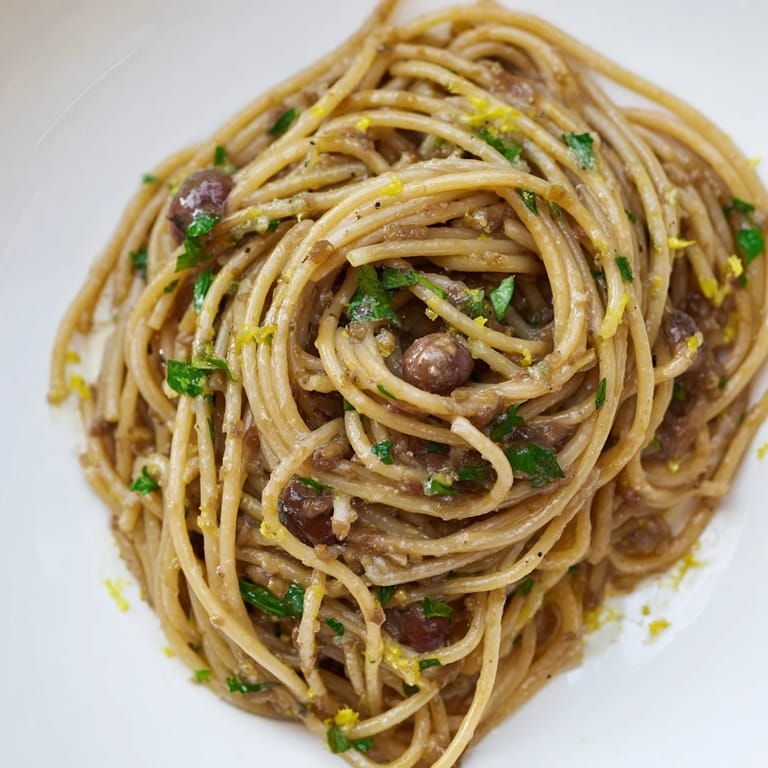
- While the pasta works, pulse the olives, capers, garlic, and parsley in a food processor until they're coarsely chopped but still have texture—not a smooth paste. With the motor running, drizzle in the olive oil slowly and watch as everything comes together into something rich and glossy, then taste and add black pepper until it feels right.
- Finish the pasta:
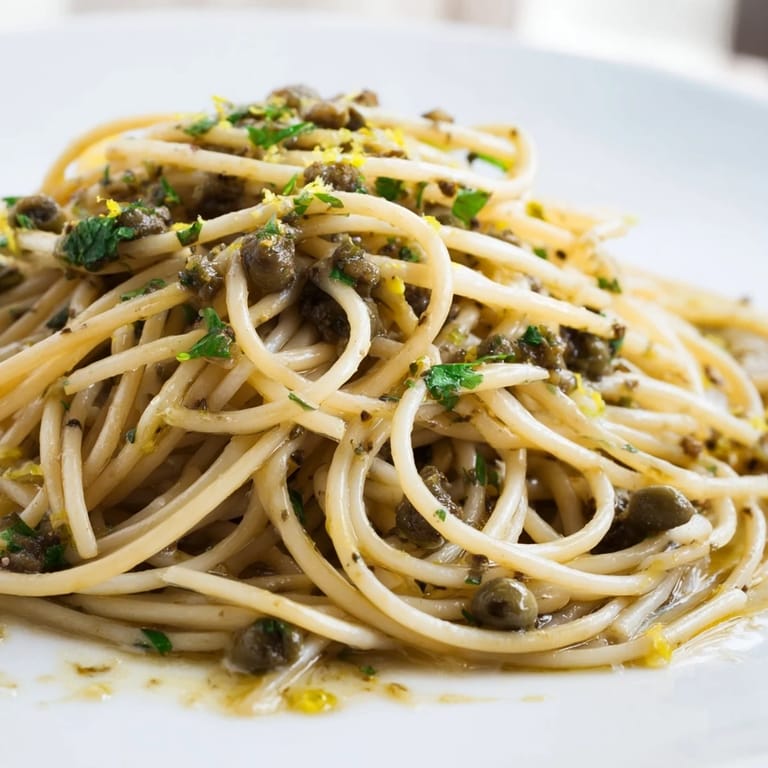
- Reserve that pasta water before you drain everything, then return the hot pasta to the empty pot and add the tapenade, tossing constantly. The heat of the pasta releases more flavor from the tapenade, and adding small splashes of that starchy pasta water creates a sauce that's silky and clings to every strand.
- Serve immediately:
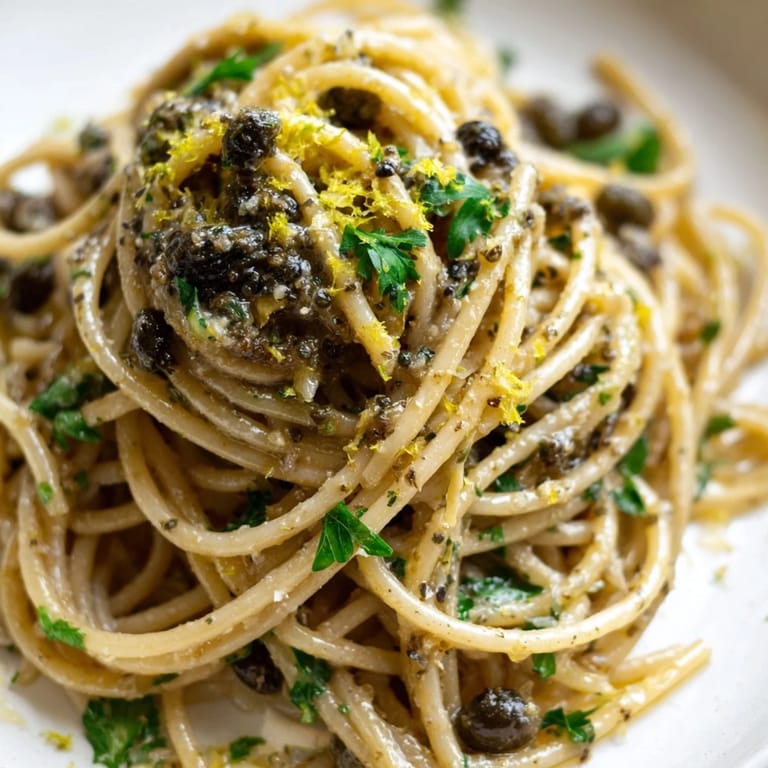
- Divide the pasta among bowls and finish with fresh parsley, a whisper of lemon zest, and Parmesan if you're in the mood—but honestly, it's complete without it.
 Save
Save My mom tasted this once and asked, without irony, why restaurants charge so much for simple food—and the answer is they don't charge for simple, they charge for the feeling of sitting somewhere that smells like rosemary and sea air. This recipe gave us that feeling on a weeknight, and that's when I realized the best cooking isn't complicated, it's just honest.
The Magic of Briny Flavors
There's a reason Mediterranean cultures built entire cuisines around brined and preserved ingredients—they're not just practical, they're delicious. When olives and capers are combined with fresh garlic and good olive oil, something chemical happens that makes your mouth water and your brain happy. It's umami in its most straightforward form, and once you understand that this is what you're chasing, you stop being afraid of bold flavors.
Timing and Texture
The secret to this dish is understanding that pasta continues to cook even after you drain it, and hot pasta that meets the tapenade creates a moment where everything becomes one thing instead of two separate things. If you're even a minute late getting the tapenade into the pasta, you lose that window where the heat brings everything together. Respecting that window is what separates a good version from one that tastes like you just stirred tapenade into cold pasta.
Variations and Additions
The foundation of this dish is solid enough that it welcomes improvisation without falling apart. A pinch of red pepper flakes adds heat, sun-dried tomatoes add sweetness, and anchovy paste adds depth if you're not avoiding it. Some versions add a splash of wine to the tapenade or finish the whole thing with a splash of balsamic, and while that's not how I make it, I understand the impulse to make it richer.
- Red pepper flakes give heat that wakes up your palate and makes the briny flavors taste even brighter.
- A spoonful of sun-dried tomato paste adds sweetness that rounds out all the salt without making it taste like dessert.
- Fresh mint instead of parsley changes the whole mood of the dish and reminds you that you're allowed to make recipes your own.
 Save
Save This is the kind of recipe that teaches you something important if you pay attention—that the best food doesn't have to be complicated, it just has to be made with things you actually believe in. Once you understand that, everything else becomes easier.
Recipe FAQ Section
- → What type of olives work best for the tapenade?
A mix of Kalamata and green olives provides the best balance of flavor and texture for the tapenade.
- → Can I use gluten-free pasta with this dish?
Yes, gluten-free pasta is a great substitute to keep the dish suitable for gluten-sensitive diets.
- → How can I make the tapenade spicier?
Add a pinch of red pepper flakes when blending the tapenade for a mild heat boost.
- → What is the purpose of reserved pasta water in the dish?
Reserved pasta water helps loosen the tapenade sauce, creating a silky texture that coats the pasta evenly.
- → Are there any suggested garnishes to enhance flavor?
Fresh parsley, lemon zest, and a sprinkle of grated Parmesan or vegan alternative enhance both flavor and presentation.
- → Is this suitable for vegan diets?
Yes, use vegan pasta and omit Parmesan or substitute with a vegan alternative to keep it vegan-friendly.