 Save
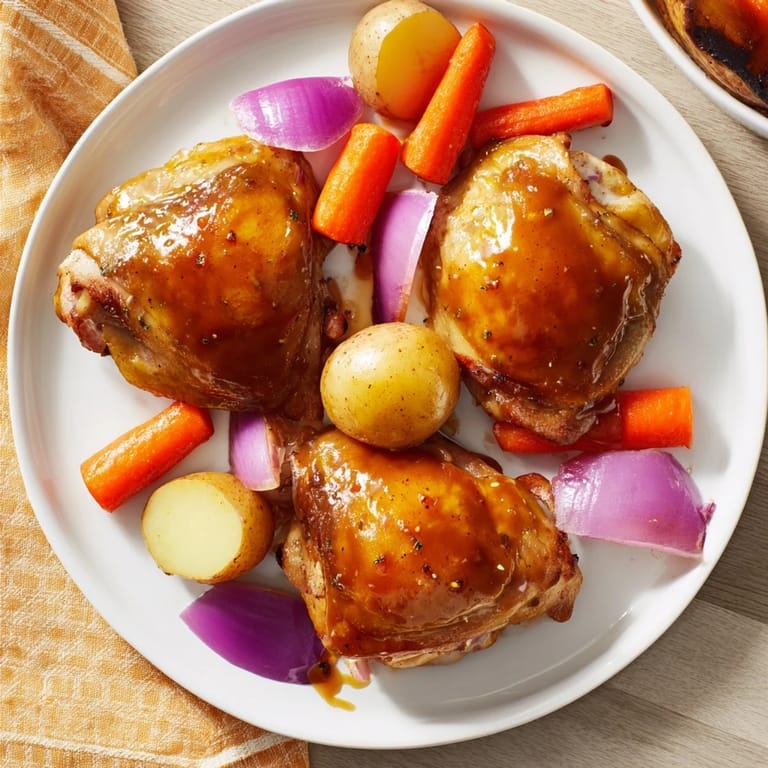
Save There's something about a sheet pan dinner that transforms a hectic Wednesday night into something almost leisurely. One autumn evening, I was rushing through dinner prep when I grabbed bone-in chicken thighs and thought: what if I made a glaze that was both sweet and sharp, something that would caramelize on the skin while the meat stayed impossibly juicy inside? The maple Dijon combination clicked immediately—it had the depth I wanted without fussiness. That one pan has become my go-to whenever I need something that feels like it took hours but honestly takes less than an hour start to finish.
I remember cooking this for my neighbor one Sunday when she mentioned feeling stuck in a dinner rut. Within fifty minutes, we had golden thighs and roasted vegetables filling the kitchen with this incredible savory-sweet aroma, and she came back the next week asking if I'd teach her. Now it's her weeknight staple too, which is the highest compliment a recipe can get.
Ingredients
- Bone-in, skin-on chicken thighs (8 pieces, about 1.2 kg / 2.5 lbs): These are your foundation—the bone keeps them moist and the skin gets gorgeously crisp when you don't skimp on heat.
- Kosher salt and freshly ground black pepper (1/2 tsp each): Season generously both sides; this is where flavor starts.
- Pure maple syrup (1/4 cup): Use real maple syrup, not the pancake kind—it has a deeper, more subtle sweetness that doesn't cloy.
- Dijon mustard (3 tbsp): This is the secret sharpness that keeps the glaze from being one-note sweet.
- Olive oil (2 tbsp): Helps the glaze coat evenly and gives the vegetables a silky finish.
- Apple cider vinegar (2 tbsp): A small amount of acid brightens everything and helps balance the maple's richness.
- Garlic (2 cloves, minced): Raw garlic adds bite; don't skip this.
- Fresh thyme (1 tbsp, or 1 tsp dried): Fresh is noticeably better here, but dried works when that's what you have.
- Smoked paprika (1/2 tsp): A quiet whisper of smoke that makes people ask what your secret is.
- Baby potatoes (400 g / 14 oz, halved): They get tender and slightly caramelized; quartering works if yours are large.
- Carrots (250 g / 9 oz, cut into 2-inch pieces): Cut them uniform so everything finishes at the same time.
- Red onion (1, cut into wedges): The sharp bite mellows as it roasts, becoming almost sweet.
Tired of Takeout? 🥡
Get 10 meals you can make faster than delivery arrives. Seriously.
One email. No spam. Unsubscribe anytime.
Instructions
- Heat your oven and prepare the pan:
- Preheat to 220°C (425°F) and line a large baking sheet with parchment paper or foil. This temperature is high enough to caramelize the skin quickly but not so hot that the vegetables scorch before the chicken cooks through.
- Dry and season the chicken:
- Pat each thigh dry with paper towels—this step is the difference between crispy skin and steamed skin. Season both sides generously with salt and pepper, getting some under the skin if you can.
- Make the glaze:
- Whisk together maple syrup, Dijon mustard, olive oil, apple cider vinegar, minced garlic, thyme, and smoked paprika in a small bowl. The mixture should smell balanced—if it smells too sweet, you haven't whisked in enough mustard.
- Prep the vegetables:
- Toss potatoes, carrots, and red onion on the sheet pan with a light drizzle of olive oil, salt, and pepper, spreading them in a single layer. They'll cook through in about thirty-five minutes and caramelize on the edges.
- Arrange and glaze the chicken:
- Nestle the chicken thighs skin-side up among the vegetables, then brush each piece generously with the glaze, reserving about two tablespoons for later. The glaze should be glossy and coat the skin completely.
- Roast in two stages:
- After thirty minutes at 220°C, remove the pan carefully (it will be hot and the vegetables will be starting to color). Brush the chicken with the reserved glaze and return it to the oven for five to ten more minutes, watching until the skin darkens to a deep golden brown and the internal temperature reaches 74°C (165°F) at the thickest part of the thigh.
- Rest before serving:
- Let the pan sit for five minutes—this allows the juices to redistribute back into the meat, keeping everything tender. Garnish with extra thyme leaves if you like the visual flourish.
 Save
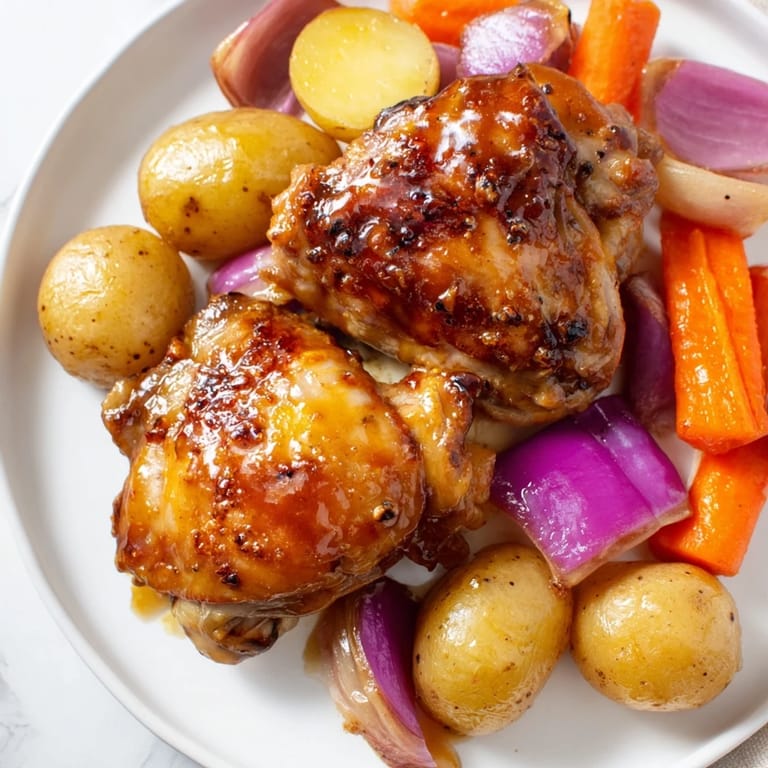
Save There was a moment during dinner when everyone stopped talking and just listened to themselves eating—the sound of forks on plates, the little satisfied pauses. That's when you know a simple dinner has become something people actually wanted, not just something they needed to eat.
Why This Works as a Weeknight Dinner
The beauty of this recipe is that it requires almost no active cooking time once everything hits the oven. You're not standing over the stove basting or adjusting heat; you're simply waiting for caramelization to happen naturally. The vegetables roast alongside the chicken and absorb all that savory maple-glazed goodness that drips from above, so you're building layers of flavor without any extra steps.
Variations and Swaps
I've made this a hundred different ways depending on what's in the crisper drawer or what I'm craving. Sweet potatoes add an earthiness that pairs beautifully with the maple, and Brussels sprouts—halved and tossed in—develop these caramelized, almost nutty edges. Parsnips are wonderful if you want something with a bit more delicate sweetness. Even winter squash works if you cut it into chunks and add a few extra minutes to the roast time. The maple-Dijon glaze is flexible enough that none of these changes throw off the balance.
Wine Pairing and Serving Suggestions
A crisp Chardonnay or dry Riesling both work beautifully—the acidity cuts through the richness of the skin and complements the maple without fighting it. If you're not drinking wine, a sparkling cider does the same job. Serve everything right from the sheet pan if you're feeling casual, or transfer to a platter for something slightly more polished. A simple green salad on the side is all you need; the glaze and vegetables are already quite rich.
- Leftovers shred beautifully and make incredible sandwiches or grain bowls the next day.
- If you have extra glaze, save it in the refrigerator and use it on pork chops or even roasted cauliflower.
- This dinner works just as well for company as it does for a quiet night at home.
 Save
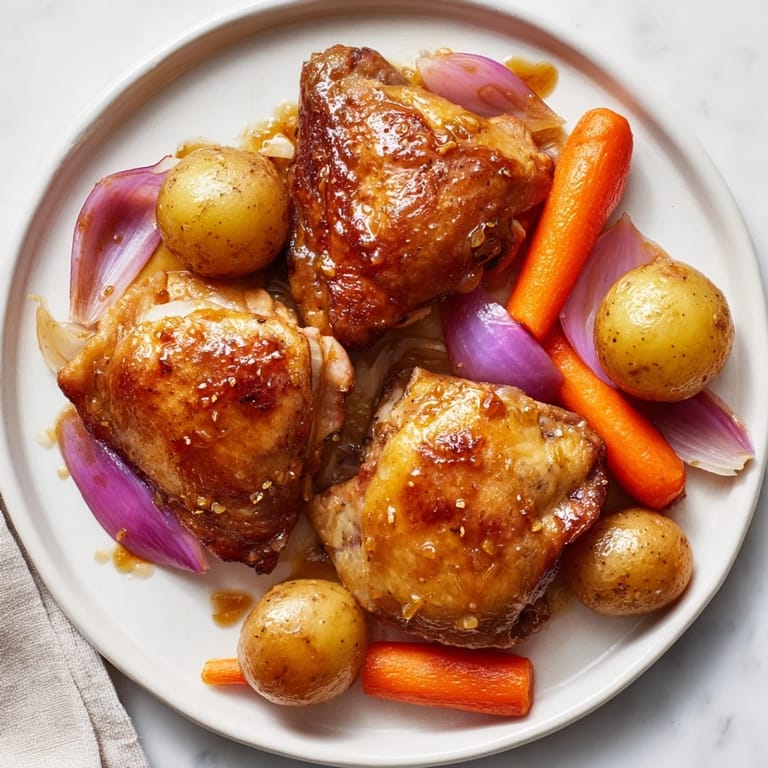
Save This is the kind of dinner that quietly becomes a favorite without you planning for it to—one that shows up again and again because it simply works. Make it once, and you'll understand why.
Recipe FAQ Section
- → What type of chicken works best for this dish?
Bone-in, skin-on chicken thighs deliver the juiciest, most flavorful results, though boneless can be used with a shorter cooking time.
- → Can I substitute the vegetables used here?
Yes, sweet potatoes, parsnips, or Brussels sprouts make excellent alternatives to baby potatoes and carrots.
- → How do I ensure the glaze caramelizes well?
Brushing the thighs with the maple Dijon glaze before roasting and again near the end promotes a rich, caramelized finish.
- → What seasonings are included in the glaze?
The glaze combines maple syrup, Dijon mustard, olive oil, apple cider vinegar, minced garlic, fresh thyme, and smoked paprika for balanced sweetness and depth.
- → How long should the chicken rest after roasting?
Allow the thighs to rest for about 5 minutes after roasting to help juices redistribute for tender results.