 Save
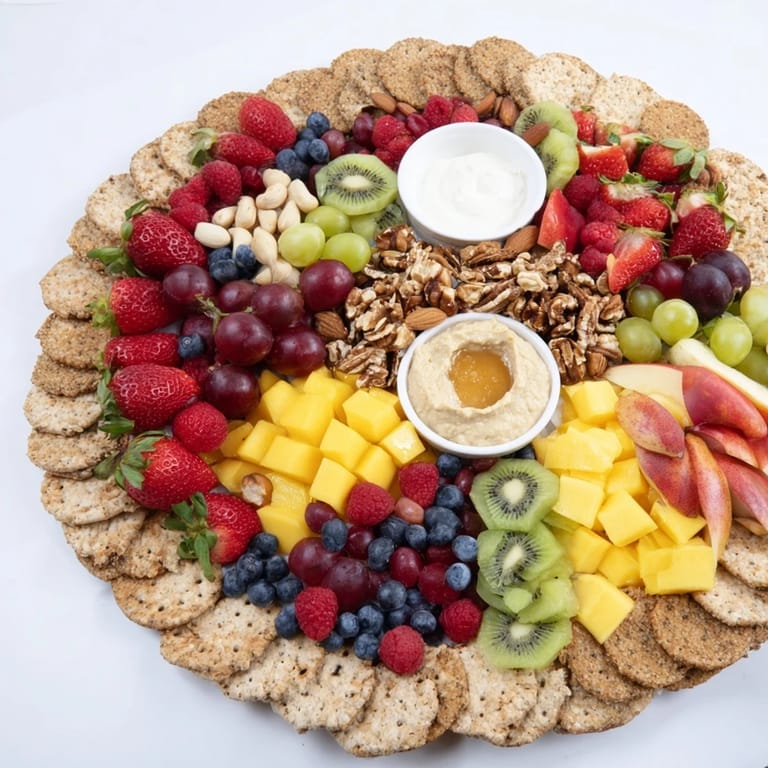
Save There's something about watching a room full of people lean in toward a platter that just feels like magic. I discovered "The Hidden Oasis" by accident at a dinner party where I'd forgotten to prep a proper appetizer and had to improvise with whatever colorful things I could find in my kitchen. The moment I arranged those crackers in a golden ring around the vibrant fruit center, my friend caught her breath and said it looked like something from a magazine. That's when I realized this wasn't just an appetizer—it was an edible centerpiece that people actually wanted to eat.
I made this for my sister's book club last spring, and I watched it become the thing everyone remembered about the evening—not the wine, not the conversation, just the platter. One woman asked if she could take a photo of it before eating, and another asked for the recipe before she'd even tried a bite. There's real power in presenting food that's both beautiful and approachable, and this dish does both without pretension.
Ingredients
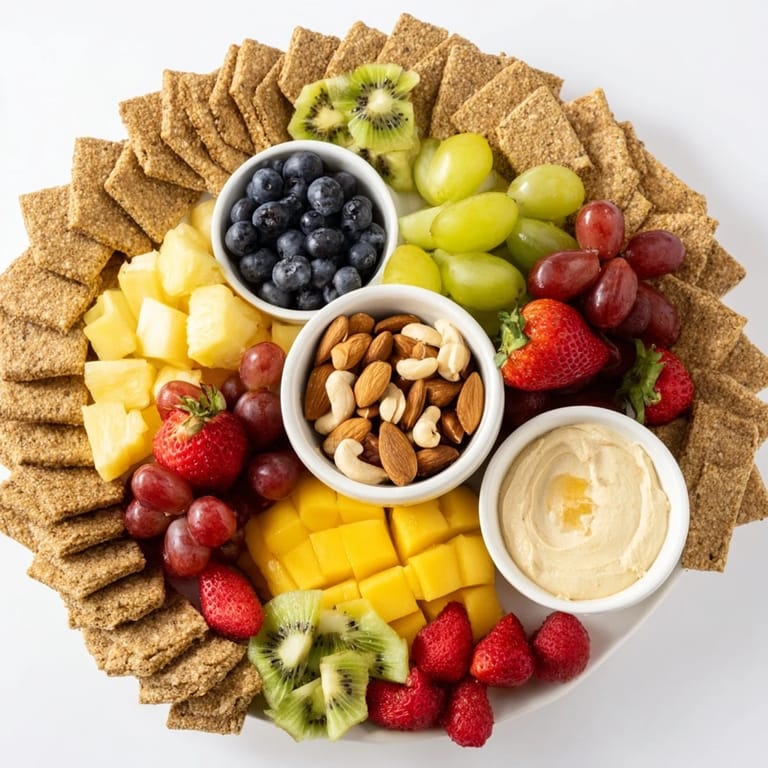
- Assorted dry crackers (150 g): Mix water crackers, multigrain, and rye for a textural contrast that keeps things interesting—they're your golden frame that holds everything together.
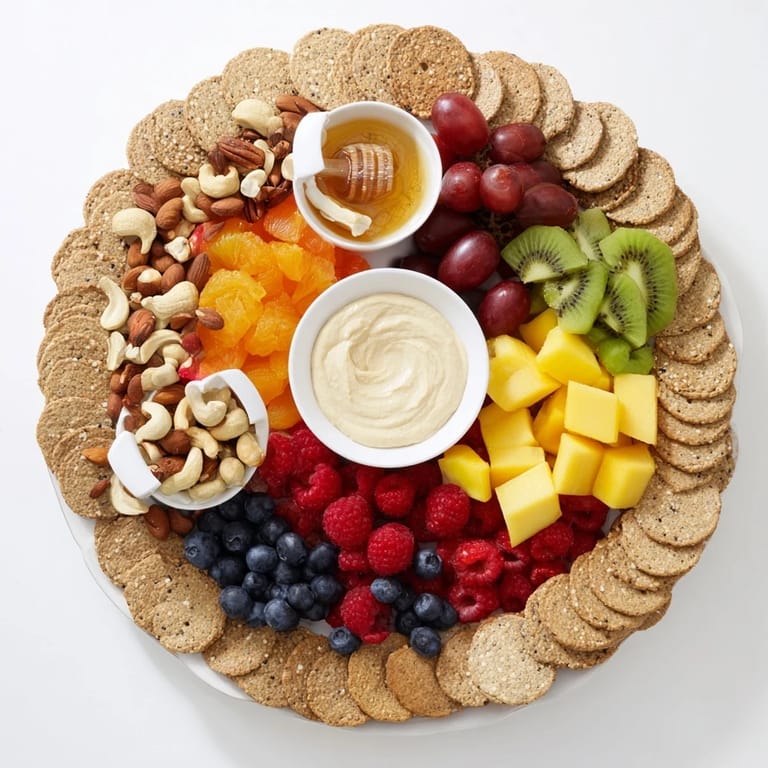
- Mixed roasted nuts (100 g): Almonds, cashews, and pecans add a subtle crunch and earthiness that bridges the gap between the crisp crackers and juicy fruit.
- Seedless grapes (1 cup): They stay firm and fresh-tasting longer than most fruits, making them your reliable anchor for color.
- Fresh berries (1 cup): Strawberries, blueberries, and raspberries bring jewel tones and a delicate sweetness that feels indulgent.
- Fresh kiwi (1 large): Slice it just before serving to keep that bright green color from turning dull and the flesh from weeping liquid.
- Fresh mango (1 small): The natural sweetness and golden color add warmth to the platter and bring a subtle tropical note.
- Pineapple chunks (1/2 cup): Their tanginess cuts through the richness of the dips and adds another textural moment.
- Creamy hummus (100 g): Use a really good quality or make your own—store-bought versions vary wildly in texture and flavor.
- Greek yogurt dip or tzatziki (100 g): This is your cool, creamy counterpoint and works with everything on the platter.
- Honey or fruit compote (100 g): Drizzle some over the dip itself or keep it on the side for dipping—it's the sweet finale.
Tired of Takeout? 🥡
Get 10 meals you can make faster than delivery arrives. Seriously.
One email. No spam. Unsubscribe anytime.
Instructions
- Build your golden frame:
- Arrange the crackers around the edge of your largest platter, standing them up or fanning them out like you're creating an actual frame. This isn't just functional—it's the first thing your eyes land on, so take a moment to make it feel intentional and inviting.
- Tuck in the nuts:
- Nestle the roasted nuts between and around the crackers, filling any gaps so you've created a complete, sturdy ring. You're essentially building a protective circle around the precious center.
- Compose the colorful heart:
- Arrange the fruits in the center in a casual but thoughtful way, alternating colors and shapes so nothing blends together. Step back and look at it—if you see patches of the same color too close together, shuffle things around until it feels balanced and alive.
- Set your dip stations:
- Place small bowls with the hummus, yogurt dip, and honey in the middle of the fruit section, nestling them gently so they feel like part of the whole composition rather than afterthoughts. Position them where they won't tip over as people reach in.
- Finish and serve:
- Give everything one final look, wipe any juice splashes from the platter's rim, and serve immediately for maximum crispness. If you need to prep ahead, cover it loosely and refrigerate for up to an hour, but let it sit at room temperature for ten minutes before serving so the flavors wake up.
 Save
Save The magic moment came when my five-year-old nephew reached for a cracker instead of going straight for the fruit, the way most kids do. He liked building little bites for himself—a cracker, a nut, a grape, a dip—and suddenly this "adult" appetizer became something he was just as excited about as the cookies for dessert. That's when I understood this dish works because it respects the person eating it enough to offer choices.
The Art of Visual Balance
The reason this platter stops people in their tracks is the color contrast and proportion. You want roughly equal visual weight around the edges—if one side has all the nuts bunched together and the other side has scattered crackers, your eye feels confused. Spend thirty seconds really looking at your work before you put it on the table. A platter that catches light well becomes the star of the meal, and it costs you nothing except intention.
Adapting for Your Crowd
I've learned to ask people about allergies ahead of time, but I've also learned that this format is flexible enough to swap almost anything. Swap the nuts for seeds if there are allergies in the room. Swap berries for dried apricots if fresh fruit isn't in season. Use a plant-based yogurt and maple syrup if you're cooking for vegans. The structure stays the same, but the dish becomes personal to whoever's sitting around your table.
Timing and Temperature
The only real enemy of this platter is time and heat. Room-temperature fruit softens faster than you'd expect, and warm crackers lose their snap. I've learned to assemble this as close to serving time as possible, keep it cool until the last moment, and if I'm worried about it sitting out at a party, I build it in two batches.
- Prep all your fruits and nuts in separate containers ahead of time so final assembly is just arranging and takes five minutes flat.
- If it's warm outside or you're serving this outdoors, nestle the platter on a bed of ice to keep everything crisp and cold.
- Tell your guests it's best eaten within the first hour—not because it spoils, but because that's when everything is at its textural best.
 Save
Save This is the kind of recipe that reminds you that sometimes the most impressive meals are the ones that let other people relax and enjoy. Make it once and it becomes your secret weapon for every gathering that matters.
Recipe FAQ Section
- → What types of crackers work best for this platter?
Assorted dry crackers such as water crackers, multigrain, and rye provide a variety of textures and flavors that complement the nuts and fruits.
- → Can the nuts be substituted or omitted?
Yes, you can substitute with other roasted nuts or omit them if there are allergy concerns. Seeds could also be a crunchy alternative.
- → How should the fruits be prepared for the best presentation?
Wash and dry fruits thoroughly. Slice kiwi and mango into bite-sized pieces, while keeping grapes whole and arranging berries to add color variety in the center.
- → Are there vegan-friendly options for the dips?
Use plant-based yogurt instead of Greek yogurt dip and replace honey with maple syrup or fruit compote to keep dips vegan.
- → How long can the platter be prepared in advance?
It can be assembled and refrigerated for up to 1 hour before serving to maintain freshness and texture.