 Save
Save I discovered harissa paste on a Tuesday afternoon at a spice market tucked behind an old library, and I couldn't resist buying a jar just to see what would happen. That evening, I tossed it into a quick tomato sauce with some chickpeas I had lingering in the pantry, and the whole kitchen filled with this warm, complex heat that felt both exotic and strangely comforting. My partner came home to the smell and asked what smelled so good, and I realized I'd stumbled onto something that would become a weeknight staple. Now whenever I make this, it feels like that small moment of culinary curiosity turned into something I actually crave.
I made this for a friend who'd just moved into a new apartment with barely any furniture, and we ate it straight from the pot standing in her kitchen, talking for hours about fresh starts and taking chances. There was something about the spice and warmth that loosened us both up, and by the end of the meal, she was already planning to make it herself. Food like this has a way of becoming the memory itself, you know?
Ingredients
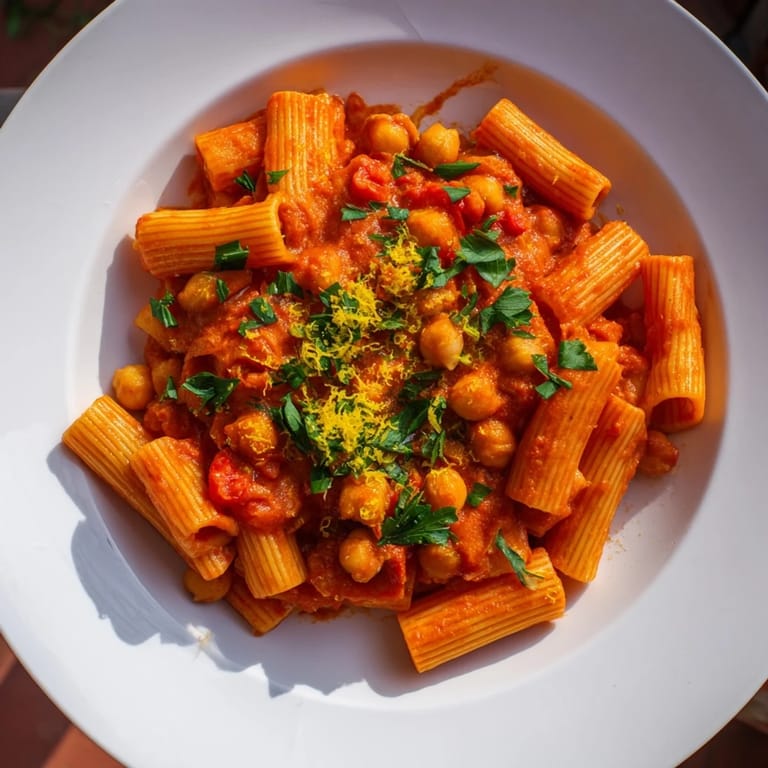
- Pasta (350 g): Short shapes like penne or rigatoni work best because the sauce clings to them, but honestly, use whatever you have—the spice carries either way.
- Olive oil (2 tbsp): Good quality makes a difference here since it's one of the few fats holding everything together.
- Onion (1 medium): Take your time chopping it fine so it softens completely and becomes almost invisible in the sauce.
- Garlic (3 cloves): Mince it small and add it to the oil before the harissa so it becomes fragrant without burning.
- Harissa paste (2 tbsp): This is your backbone, so taste it first—some brands run hotter than others, and you can always add more.
- Ground cumin (1 tsp) and smoked paprika (1/2 tsp): These warm spices balance the heat and add earthiness that makes the whole dish feel intentional.
- Canned diced tomatoes (400 g): Don't bother with fresh here; the can is actually better because the tomatoes have already broken down and released their juice.
- Chickpeas (2 cans, drained and rinsed): Rinsing them removes the can liquid and excess starch, which keeps the sauce cleaner and the texture lighter.
- Vegetable broth or water (1/2 cup): This gives the sauce body without overwhelming it—you're building layers, not making soup.
- Lemon zest and juice (1 lemon): This hits at the very end and wakes everything up, turning a good sauce into something memorable.
- Fresh parsley or cilantro (2 tbsp): The herbs are not just garnish here; they cut through the richness and add brightness that feels necessary.
- Feta cheese (optional): Crumbled feta adds a salty, tangy contrast that plays beautifully against the spice, but the dish works perfectly without it.
Tired of Takeout? 🥡
Get 10 meals you can make faster than delivery arrives. Seriously.
One email. No spam. Unsubscribe anytime.
Instructions
- Get the water boiling:
- Fill a large pot with water, salt it well (it should taste like the sea), and bring it to a rolling boil. Don't rush this step because good pasta starts with hot water.
- Build the base:
- While the water heats, warm olive oil in a skillet over medium heat and add your chopped onion. Let it soften slowly for 4–5 minutes, stirring occasionally—this is where patience pays off because the sweetness it develops becomes the foundation for everything else.
- Bloom the spices:
- Once the onion is translucent, add the minced garlic, harissa, cumin, and smoked paprika all at once and stir constantly for about a minute. You'll smell it come alive, which is your signal that the raw paste has opened up into something warm and complex.
- Cook the pasta:
- By now, the water should be ready, so add your pasta and cook it according to the package instructions, stirring occasionally to prevent sticking. Reserve 1/2 cup of the starchy pasta water before draining—this liquid is liquid gold for loosening the final sauce.
- Build the sauce:
- Pour the canned tomatoes, drained chickpeas, and vegetable broth into the skillet with your spiced onions. Stir everything together, bring it to a gentle simmer, then cover and let it bubble quietly for 10–12 minutes, stirring every few minutes so nothing sticks to the bottom.
- Bring it together:
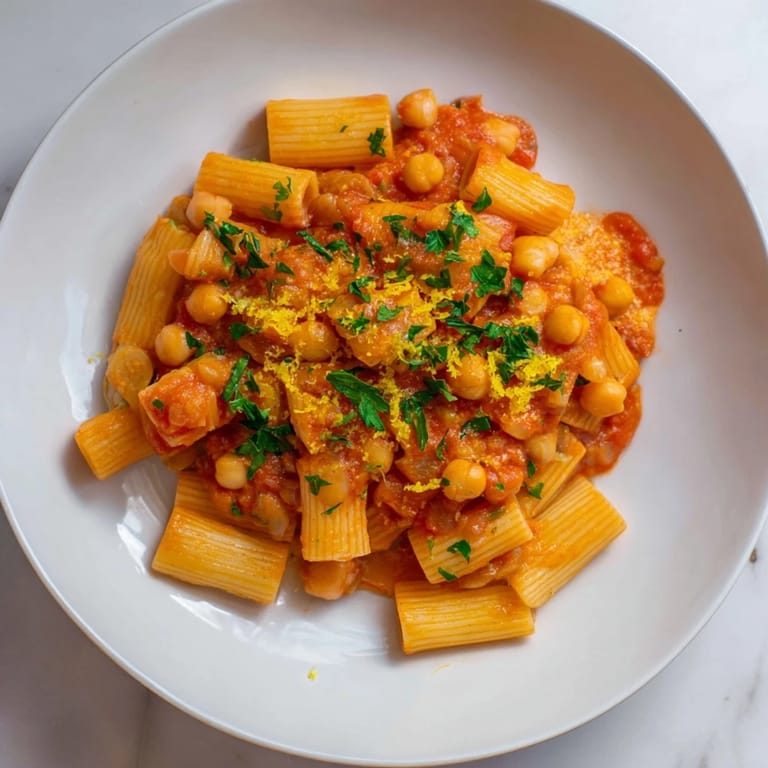
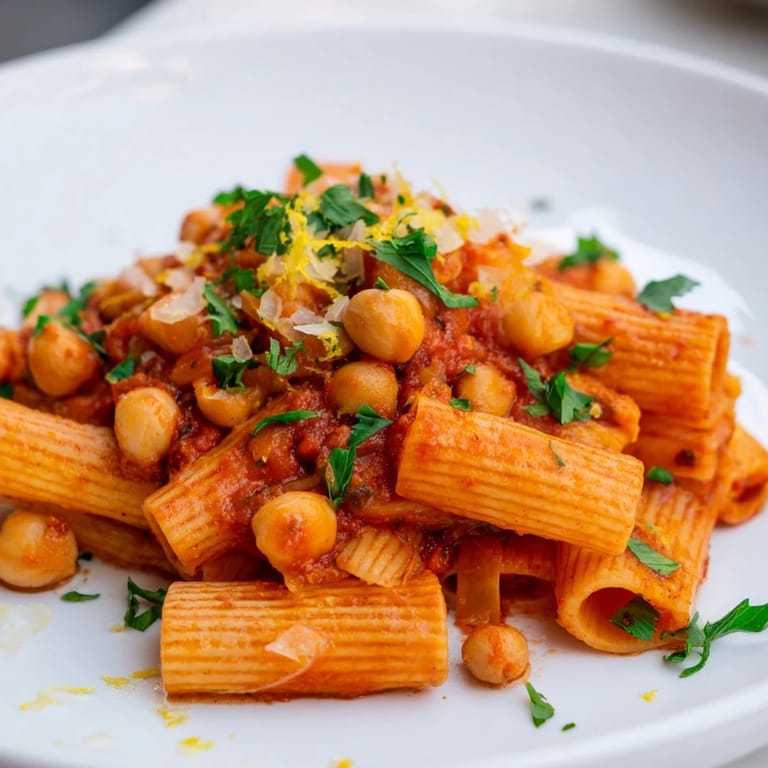
- When the pasta is drained and the sauce is thick and fragrant, add the pasta to the skillet and toss everything together to coat. If it looks too tight, splash in some of that reserved pasta water a little at a time until you get a sauce that clings to the noodles without pooling at the bottom.
- Finish with brightness:
- Remove from heat, then stir in the lemon zest, lemon juice, and fresh herbs. Taste it and adjust salt, pepper, or even a touch more lemon if something feels flat—this final step is when you make it yours.
 Save
Save There was a morning I made this leftover and had it for breakfast, cold straight from the fridge, and it was just as good as the night before—maybe better because the flavors had kept developing. That's when I knew this wasn't just a weeknight dinner; it was the kind of recipe that sticks around because it works in almost any situation.
How to Make It Your Own
The beauty of this dish is that it handles changes gracefully. Swap in white beans or cannellini beans if that's what you have, roast some vegetables like zucchini or bell peppers on the side, or even throw them right into the sauce if you want extra texture. I've made it with fresh spinach wilted in at the last second, and with roasted chickpeas stirred in for extra crunch. The harissa-tomato base is forgiving enough that your additions will feel natural rather than desperate.
Pairing and Serving Suggestions
This pasta feels best served family-style, right out of the skillet if you're cooking for people you love, or portioned into bowls if you're keeping it for yourself through the week. A crisp white wine or chilled rosé cuts through the spice beautifully, but honestly, cold water is just as satisfying. If you want something on the side, a simple green salad with lemon vinaigrette or crusty bread to soak up the last bits of sauce both feel right without being necessary.
Storage and Make-Ahead Tips
This keeps in the refrigerator for three or four days, and the sauce actually gets richer as it sits, which means it's even better reheated. You can make the sauce entirely ahead of time and cook the pasta fresh when you're ready to eat, which takes the pressure off if you're planning dinner for a busy evening. Just warm the sauce gently in a pot while your pasta cooks, and you'll have dinner on the table in under 20 minutes.
- If the sauce thickens too much in storage, loosen it with a splash of broth or water when you reheat.
- Don't freeze this dish because the pasta gets mushy when thawed, but the sauce alone freezes beautifully for up to three months.
- Taste it again before serving because salt and spice levels can shift slightly, and a quick adjustment takes it from good to perfect.
 Save
Save Every time I make this, I remember that spice market and how one impulse purchase turned into a dish I'd make again and again. That's the kind of recipe worth keeping close.
Recipe FAQ Section
- → What type of pasta works best for this dish?
Short pasta like penne, rigatoni, or fusilli holds the sauce well and provides a great texture contrast.
- → Can I adjust the spiciness level?
Yes, increase or reduce the harissa paste according to your preferred heat intensity.
- → Is there a substitute for chickpeas?
White beans or roasted vegetables make excellent alternatives for a similar hearty texture.
- → How can I make the sauce creamier without dairy?
Use a splash of reserved pasta water to loosen and slightly thicken the sauce without adding dairy.
- → What herbs complement this dish best?
Fresh parsley or cilantro bring a bright, fresh note that balances the rich and spicy flavors.