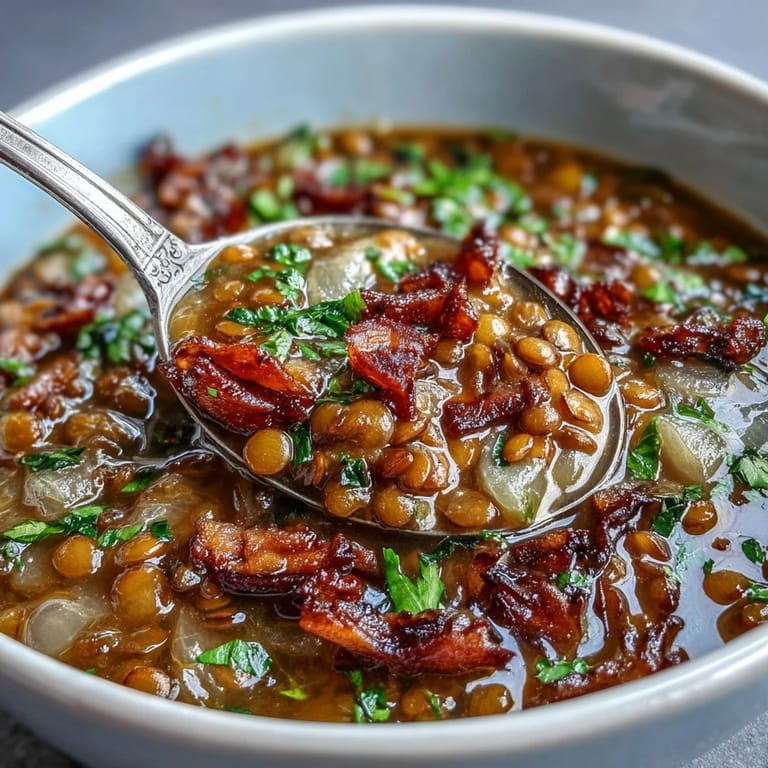
 Save
Save My neighbor stopped by one October afternoon with a bag of fresh carrots from her garden, and somehow we ended up talking about the kind of food that makes you want to sit at the kitchen table for hours. She mentioned a stew her grandmother made every fall—nothing fancy, just ham and lentils simmered until everything became this golden, comforting whole. I went home that evening, pulled out my biggest pot, and discovered that magic doesn't require complicated techniques, just good ingredients and patience.
The first time I made this for my book club, I was genuinely nervous—lentils can be unpredictable, and I'd heard horror stories about them turning to mush. But something about the combination of onions, carrots, and that smoky ham created such a rich foundation that even the lentils seemed to know what they were supposed to become. Everyone went quiet for that first spoonful, and then someone asked for the recipe before even finishing their bowl.
Ingredients
- Cooked ham, diced (250 g): Look for quality ham with minimal additives if you're sensitive to preservatives; the smokiness is what carries this entire stew, so don't skimp on flavor here.
- Dried brown or green lentils, rinsed (250 g): Rinsing removes any dust or debris, and brown lentils hold their shape better than red ones, which is exactly what you want in a stew.
- Medium onions, finely chopped (2): They break down into the broth and sweeten everything, becoming almost invisible but absolutely essential to the final flavor.
- Medium carrots, diced (2): Cut them into pieces similar in size to your lentils so they cook evenly and contribute natural sweetness throughout.
- Celery stalks, diced (2): This is the quiet hero—it doesn't announce itself but builds depth that makes people ask what's in this without being able to pinpoint it.
- Garlic cloves, minced (3): Add this after your vegetables soften so it doesn't burn and turn bitter; it awakens everything in the pot.
- Low-sodium chicken or vegetable stock (1.2 L): Use vegetable stock if you want to keep this naturally gluten-free, and always check labels for hidden additives.
- Bay leaf (1): Remove it before serving—I learned this the hard way when a guest bit into one and gave me a look I'll never forget.
- Dried thyme (1 tsp): It adds an herbaceous note that prevents the stew from tasting one-dimensional; don't leave it out thinking it won't matter.
- Smoked paprika (½ tsp): This is the secret ingredient that makes people think you've added more ham than you actually have.
- Salt and freshly ground black pepper, to taste: Taste as you go because lentils can absorb seasoning in unpredictable ways.
- Fresh parsley, chopped (2 tbsp, optional): A small handful at the end brightens everything and adds a visual lift to the bowl.
- Olive oil (1 tbsp): Just enough to coat the pot without making it greasy; it's the foundation for building those first layers of flavor.
Tired of Takeout? 🥡
Get 10 meals you can make faster than delivery arrives. Seriously.
One email. No spam. Unsubscribe anytime.
Instructions
- Start with your aromatics:
- Heat the olive oil in your pot over medium heat and add the onions, carrots, and celery—you'll know they're ready when the onions turn translucent and everything smells sweet and inviting, about 6 to 8 minutes. This isn't rushing; let them soften properly because this is where the stew's foundation gets built.
- Wake up the garlic:
- Stir in the minced garlic and let it cook for just a minute until fragrant, but not a second longer or it'll turn bitter and ruin everything. You want to smell that raw garlic energy transform into something mellower.
- Add your ham:
- Toss in the diced ham and let it warm through for about 2 minutes, stirring occasionally so it releases its smokiness into the oil. This isn't cooking the ham; it's inviting it to share its flavor with the pot.
- Bring it all together:
- Add the rinsed lentils, bay leaf, thyme, smoked paprika, stock, and a pinch of salt and pepper, then stir well and watch it all come to a boil. The kitchen will smell incredibly full and promising at this point.
- Let patience do the work:
- Reduce the heat to low, cover the pot, and simmer for 35 to 40 minutes, stirring occasionally, until the lentils are completely tender and the broth has deepened in color. You're aiming for that moment when everything tastes like it's known each other forever.
- Finish and taste:
- Remove the bay leaf, then taste the stew and adjust the seasoning because those lentils might have absorbed more salt than you expected. Sometimes it needs a crack more pepper; sometimes it needs nothing but a shower of fresh parsley.
- Serve it warm:
- Ladle into bowls, add a sprinkle of fresh parsley if you have it, and bring everyone to the table while it's still steaming.
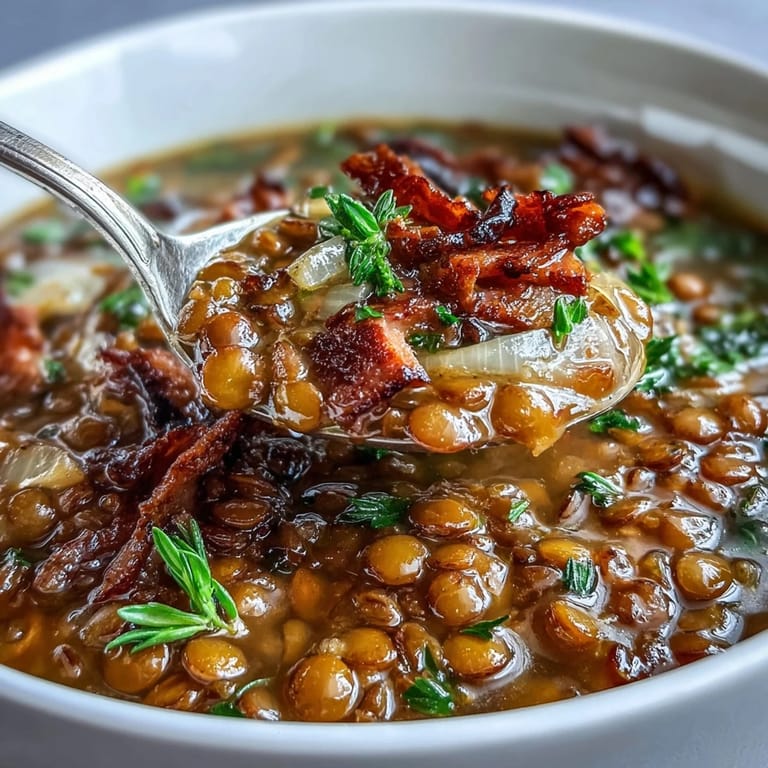 Save
Save What stays with me about this stew is how it turned into a regular thing at our house, especially as the weather got colder. My kids started asking for it by name, which felt like the highest compliment because they're usually the first to reject anything that looks remotely brown.
The Science of Building Flavor Layers
This recipe works because you're not just throwing ingredients together; you're building layers of flavor that develop and deepen as they spend time together. The initial sauté of vegetables creates a caramelized base, the garlic adds pungency that mellows into sweetness, the ham contributes smokiness, and the lentils absorb everything while adding earthiness. By the time it reaches your bowl, no single ingredient dominates—instead, they've become something unified and complete.
Why This Stew Gets Better the Next Day
There's genuine chemistry happening in your fridge overnight. The lentils continue absorbing liquid and flavors, the ham releases more of its subtle smokiness, and the spices integrate so completely that you can't taste them individually anymore. Make it on a Sunday and by Monday evening it tastes like it was meant to be that way from the start, which is why I always make extra.
Making It Your Own
The beauty of this stew is that it welcomes changes without falling apart. Some people add a splash of red wine or apple cider vinegar at the end for brightness; others throw in a diced potato for more substance. I once added kale from my garden because I had it and it was gorgeous—wilted right into the pot in the last few minutes, adding color and texture without changing the essential character of the dish.
- For a vegetarian version, skip the ham and double the garlic and thyme, or add diced smoked tofu for that smoky quality.
- Swap the lentils for split peas or barley if you want a different texture, though the cooking time might shift slightly.
- Crusty bread is non-negotiable—it's how you get every last spoonful of that golden broth.
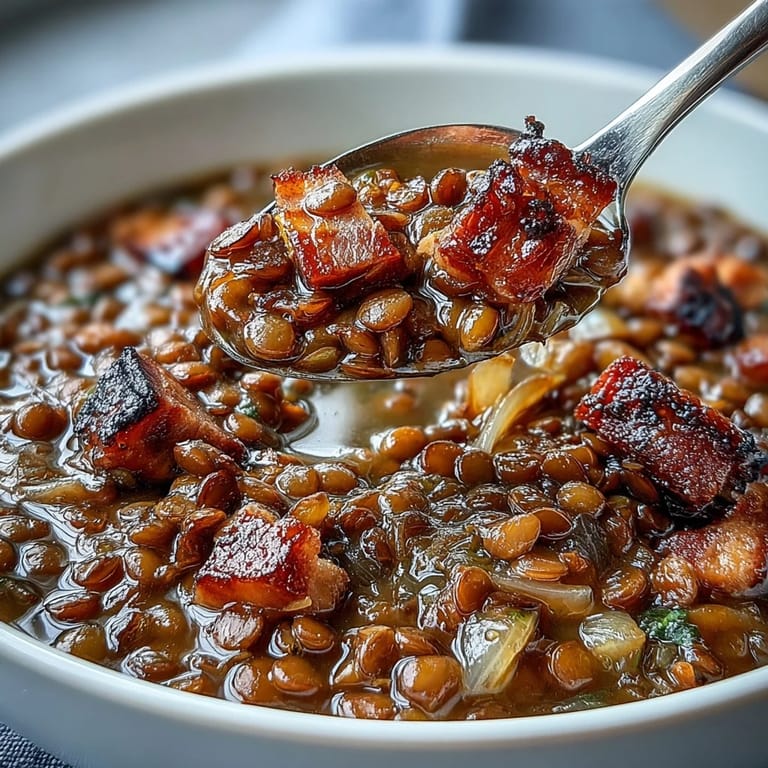 Save
Save This stew feels like home in a bowl, the kind of food that makes people linger at the table and ask for seconds without thinking. It's proof that simple ingredients, treated with respect and time, become something that tastes like love.
Recipe FAQ Section
- → Can I make this stew vegetarian?
Yes, by omitting the ham and increasing vegetables or adding smoked tofu, you can create a flavorful vegetarian version.
- → What type of lentils work best for this dish?
Brown, green, or Puy lentils are all suitable and hold their shape well during cooking.
- → How should I adjust cooking times for dried lentils?
No pre-soaking is needed; simmer lentils for 35-40 minutes until tender but not mushy.
- → Can I prepare this stew in advance?
Yes, flavors deepen the next day, making it an excellent make-ahead meal.
- → What sides complement this hearty stew?
Crusty bread or a simple green salad balance the rich and smoky elements nicely.