 Save
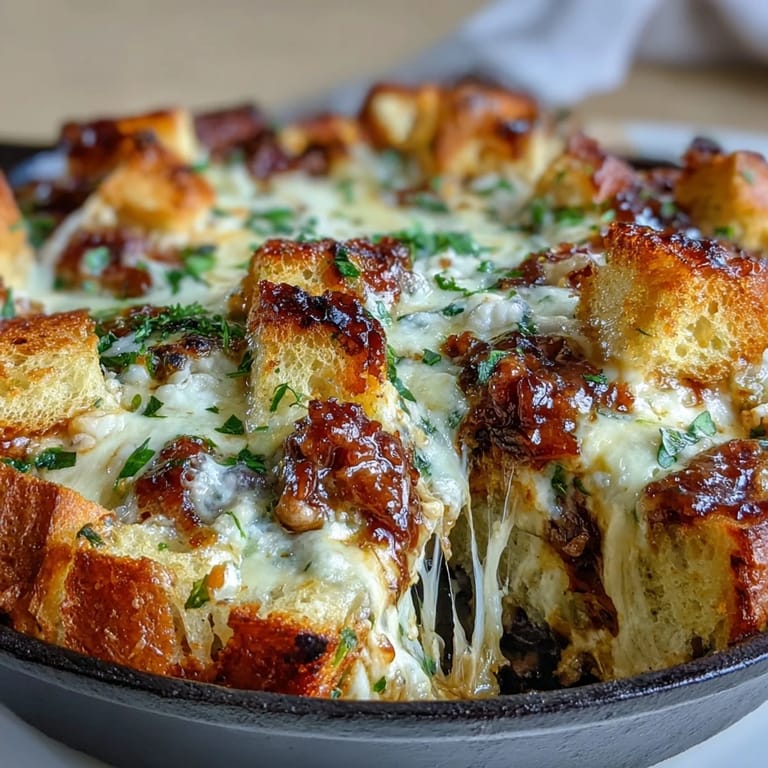
Save One weeknight, I was standing in front of my cast-iron skillet wondering how to make lasagna without the fussy layering sheets, when my partner mentioned they'd demolish anything involving garlic bread and melted cheese. That's when it hit me: why not skip the noodles entirely and build this thing with toasted bread cubes instead? The result was gloriously messy, deeply satisfying, and ready in under an hour with zero pasta-related stress.
I made this for a casual dinner party last fall, and halfway through cooking, the kitchen smelled so impossibly good that my neighbor literally knocked on the door asking if something was burning. When I opened it to show her the skillet bubbling away with golden cheese on top, she laughed and said I should just invite her to dinner next time instead of torturing her with the aroma alone. She ended up staying, and we polished off nearly the entire thing while it was still steaming.
Ingredients
- Italian bread, cut into 1-inch cubes (1 large loaf, about 400 g): Day-old bread works better than fresh because it holds its shape and toasts evenly without becoming mushy; if your bread is super soft, spread the cubes on a baking sheet and let them sit out for an hour to firm up slightly.
- Unsalted butter, melted (4 tbsp): This is your base for golden, garlicky coating, so don't skimp on quality here because the bread will taste every bit of it.
- Fresh garlic, minced (3 cloves for bread, 2 more for sauce): Mince it finely so it distributes evenly and doesn't leave harsh raw bites; I learned this the hard way by using a garlic press that left chunky pieces.
- Fresh parsley, chopped (2 tbsp): Adds brightness and color to the bread coating, though it wilts in the oven so don't worry about making it picture-perfect.
- Ground beef (1 lb / 450 g): Choose 80/20 ground beef for a balance of flavor and fat that won't leave you with a greasy sauce; Italian sausage is equally delicious if you want a spicier angle.
- Onion, finely chopped (1 small): This builds the flavor foundation of your sauce, so take the minute to dice it small rather than chunky.
- Crushed tomatoes (1 can, 15 oz / 425 g): Don't use tomato sauce here; crushed tomatoes give you better texture and control over the sauce consistency.
- Tomato paste (2 tbsp): This concentrated stuff deepens the sauce with rich tomato flavor that you can't fake with extra canned tomatoes.
- Dried oregano and basil (1 tsp and 1/2 tsp respectively): The Italian herb duo that makes this taste unmistakably like lasagna, so don't omit them thinking fresh will work the same way.
- Ricotta cheese (1 cup / 250 g): This is your creamy layer, and if it's very thick, a light stir with a fork loosens it before mixing with other ingredients.
- Grated Parmesan cheese (1/2 cup / 50 g): Quality Parmesan makes a real difference in sharpness and melt-ability, so grate it yourself if you can rather than using pre-grated.
- Large egg (1): Binds the ricotta mixture together so it doesn't separate or slide around during baking.
- Shredded mozzarella cheese (2 cups / 200 g): This is your golden, bubbly top layer, and whole milk mozzarella gives better melt than low-moisture varieties here.
Tired of Takeout? 🥡
Get 10 meals you can make faster than delivery arrives. Seriously.
One email. No spam. Unsubscribe anytime.
Instructions
- Set your oven and prep the garlic bread:
- Preheat to 375°F (190°C). In a large bowl, toss bread cubes with melted butter, minced garlic, parsley, and salt until every piece glistens and smells incredible—this step takes maybe two minutes but transforms plain bread into something special.
- Build your meat sauce:
- Heat your cast-iron skillet over medium heat, add ground beef, and break it apart with a spoon as it browns, which usually takes 5–7 minutes. Once it's no longer pink, add the onion and cook for 3–4 minutes until it softens and loses its raw edge, then add garlic and cook for just 1 minute until fragrant.
- Simmer and season:
- Stir in crushed tomatoes, tomato paste, oregano, basil, salt, and pepper, then let it bubble gently for 8–10 minutes so the flavors marry and the sauce thickens slightly. You'll know it's ready when it coats the back of a spoon and tastes balanced between savory and tangy.
- Mix your creamy cheese filling:
- In a small bowl, combine ricotta, Parmesan, egg, fresh basil if you're using it, and black pepper. Stir it until it's smooth but still has a little body to it—you don't want it soupy.
- Layer like you mean it:
- Spread half the garlic bread cubes over the meat sauce in the skillet, then dollop half the ricotta mixture over the top, then sprinkle with half the mozzarella. Repeat the layers so you end with cheese on top, which guarantees that gorgeous bubbly, golden finish.
- Bake covered, then uncover:
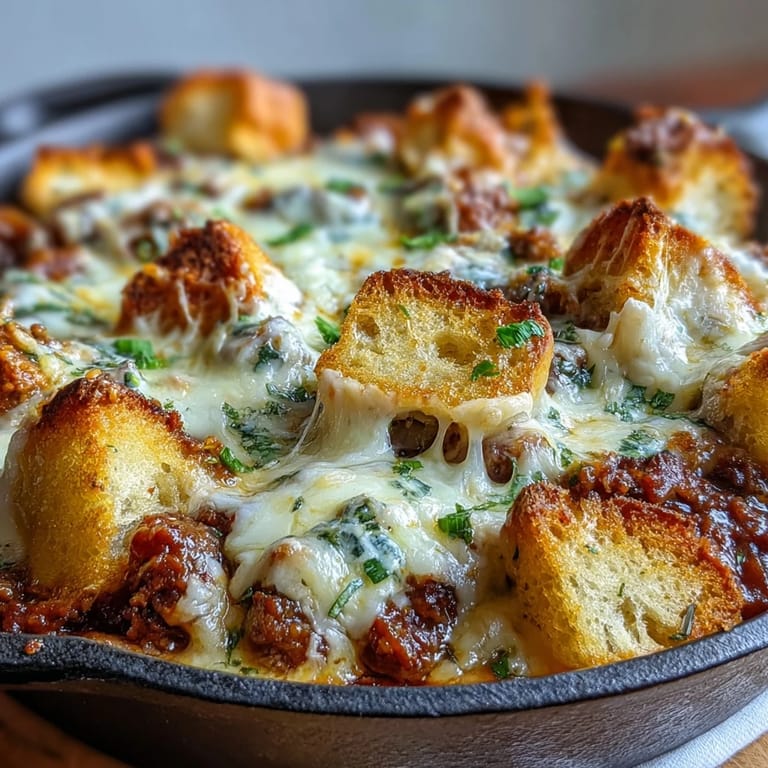
- Cover the skillet loosely with foil and bake for 20 minutes, which allows the bread to soften and everything to meld. Remove the foil and bake 10–15 more minutes until the cheese is bubbly and starting to brown at the edges, which is when you know it's done.
- Rest before serving:
- Let it sit for 10 minutes out of the oven—I know this is hard, but it lets everything set so you actually get clean portions instead of a delicious avalanche. Finish with fresh parsley or basil if the mood strikes.
 Save
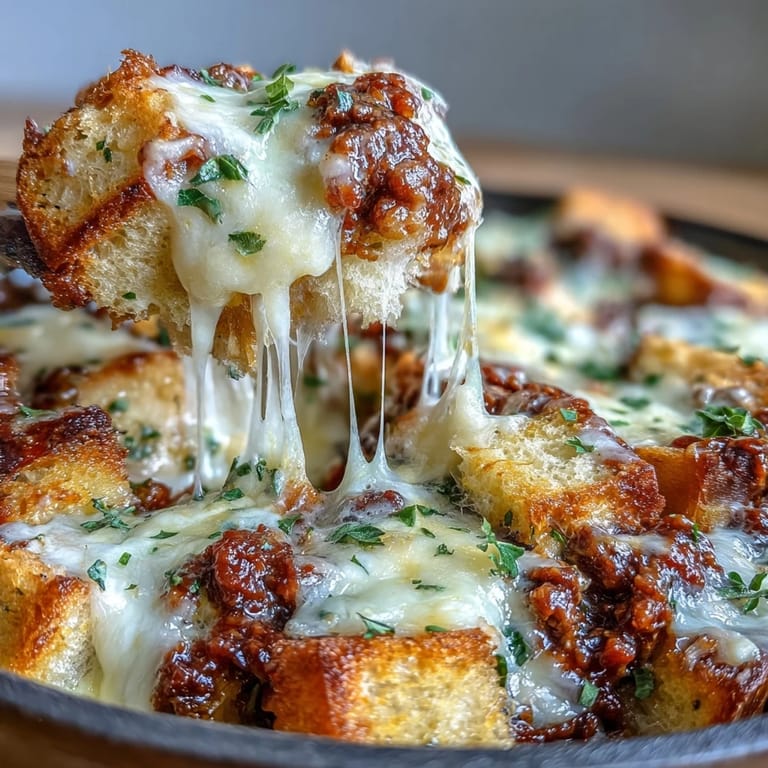
Save What struck me most about this dish wasn't how quickly it came together, but how it turned an ordinary Tuesday dinner into something people asked me to make again and again. There's something about serving food in the skillet it was baked in that makes even a simple meal feel like you've done something intentional and special.
Why Cast-Iron Changes Everything
A cast-iron skillet does more here than just cook; it distributes heat evenly so the bottom doesn't scorch while the top stays pale, and it goes from stovetop to oven without a second thought. The seasoned surface also imparts a subtle richness that you don't get from other pans, and honestly, bringing the whole thing to the table still bubbling hot makes everyone feel like they're getting restaurant-quality food from your home kitchen.
Customizing Without Losing the Soul
One night I substituted ground turkey because that's what I had, and it was genuinely just as good—leaner, maybe, but still deeply satisfying. If you're vegetarian, crumbled plant-based meat works surprisingly well, and a handful of mushrooms cooked down with the onions adds earthy body that makes the meat go almost unnoticed. For heat lovers, a pinch of red pepper flakes stirred into the sauce builds warmth without overpowering the cheese and herbs.
Pairing and Storage Wisdom
This dish practically begs for a crisp green salad on the side—something bitter like arugula or peppery like watercress cuts through the richness in the best possible way. A glass of Chianti or any light red wine makes the whole meal feel intentional, and honestly, leftovers are excellent straight from the fridge or reheated gently in a 325°F oven until warm through. Store it covered in the fridge for up to three days, and it actually tastes better on day two once all the flavors have settled into one another.
- Don't try to reheat this in the microwave or the bread gets rubbery and the cheese separates.
- If you're making this ahead, assemble everything but don't bake until you're ready to eat.
- Freeze unbaked for up to a month, then add 10 extra minutes to the baking time from frozen.
 Save
Save This is the kind of dish that quietly becomes a staple because it asks so little of you but delivers so much comfort and joy. Make it once and you'll understand why it's been requested at every gathering since.
Recipe FAQ Section
- → Can I substitute the ground beef in this dish?
Yes, ground turkey or vegetarian crumbles are great alternatives for a lighter or meatless version, maintaining flavor and texture in the skillet.
- → What type of bread works best for the garlic bread cubes?
Italian bread with a sturdy crust is ideal, as it holds up well when baked and blends perfectly with the garlic butter coating.
- → How can I add extra heat to the meat sauce?
Incorporate a pinch of red pepper flakes into the sauce during cooking for a subtle spicy kick that complements the savory flavors.
- → Is it necessary to use a cast-iron skillet?
While a cast-iron skillet provides even heating and a nice crust, any oven-safe skillet or baking dish can be used as a substitute.
- → Can I prepare this dish ahead of time?
Yes, you can assemble the layers in the skillet and refrigerate it before baking. Bring to room temperature before placing it in the oven for even cooking.