 Save
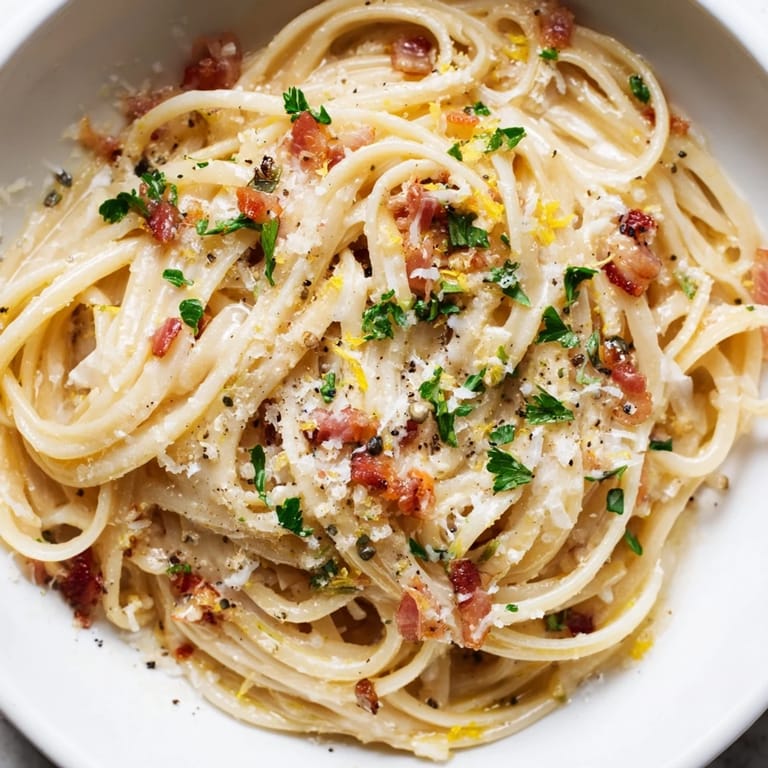
Save I discovered this pasta by accident one weeknight when I'd promised dinner but had no cream in the house. Bacon was sizzling, garlic was calling from the pantry, and somehow I remembered that pasta water holds starch like liquid gold. Twenty minutes later, my partner was asking for seconds, amazed that something so silky could come together without a splash of cream. That's when I realized the best recipes aren't always the complicated ones—they're the ones that surprise you with how simple they actually are.
I made this for my friend who had just moved into her first apartment and was convinced she couldn't cook. Watching her plate it up and taste it—that moment her face lit up—told me everything. She texted me the next day saying she'd made it three times already. Now it's her go-to when she wants to impress someone or just needs to feel capable in her kitchen.
Ingredients
- Linguine (400g): The thin strands catch every drop of sauce and cook in about 10 minutes, so you're never waiting around.
- Bacon (200g, diced): Buy it in a chunk if you can and dice it yourself—the pieces will be more substantial and crisp better than pre-cut bacon.
- Garlic (3 cloves, finely chopped): Garlic at low heat becomes sweet and gentle instead of harsh; this is where patience pays off.
- Olive oil (2 tbsp): Use something you actually like to taste—this isn't the place for your cheapest bottle.
- Black pepper (1/2 tsp, freshly ground): Crack it fresh from the mill; pre-ground tastes like dust by comparison.
- Red pepper flakes (1/4 tsp, optional): A whisper of heat makes everything taste more intentional.
- Reserved pasta water (1/2 cup): This starchy liquid is the secret to the sauce—don't skip saving it.
- Parmesan cheese (40g, grated): Freshly grated melts silkily into the sauce; pre-shredded cheese with its anti-caking powder will make the sauce grainy.
- Fresh parsley (2 tbsp, chopped): It brightens everything at the last moment and makes the dish look intentional.
- Lemon zest (optional): Just a whisper transforms this from good to something you'll think about later.
Tired of Takeout? 🥡
Get 10 meals you can make faster than delivery arrives. Seriously.
One email. No spam. Unsubscribe anytime.
Instructions
- Salt the water generously:
- Fill a large pot and salt it until it tastes like the sea—you're seasoning the pasta from the inside out. Bring it to a rolling boil before the pasta goes in.
- Cook the linguine until al dente:
- Follow the package time but taste it a minute before; it should have a slight resistance when you bite it. The moment it's ready, fish out 1/2 cup of the cooking water (use a mug or measuring cup) before you drain.
- Crisp the bacon slowly:
- Medium heat lets the fat render gradually and the edges brown without burning. Stir it occasionally—you're looking for golden, crackling pieces that make a sound when you bite them.
- Coax out the garlic's sweetness:
- Lower the heat and add the garlic and pepper to the bacon fat. Let it toast for just a minute, swirling gently—you want fragrance, not browning.
- Bring it all together:
- Add the drained linguine directly to the warm skillet with the bacon and garlic. Pour in a splash of pasta water and toss everything constantly, watching as the starchy water transforms into something creamy and silky. If it looks dry, add more water a splash at a time.
- Finish with Parmesan while it's warm:
- Take the skillet off the heat, add the cheese, and toss until it melts into the sauce. The heat from the pasta will do the work—you don't need to reheat it.
- Taste and adjust:
- Add the parsley, taste for salt and pepper, and brighten it with lemon zest if you have it. This last minute is where you make it yours.
 Save
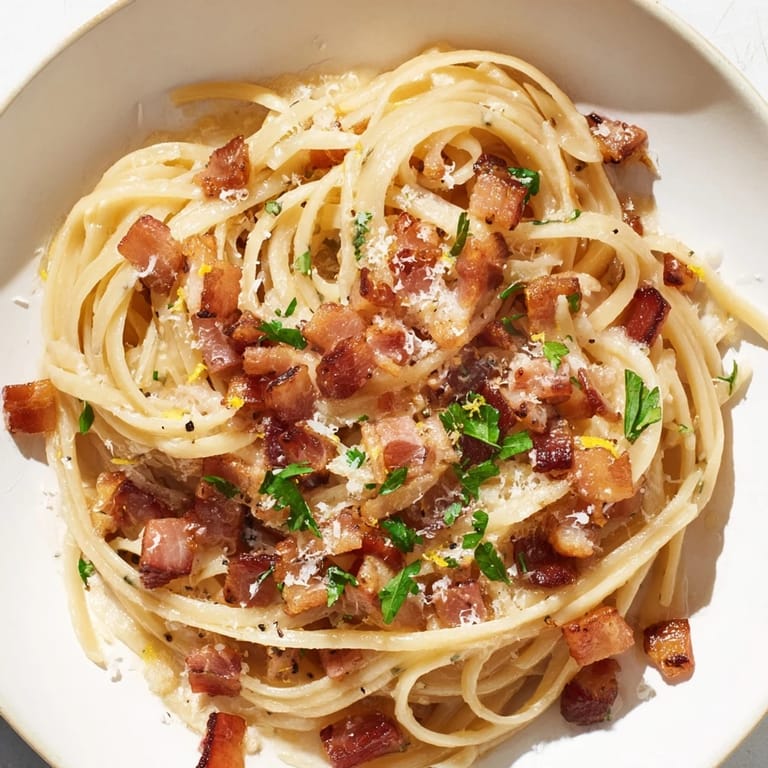
Save There's something almost meditative about standing at the stove while bacon crisps, the kitchen filling with that smell that makes you feel like you're cooking with intention. It's the kind of dish that reminds you that good food doesn't require a long list of special ingredients or hours of fussing—sometimes it just needs attention and a little care.
Why This Works Every Time
The magic here is starch and fat coming together. Bacon renders its fat into the skillet, and pasta water's starch emulsifies into it, creating a sauce that clings to every strand. It's chemistry you can taste, and it means you're never stranded with dry pasta or a broken sauce that separates. This is why Italians have been doing this for generations—not out of necessity, but because it actually works beautifully.
The Timing That Matters
Start your bacon before the water even boils; by the time the pasta is cooked and drained, everything is ready to come together in the pan. There's no waiting, no separate sauces to manage, just one warm skillet and a few minutes of tossing. It's organized chaos that feels effortless once you've done it once.
Small Changes That Matter
This dish is forgiving, but small choices change everything. Fresh Parmesan instead of the shaker kind; cracked pepper instead of pre-ground; bacon you'd actually want to eat on its own. These aren't fancy moves—they're just paying attention to what you're using. A handful of sautéed mushrooms or peas adds vegetables without complicating anything; a squeeze of fresh lemon zest at the end makes people pause and ask what you did.
- Taste the bacon before you buy it, or ask the butcher; it's the star, and it deserves to be good.
- Don't let the pasta sit after draining—warm pasta absorbs sauce better than cold, and the whole dish should come together while everything is still hot.
- If you're cooking for someone, serve immediately and watch their face when they taste something this simple tasting this good.
 Save
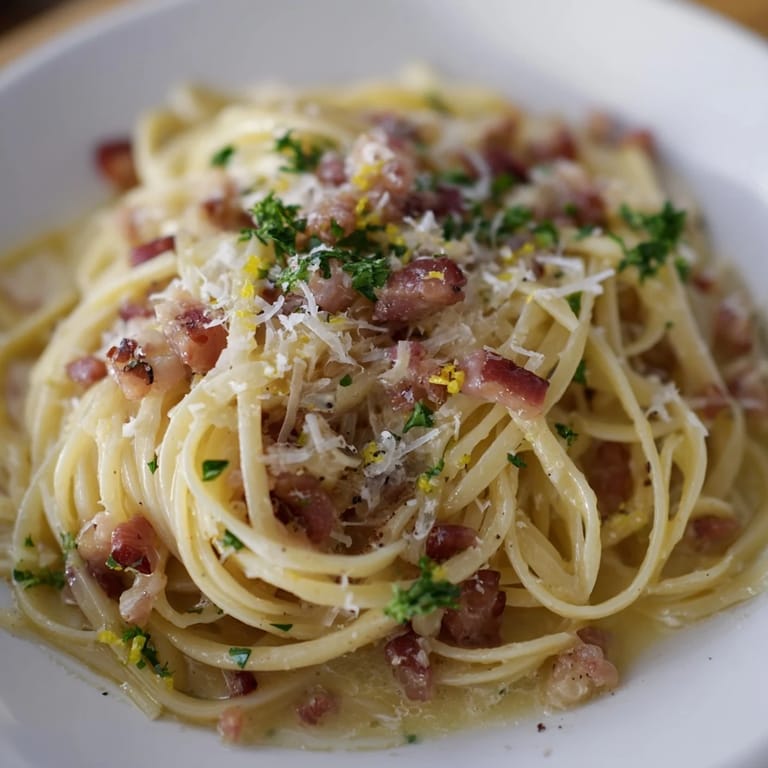
Save This is the kind of meal that proves you don't need complexity to feel proud of your cooking. Serve it with good bread and maybe a glass of something crisp, and let the pasta speak for itself.
Recipe FAQ Section
- → How do you keep bacon crispy in the dish?
Cook the bacon over medium heat until golden and crisp. Drain excess fat and add it to the pasta just before serving to maintain its texture.
- → What is the purpose of reserved pasta water?
Starchy pasta water binds the ingredients, creating a smooth, silky sauce that coats the linguine perfectly without needing cream.
- → Can any type of bacon be used?
Yes, traditional pork bacon works best for flavor, but turkey bacon can be substituted for a lighter option.
- → How is the sauce made creamy without cream?
The sauce relies on the starch from reserved pasta water and melted Parmesan cheese to achieve a creamy texture naturally.
- → Are there suggested additions to the dish?
Adding peas or sautéed mushrooms provides extra vegetables and texture, enhancing the overall taste experience.