 Save
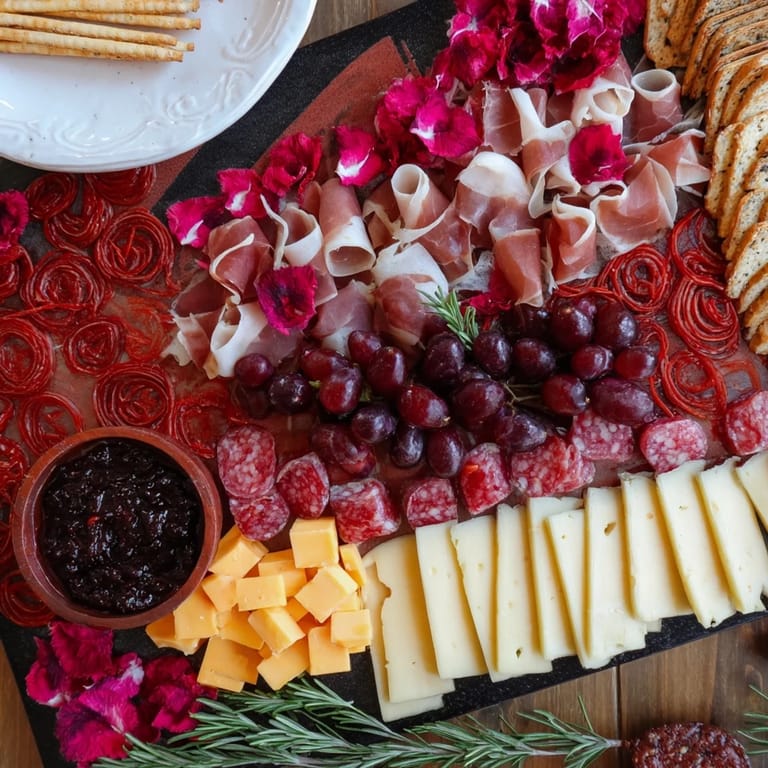
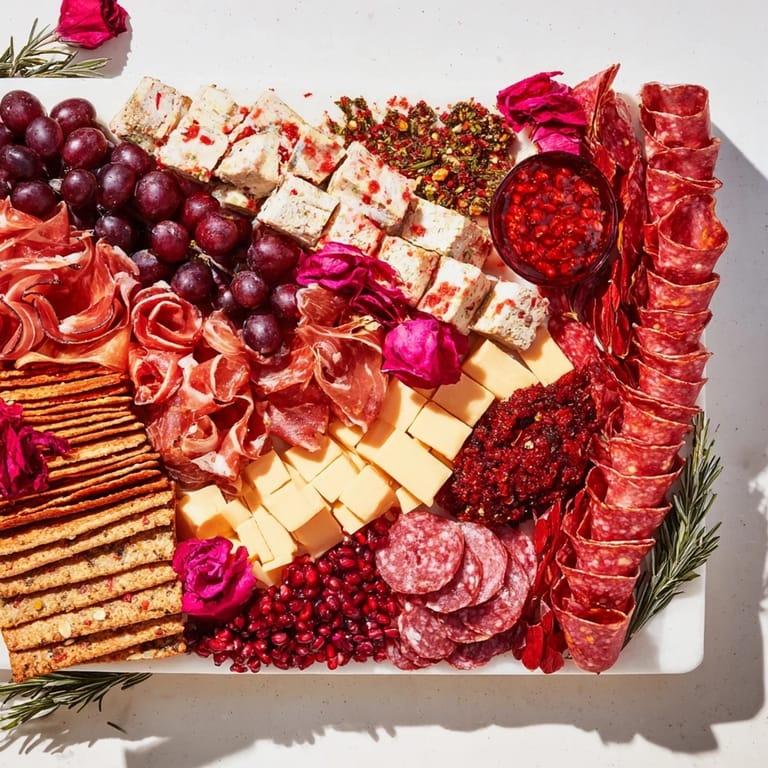
Save The first time I assembled a charcuterie board with intention rather than panic, I realized it wasn't about what I had in my fridge—it was about the story each element told. A friend mentioned Drunken Goat cheese, those wine-soaked wheels that look like edible jewels, and suddenly I saw the possibility: a board painted entirely in crimson and deep ruby tones, a celebration of bold flavors and the romance of a shared meal.
I remember a dinner party where someone arrived early and caught me mid-arrangement, crimson peppers slipping across the board, pomegranate seeds rolling like tiny rubies. Instead of being embarrassed, she grabbed a handful and we started building together, laughing about symmetry being overrated. That board became the backdrop for hours of conversation that night.
Ingredients
- Prosciutto (100 g): This delicate meat becomes even more ethereal when folded loosely; it catches the light and makes your board look intentional.
- Bresaola (100 g): Its deep burgundy color is half the visual appeal here, and its subtle, tender flavor won't overpower the wine-forward cheeses.
- Spicy Chorizo (100 g, thinly sliced): The heat brings balance to the creamy cheeses and won't let anyone forget this is a board with personality.
- Smoked Beef Salami (80 g): A quieter player, but essential—it adds depth without stealing the show.
- Drunken Goat Cheese (150 g, sliced): This is the showstopper; the red wine infusion makes it tangy, creamy, and completely unforgettable.
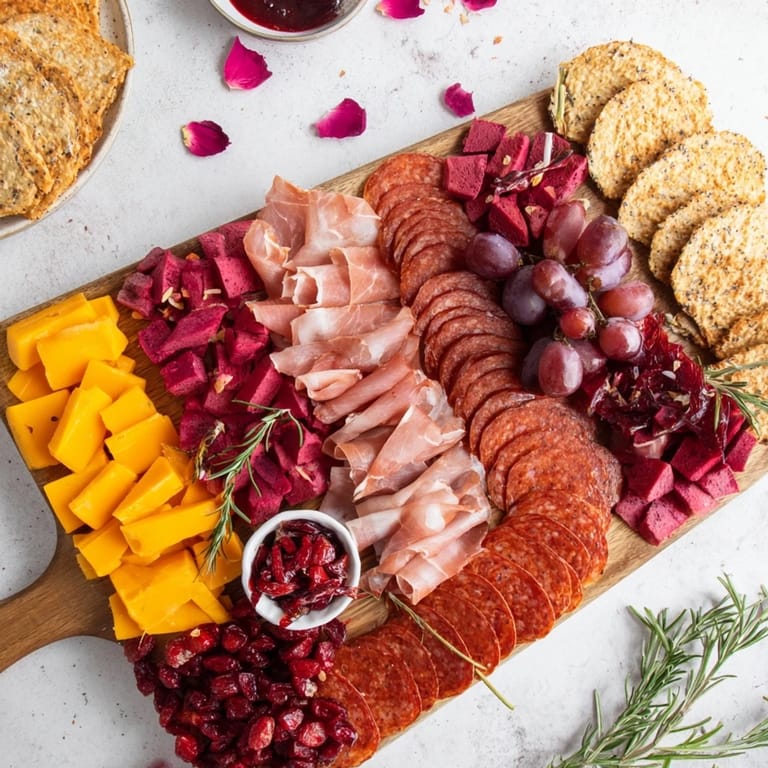
- Red Wine Cheddar (150 g, cubed): It bridges the gap between familiar and fancy, with a subtle wine note that ties the whole board together.
- Merlot BellaVitano (100 g, sliced): Nutty and complex, this cheese reminds everyone that wine belongs on the board in more ways than one.
- Red Grapes (1 small bunch, washed): They provide sweetness and a natural palate cleanser between bites of meat and cheese.
- Pomegranate Seeds (from 1 medium pomegranate): Each seed is a burst of tartness and visual drama; they're worth the mess.
- Red Onion Jam (1 small jar): A spoonful transforms a simple bite into something complex and memorable.
- Roasted Red Peppers (1 cup, sliced): Slightly sweet and silky, they echo the wine theme without being redundant.
- Dried Cranberries (1 small handful): Their tartness cuts through richness and adds unexpected pockets of flavor.
- Baguette (1, sliced): Always slice it fresh or at least toast it lightly; stale bread is the quiet killer of even the most beautiful board.
- Red Beet Crackers (1 box): They're both functional and thematic, tying the color story together while providing excellent crunch.
- Fresh Rosemary Sprigs: Not just garnish—brush them gently across your fingers while arranging and you'll smell why they matter.
- Edible Rose Petals (optional): Skip them if they feel like too much, but if you use them, place just three or four where they'll catch someone's eye and make them smile.
Tired of Takeout? 🥡
Get 10 meals you can make faster than delivery arrives. Seriously.
One email. No spam. Unsubscribe anytime.
Instructions
- Fold your meats with intention:
- Don't just toss them on the board; fold the prosciutto into loose triangles, the bresaola into soft rolls, and let each piece have its own space. This takes two minutes and transforms the board from lazy to luxurious.
- Slice cheeses and arrange by personality:
- Fan the Drunken Goat across one section, cube the Red Wine Cheddar and cluster them like building blocks, and arrange the Merlot BellaVitano so their creamy interiors show. Give each cheese room to breathe and be admired.
- Scatter the jewels:
- Drop pomegranate seeds and grapes into the gaps, letting them fall where they will; this randomness is what makes boards feel alive rather than staged. A few will roll—that's part of the charm.
- Create textural contrast with breads:
- Lean the baguette slices against the meats, weave beet crackers through the cheeses, and fill empty spaces with intention. Think of it like building a landscape where each element supports the next.
- Add your finishing touches:
- Place the red onion jam in a small bowl, scatter roasted peppers in pockets where they'll be found, and tuck rosemary sprigs around the board. If using rose petals, place them last where they'll catch light and seem accidental.
- Let it rest and breathe:
- Step back for a moment before serving, let the board come to room temperature if it's been chilled, and take a photo only if it helps you remember how proud you should be of this moment.
 Save
Save What makes this board special isn't the ingredients—though they are beautiful. It's the moment someone picks up the Drunken Goat, bites into it with their eyes closed, and whispers, 'What is this?' You get to be the one who knows, and somehow that makes the entire evening feel like a small victory.
The Art of Board Building
I used to think charcuterie boards were about abundance, but I've learned it's really about balance and negative space. Cramming every inch makes a board feel anxious, while leaving room for the eye to travel makes it feel intentional and elegant. Cluster three similar items together, then let emptiness breathe before the next group.
Why Red Wine Cheeses Change Everything
The first time I tasted a wine-soaked cheese, I understood why people get sentimental about food. The wine isn't a gimmick—it actually softens the cheese, adds subtle complexity, and creates a flavor experience that tastes like someone cared about every detail. These cheeses elevate a casual board into something that feels like a gift.
Making It Your Own
The beauty of this board is that it's a template, not a mandate. If you can't find one of the wines cheeses, aged Manchego rubbed with paprika brings the same bold energy. If someone at your table doesn't eat meat, their portion of the board can be twice the cheese. The point is to build something that makes your guests feel seen and celebrated.
- Prep your ingredients the morning of and store them separately; assembly takes only 15 minutes when everything's ready.
- Ask your cheese counter for their recommendation on what pairs with bold red wines; they often have gems you've never heard of.
- Remember that the most beautiful boards are the ones where people actually eat the food, not just admire it.
 Save
Save A charcuterie board isn't about perfection; it's about creating a moment where people slow down and taste intentionality on their tongues. Serve this with confidence, and watch how quickly it becomes the reason your dinner party gets remembered.
Recipe FAQ Section
- → What types of meats are featured on The Crimson Crest board?
The board includes prosciutto, bresaola, spicy chorizo, and smoked beef salami, offering a variety of textures and flavors.
- → Which cheeses are infused with red wine in this assortment?
Drunken Goat, Red Wine Cheddar, and Merlot BellaVitano cheeses are soaked in red wine, adding rich, complex notes.
- → What accompaniments enhance the flavor profile of the board?
Red grapes, pomegranate seeds, dried cranberries, roasted red peppers, and red onion jam complement the meats and cheeses.
- → Are there any garnishes used to elevate presentation and aroma?
Fresh rosemary sprigs and optional edible rose petals provide color contrast and a fragrant touch.
- → Can this board accommodate dietary restrictions?
Substitutions like gluten-free crackers are suggested for those avoiding gluten; always verify allergen labels to suit personal needs.
- → What is the best way to serve The Crimson Crest board?
Serve immediately at room temperature to ensure optimal flavor and texture balance among all components.