 Save
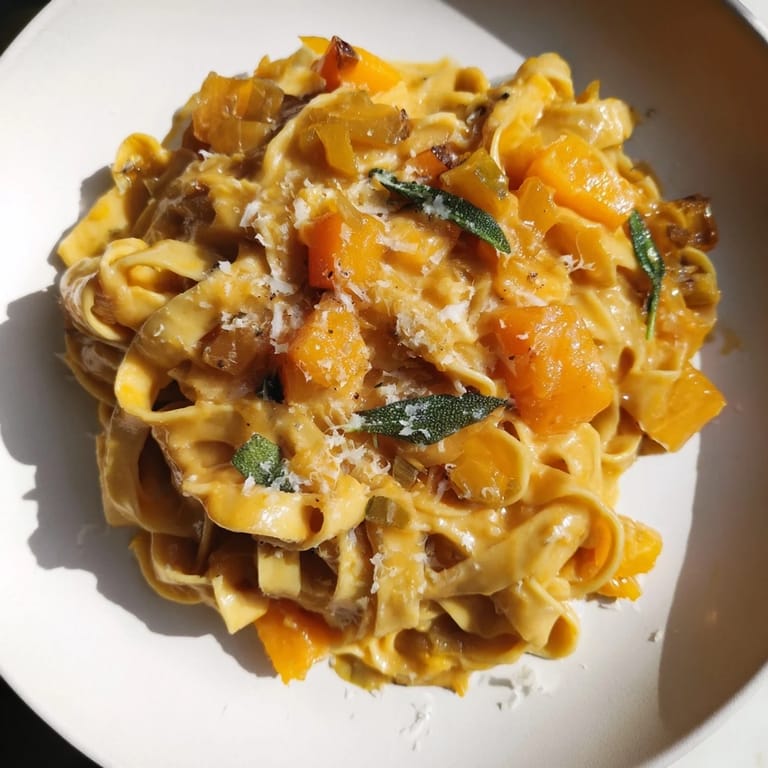
Save There's something about October evenings that makes me crave butternut squash in every form, and this pasta emerged from one of those nights when I had half a squash languishing in the fridge and absolutely nothing in the mood for complicated cooking. I roasted it on a whim, blended it into cream, and suddenly had the silkiest, most golden sauce coating fresh pasta like it was meant to be. Now I make it whenever the kitchen feels too quiet or the weather turns that certain shade of amber that only happens in fall.
I remember making this for my friend Maya on a random Wednesday when she'd had a rough day at work, and watching her face light up as she twirled the first forkful was worth every minute of chopping. She asked for the recipe immediately, which almost never happens, and now it's become our unspoken signal that one of us needs a little warmth and care delivered in pasta form.
Ingredients
- 1 medium butternut squash (about 2 lbs), peeled, seeded, and cubed: The star of the show, roasted until its edges caramelize into something almost honeyed and sweet; don't skip the peeling step unless you love extra cleanup.
- 2 cloves garlic, unpeeled: Roasting the garlic whole keeps it gentle and sweet rather than sharp, a trick that transforms the whole sauce.
- 1 small yellow onion, diced: A foundation of savory flavor that softens into the background so the squash can shine.
- 1 tablespoon fresh sage leaves, chopped (or 1 teaspoon dried): Sage and squash are old friends; even a small amount whispers autumn into every spoonful.
- 2 tablespoons fresh parsley, chopped: A bright green finish that adds freshness and prevents the dish from feeling heavy.
- 12 oz (340 g) dried fettuccine or tagliatelle (or fresh pasta): The wide ribbons catch and hold the creamy sauce better than thin pasta ever could.
- 2 tablespoons olive oil: One tablespoon goes to the roasting pan, the other builds the flavor base for your sauce.
- 1/2 cup (120 ml) heavy cream (or full-fat coconut milk for vegan): This is what makes the sauce luxurious and smooth; don't thin it out with anything else.
- 1/3 cup (35 g) grated Parmesan cheese (or vegan alternative): A salty depth that ties everything together at the end.
- 3/4 cup (180 ml) vegetable broth: The liquid that helps you blend everything into silk; warm broth blends more smoothly than cold.
- Salt and black pepper, to taste: Season as you go, not all at the end.
- Pinch of nutmeg (optional): If you use it, it should be so subtle no one can name it, just feel it.
Tired of Takeout? 🥡
Get 10 meals you can make faster than delivery arrives. Seriously.
One email. No spam. Unsubscribe anytime.
Instructions
- Get your oven ready and prep the squash:
- Heat your oven to 400°F and line a baking sheet with parchment paper, which saves you the scrubbing later. Toss your cubed squash and whole garlic cloves with one tablespoon of olive oil, salt, and pepper until everything glistens.
- Roast until golden and tender:
- Spread everything on the sheet in a single layer and roast for 25 to 30 minutes, stirring halfway through so the edges get caramelized and beautiful. You'll know it's done when a fork slides through the squash with no resistance and the edges are turning amber.
- Start the pasta while things roast:
- When the squash goes in the oven, fill a large pot with salted water and bring it to a rolling boil. Cook your pasta according to the package, but aim to finish around the same time as the squash; reserve a half cup of the starchy cooking water before you drain everything.
- Build flavor in a skillet:
- While the squash roasts, heat the second tablespoon of olive oil in a large skillet over medium heat and add your diced onion and sage. Let them get soft and fragrant, about four minutes, until the kitchen smells like autumn in a good way.
- Blend the sauce into cream:
- Squeeze the soft roasted garlic cloves out of their skins into a blender, then add the roasted squash, the sautéed onion and sage mixture, the vegetable broth, and the heavy cream. Blend on high until the mixture looks like spun silk with no lumps.
- Season the sauce to perfection:
- Pour the blended squash sauce back into your skillet over low heat and stir in the Parmesan and a pinch of nutmeg if you're using it. Taste and season with salt and pepper; add splashes of that reserved pasta water if the sauce is thicker than you want.
- Combine pasta and sauce with care:
- Add your drained pasta to the skillet and toss gently for two to three minutes so every strand gets coated and warmed through. The sauce should cling to the pasta like silk, not pool at the bottom.
- Plate and finish:
- Divide the pasta among bowls and top with a sprinkle of fresh parsley and extra Parmesan if you want. Serve it immediately while it's still steaming.
 Save
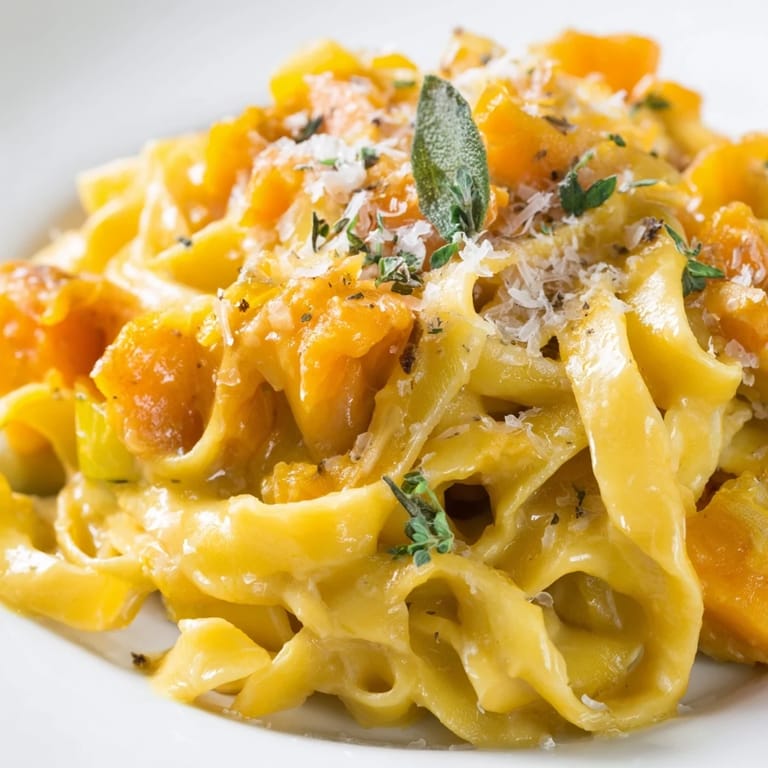
Save This dish sits at that perfect intersection of indulgent and nourishing, the kind of meal that feels like you're treating yourself while also feeding your body exactly what it needs. It's become my answer to almost any situation that needs softening.
Why Fall Flavors Matter Here
Butternut squash carries a natural sweetness that deepens when roasted, and sage adds an earthy note that makes you think of wool sweaters and candlelight. The combination feels seasonal without being confined to it; I've made this in July and it still brought comfort, though it makes so much more sense when the days get shorter. The cream rounds out everything into a dish that tastes both light enough for a weeknight and special enough for guests who want to feel cared for.
Swaps and Customizations That Work
The beauty of this recipe lives in its flexibility; I've made it with coconut milk for a vegan friend and it disappeared just as fast, and I've added toasted walnuts for texture without changing the essential character of the dish. Sautéed mushrooms or wilted spinach find their way in sometimes, not because they're required but because they're what I have on hand or what sounds good that day. The sauce is forgiving enough to accommodate what your pantry offers while staying true to itself.
Pairing and Storage Thoughts
A crisp white wine like Pinot Grigio cuts through the richness beautifully if you're the type to pour a glass while cooking. This dish keeps well in the refrigerator for three days if you store the pasta and sauce separately, though it tastes best served fresh and warm right after you've made it.
- If you make it ahead, reheat gently on the stovetop with a splash of broth or cream rather than the microwave.
- Leftovers transform into a stunning pasta bake if you add them to a baking dish with extra cheese and a splash of milk, then warm through at 350 degrees.
- The sauce freezes beautifully on its own if you want to make a double batch and save half for a night when you're too tired to roast squash.
 Save
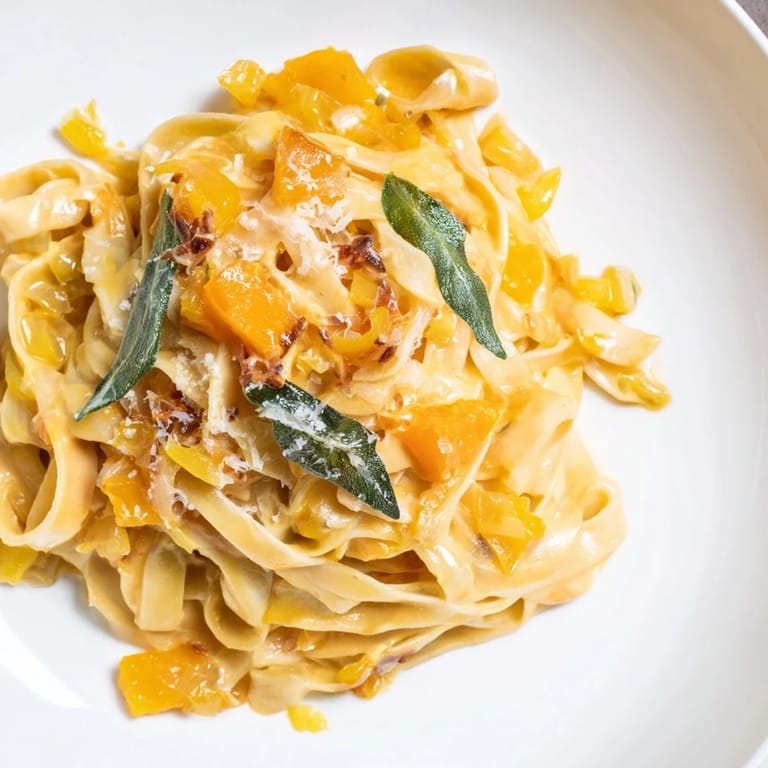
Save This pasta has become my default answer to almost any question about what to cook, and I hope it becomes yours too. It's proof that simple ingredients and a little patience create something that tastes far more impressive than the effort required to make it.
Recipe FAQ Section
- → How do I roast the butternut squash for best flavor?
Peel and cube the squash evenly, then roast at 400°F until caramelized and tender, about 25–30 minutes, turning halfway for even cooking.
- → Can I make this dish vegan?
Yes, substitute heavy cream with coconut milk and Parmesan with a plant-based cheese alternative for a vegan-friendly version.
- → What pasta types work well here?
Fettuccine or tagliatelle hold the sauce nicely due to their flat texture, but any preferred pasta will complement the creamy sauce.
- → How can I adjust the sauce consistency?
Use reserved pasta water to thin the sauce gradually until it reaches a smooth, coating consistency.
- → What herbs enhance this dish's flavor?
Fresh sage is key for earthiness, and parsley adds a fresh, bright finish when sprinkled on top.
- → Can I add other vegetables for texture?
Sautéed mushrooms, spinach, or toasted walnuts make excellent additions for extra texture and flavor complexity.