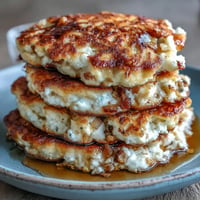
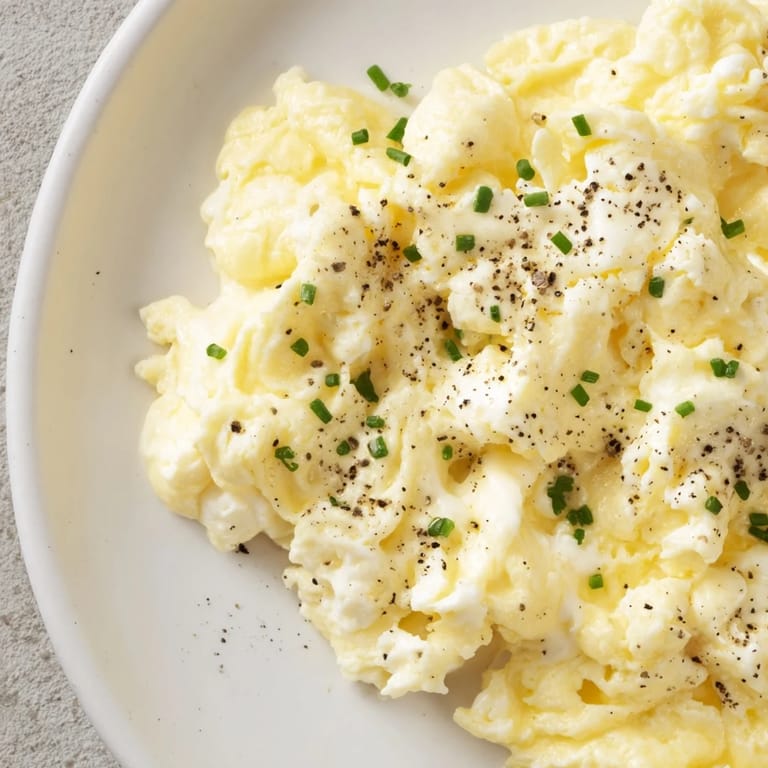
 Save
Save There's something almost magical about the moment cottage cheese hits hot butter—how it melts into the eggs and transforms them into clouds. I discovered this trick by accident one morning when I grabbed what I thought was Greek yogurt, and suddenly my scrambled eggs had this luxurious, creamy texture I'd never achieved before. That happy mistake became the breakfast I make whenever I want to feel like I'm treating myself right before a long day.
I made this for my partner on a Sunday when we'd both stayed up too late the night before, and watching his face light up at how soft and rich they were made me feel like a genius in the kitchen. He asked for the secret, and when I told him it was just cottage cheese, he didn't believe me until I showed him the container. Now it's become our lazy weekend tradition.
Ingredients
- Eggs: Use four large eggs at room temperature if you can—they blend more smoothly and create better volume when whisked.
- Cottage cheese: Full-fat is your friend here; the richness makes all the difference, and it creates that signature silky texture.
- Milk or cream: This is your secret weapon for extra fluffiness; the liquid disperses throughout and creates tiny pockets of air.
- Salt and pepper: Don't skip seasoning the raw mixture—it distributes evenly and prevents that last-minute underseasoned bite.
- Unsalted butter: This gives you control over salt levels and lets the eggs shine without competing flavors.
- Chives or parsley: A handful of fresh herbs at the end lifts the whole dish and adds that just-cooked-by-someone-who-cares feeling.
Tired of Takeout? 🥡
Get 10 meals you can make faster than delivery arrives. Seriously.
One email. No spam. Unsubscribe anytime.
Instructions
- Combine your base:
- Crack the eggs into a bowl and add the cottage cheese, milk, salt, and pepper, then whisk until you see tiny bubbles forming on top. This frothy texture is where all your fluffiness comes from, so don't skip this step.
- Heat your pan:
- Melt the butter over medium-low heat—medium-low is crucial here because high heat scrambles too fast and you lose that creamy texture. You want the butter just melted and foaming gently.
- Start the magic:
- Pour the mixture in and let it rest for about 20 seconds without touching it; this lets the bottom set slightly and gives you something to work with. Then use a spatula to gently push the cooked parts from the edges toward the center, tilting the pan so the uncooked eggs flow to the edges.
- Find your moment:
- Keep stirring gently every 10-15 seconds until the eggs look mostly set but still have just a hint of shine on top. This takes about 2-3 minutes, and it's the difference between creamy eggs and rubbery ones.
- Plate immediately:
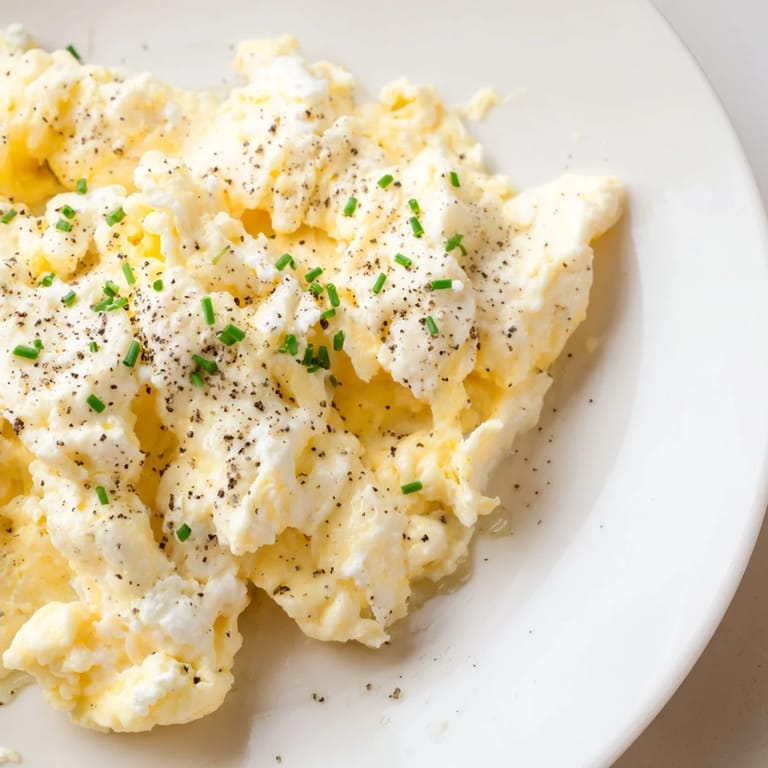
- The moment the eggs look just barely set, transfer them to your plate—they'll continue cooking slightly from residual heat. Finish with fresh chives or parsley and a crack of black pepper.
 Save
Save These eggs taught me that breakfast doesn't have to be complicated to feel special. There's something about sitting down to something this soft and nourishing that makes the whole morning feel calmer, even when nothing else in the day is.
Why Cottage Cheese Changes Everything
Cottage cheese does something completely different than cream or milk alone—it adds body and richness while keeping things light. The curds catch and hold tiny air bubbles, which is exactly what creates that fluffy texture you'd normally need eggs from a fancy brunch spot to achieve. I've tried this with Greek yogurt too, and while it works, cottage cheese wins every time because it doesn't add any tang.
The Timing Game
Low heat feels frustratingly slow at first, like nothing's happening, but that's when the magic occurs. Rushing this with medium or medium-high heat turns the edges rubbery while the center stays wet. The slow, gentle heat creates an even, creamy set throughout, and the wait is never more than five minutes anyway.
Flavor Builds and Mix-Ins
This base is genuinely delicious on its own, but it's also a perfect canvas for whatever you're in the mood for. On mornings when I want something heartier, I'll stir in a handful of sharp cheddar just before plating, or layer in warm sautéed spinach that's been squeezed dry. Sometimes I'll fold in a spoonful of smoked salmon or crispy bacon pieces, and the protein content soars even higher.
- Add cheese, vegetables, or fish right at the end so they stay bright and don't overcook into the eggs.
- If you're adding cooked vegetables or meat, make sure they're already warm so you don't cool down the eggs.
- Fresh herbs stirred in at the last second stay vibrant and are always better than cooked-through ones.
 Save
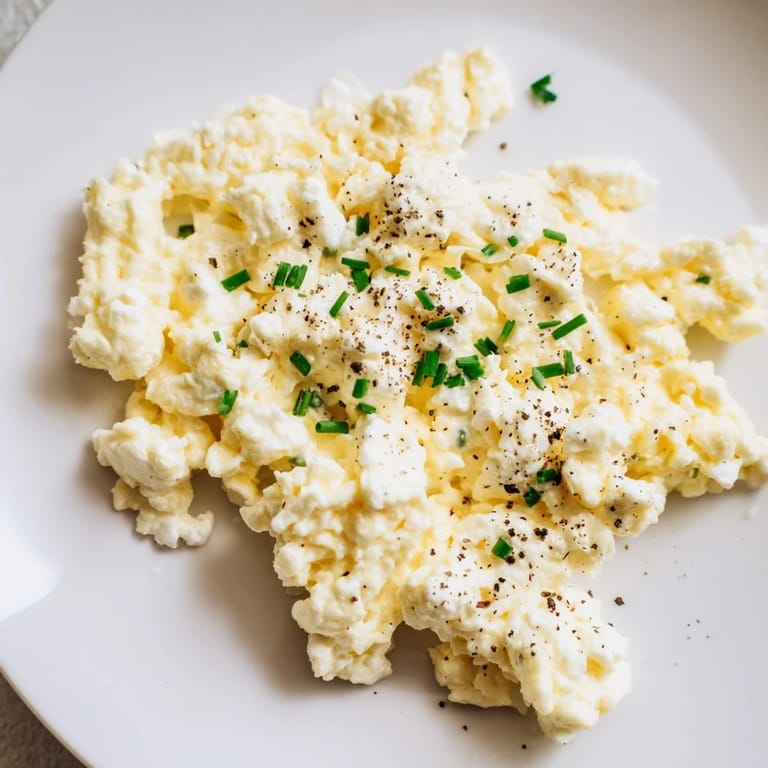
Save This is the kind of breakfast that makes you want to sit down and actually eat, not just grab and go. Serve it with toast, fruit, or avocado, and you've got a meal that feels like you're taking care of yourself.
Recipe FAQ Section
- → How does cottage cheese affect the texture?
Adding cottage cheese makes the eggs creamier and fluffier by incorporating moisture and fat, creating a richer mouthfeel.
- → Can I substitute the milk or cream?
Yes, you can use any dairy or non-dairy milk for subtle flavor variations while maintaining creaminess.
- → What herbs pair well as a garnish?
Fresh chives, parsley, or dill complement the creamy eggs by adding a fresh, herbal note.
- → How long should I cook the eggs?
Cook gently over medium-low heat for 2-3 minutes until soft and just set to retain a creamy texture.
- → Can I add vegetables or other ingredients?
Yes, folding in sautéed spinach, tomatoes, or smoked salmon enhances flavor and nutrition.