 Save
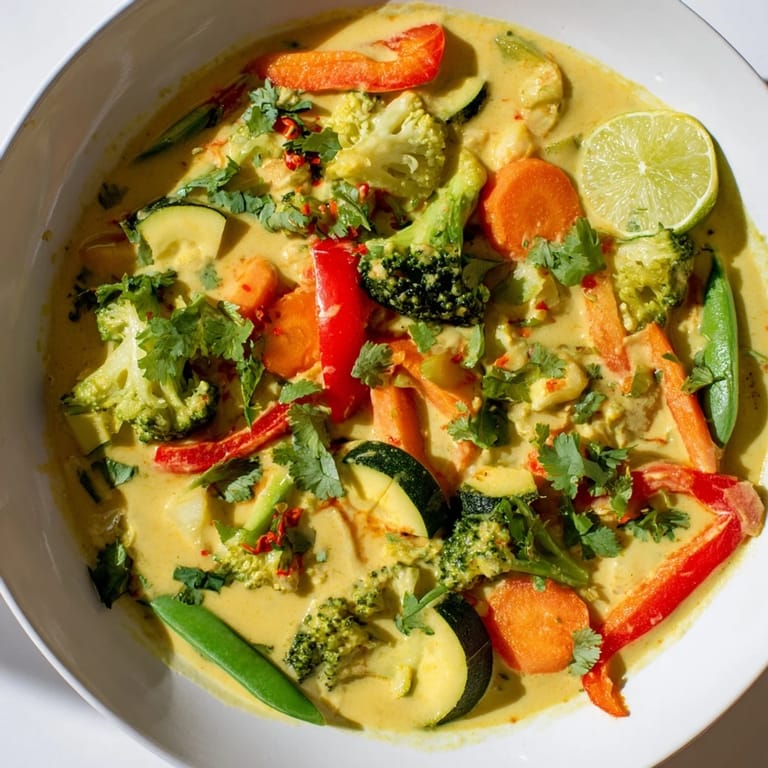
Save I stumbled into this recipe on a rainy Tuesday when my fridge was a chaotic mix of half-used vegetables and a lone can of coconut milk. I had no plan, just hunger and a vague craving for something warm and fragrant. What emerged from that improvisational moment became one of my most-requested dinners. The kitchen filled with the scent of ginger and curry, and suddenly the gray afternoon felt a little brighter.
The first time I made this for friends, I was nervous because one of them claimed to hate vegetables. I watched her take a cautious first bite, then another, then scrape her bowl clean. She looked up and said, I didnt know vegetables could taste like this. That moment reminded me how a good sauce and a little care can change everything.
Ingredients
- Red bell pepper: Adds sweetness and a gorgeous pop of color that makes the dish look as good as it tastes.
- Carrot: Brings a subtle earthiness and holds up beautifully in the simmering sauce without turning mushy.
- Zucchini: Soaks up all that coconut curry flavor and adds a tender, melt-in-your-mouth texture.
- Broccoli: Stays vibrant green if you dont overcook it, and the florets catch little pockets of sauce.
- Snap peas: A last-minute addition that keeps a satisfying crunch and a hint of natural sweetness.
- Red onion: Softens into the base and gives the curry a gentle, aromatic backbone.
- Coconut oil: The perfect fat for this dish, it enhances the coconut milk and doesnt compete with the spices.
- Garlic and ginger: The dynamic duo that makes your kitchen smell like magic and builds deep, layered flavor.
- Red curry paste: The heart of the dish, delivering complex heat and umami in one spoonful.
- Turmeric, cumin, coriander: These three spices add warmth and depth, turning a simple curry into something unforgettable.
- Coconut milk (full fat): Do not skimp here, the creaminess is everything and it balances the spice perfectly.
- Vegetable broth: Thins the sauce just enough so it coats the vegetables without becoming heavy.
- Soy sauce or tamari: A splash of salty richness that ties all the flavors together.
- Lime juice: The bright, tangy finish that wakes up every bite right before serving.
- Fresh cilantro and lime wedges: Garnishes that add freshness and let everyone customize their bowl.
Tired of Takeout? 🥡
Get 10 meals you can make faster than delivery arrives. Seriously.
One email. No spam. Unsubscribe anytime.
Instructions
- Start with the aromatics:
- Heat the coconut oil until it shimmers, then add the red onion and let it soften and turn translucent. This creates a sweet, fragrant base that everything else builds on.
- Wake up the garlic and ginger:
- Stir them in and cook just until your kitchen smells incredible, about a minute. Dont let them brown or theyll turn bitter.
- Bloom the spices:
- Add the curry paste, turmeric, cumin, and coriander, stirring constantly. Youll see the oil turn golden and the spices release their full aroma.
- Add the hearty vegetables:
- Toss in the bell pepper, carrot, zucchini, and broccoli, stirring them around so they get coated in all those beautiful spices. Let them sauté for a few minutes to start softening.
- Pour in the coconut milk and broth:
- The sauce will come together quickly, turning creamy and luscious. Bring it to a gentle simmer, not a rolling boil.
- Finish with snap peas and soy sauce:
- Stir them in, cover the pot, and let everything simmer until the vegetables are tender but still have a little bite. This is where the magic happens.
- Brighten and season:
- Remove from heat, stir in the lime juice, and taste. Adjust salt and pepper until it feels just right.
- Serve with love:
- Spoon into bowls, scatter cilantro on top, and set out lime wedges. Pair it with rice or quinoa if you want to make it a full meal.
 Save
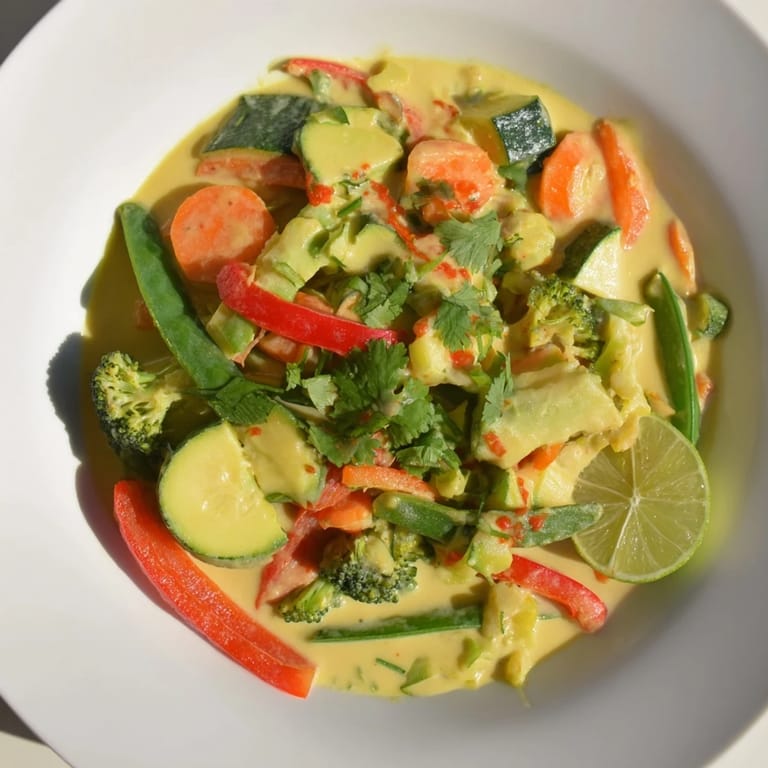
Save One evening I made this after a long, exhausting day, and as I stirred the pot, I realized I was smiling. The rhythm of chopping, the sizzle of spices, the creamy swirl of coconut milk, it all felt like a small act of care for myself. When I sat down to eat, I felt nourished in a way that went beyond just filling my stomach.
Making It Your Own
This recipe is wonderfully forgiving and loves improvisation. Swap in cauliflower, green beans, or mushrooms if thats what you have on hand. I once added a handful of baby spinach at the end and it wilted into the sauce beautifully. If you want more protein, chickpeas or cubed tofu are perfect additions, just toss them in during the simmer.
Adjusting the Heat
The spice level depends entirely on your curry paste, and brands vary wildly. Start with a tablespoon and taste the sauce before adding more. If it gets too spicy, a little extra coconut milk or a spoonful of sugar can mellow it out. I keep a jar of mild and a jar of hot curry paste so I can adjust depending on whos coming to dinner.
Serving and Storing
This curry tastes even better the next day after the flavors have had time to meld. Store leftovers in an airtight container in the fridge for up to four days. Reheat gently on the stovetop, adding a splash of broth or water if it has thickened too much. It also freezes well for up to two months, though the vegetables may soften a bit after thawing.
- Serve over jasmine rice, quinoa, or even rice noodles for a change.
- If you like crunch, sprinkle toasted cashews or sesame seeds on top.
- A dollop of coconut yogurt adds creaminess and cools down the spice.
 Save
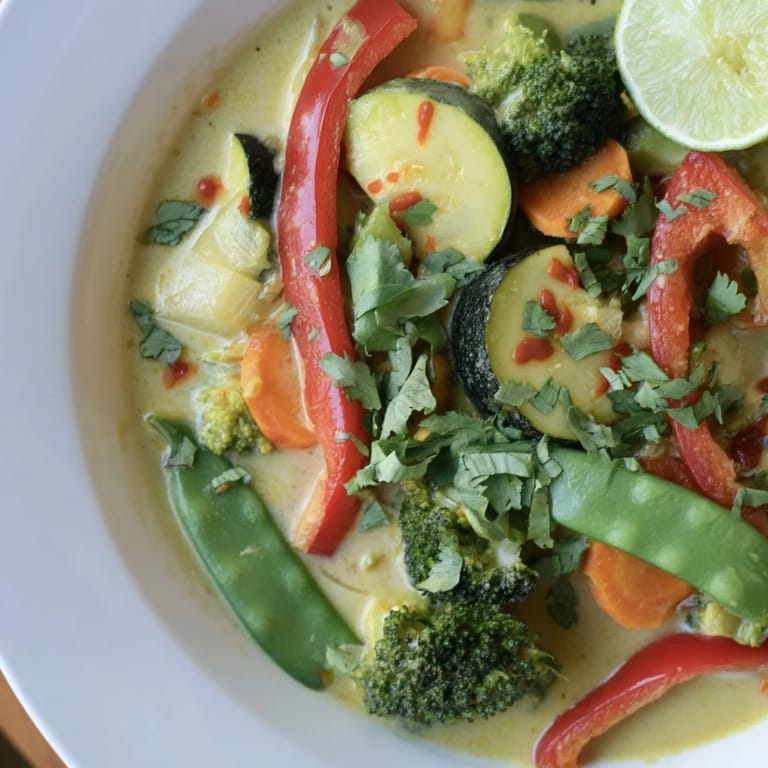
Save This curry has become my go-to whenever I want something comforting, nourishing, and full of life. I hope it brings as much warmth to your table as it has to mine.
Recipe FAQ Section
- → What vegetables work best in this curry?
Bell pepper, carrot, zucchini, broccoli, snap peas, and red onion provide a vibrant texture and flavor mix, but cauliflower or green beans can also be added.
- → How can I adjust the spice level?
Modify the amount of red curry paste according to your preference for mild or spicy heat.
- → Can I add protein to this dish?
Yes, chickpeas or tofu can be stirred in during the simmering step for extra protein and heartiness.
- → What cooking tools are needed?
A large skillet or Dutch oven works best to sauté and simmer the ingredients evenly.
- → Are there common allergens to watch for?
Contains soy from soy sauce or tamari and coconut milk; verify curry paste ingredients for possible shellfish traces.