 Save
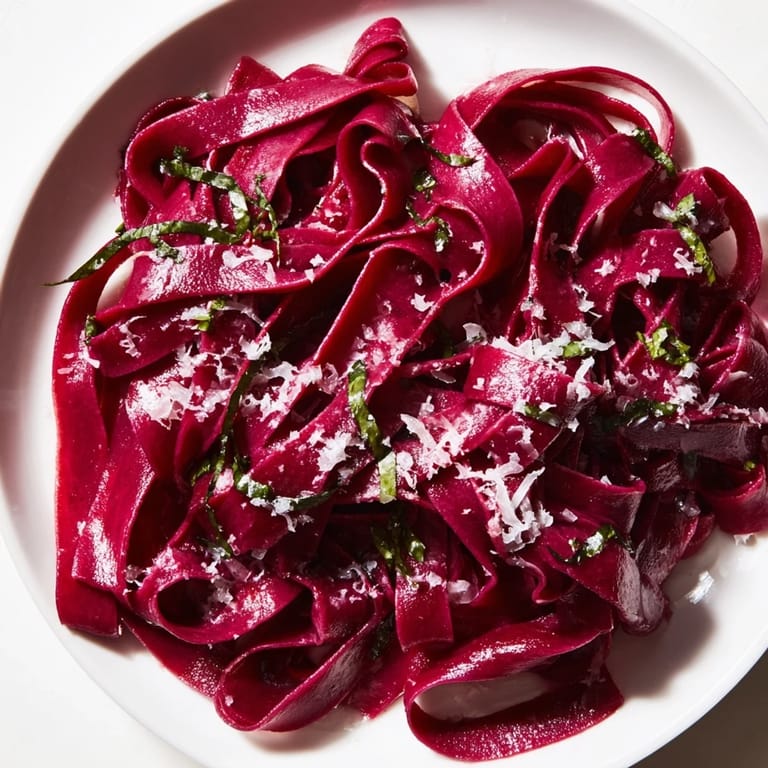
Save I discovered beet noodles completely by accident on a Sunday afternoon when my blender was already out from making soup, and I noticed those gorgeous roasted beets sitting on the counter. What if I just threw one in with the pasta dough? The result was so stunning—this deep magenta that looked almost jewel-like—that I immediately called my partner over to see if I'd actually made it or if something magical had happened in the kitchen.
The first time I served this to guests, I remember one person took a bite and just froze mid-chew, clearly trying to figure out what made the color so vivid. When I explained it was beets, they visibly relaxed—they'd been worried I'd used food coloring. That moment taught me how much trust people place in homemade food, and how a simple ingredient can feel like a small act of care.
Ingredients
- Medium beet (about 180 g): Choose one that feels firm without soft spots, as roasting brings out the natural sweetness that becomes subtle in the pasta.
- Olive oil for roasting: A light drizzle is all you need; it helps the beet cook evenly and prevents it from drying out.
- All-purpose flour (2 cups/250 g): This is your base, and the beet puree will replace some of the liquid that eggs usually provide, so don't over-hydrate the dough.
- Eggs (2 large): They bind everything together and create that silky texture fresh pasta is known for.
- Roasted beet puree (1/4 cup/60 g): This is where the magic happens—smooth, concentrated beet flavor and color.
- Salt: A pinch for roasting, and 1/2 teaspoon in the dough; it enhances both the beet and the wheat flavor.
- Butter or olive oil for serving: A simple finish lets the pasta's natural flavor shine.
- Fresh herbs and cheese: Optional but they cut through the earthiness beautifully.
Tired of Takeout? 🥡
Get 10 meals you can make faster than delivery arrives. Seriously.
One email. No spam. Unsubscribe anytime.
Instructions
- Roast the beet until it's fork-tender:
- Wrap it in foil with a drizzle of olive oil and salt, then roast at 400°F for 45 to 60 minutes—you'll know it's ready when a fork slides through like butter. The kitchen will smell unbelievably earthy and warm.
- Puree and measure your beet:
- Once cooled enough to handle, peel away the papery skin and puree until completely smooth. You need exactly 1/4 cup for the dough, though you might have extra to save for soup or roasted vegetables.
- Build your dough with the flour well method:
- Mound your flour on a clean surface, create a well in the center, and add eggs, salt, and beet puree. Using a fork, gently pull flour from the inner walls of the well into the wet ingredients, working slowly so nothing escapes.
- Knead until the dough becomes elastic:
- Once a shaggy dough forms, knead for 8 to 10 minutes—your hands will turn slightly pink, which is oddly satisfying. The dough should feel smooth and springy, not sticky or stiff.
- Rest the dough at room temperature for 30 minutes:
- This isn't just a waiting game; the gluten relaxes and the beet flavor distributes evenly. Wrap it in plastic wrap so it doesn't dry out.
- Roll and cut your pasta to your desired thickness:
- Divide into 4 pieces and use a pasta machine (easiest) or rolling pin to reach about 1 to 2 mm thickness. Cut into whatever shape you love—fettuccine, tagliatelle, or even pappardelle.
- Cook briefly in salted boiling water:
- Fresh pasta cooks quickly, usually just 2 to 3 minutes until it floats to the surface and tastes tender but still has slight resistance. Taste as you go rather than watching the clock.
 Save
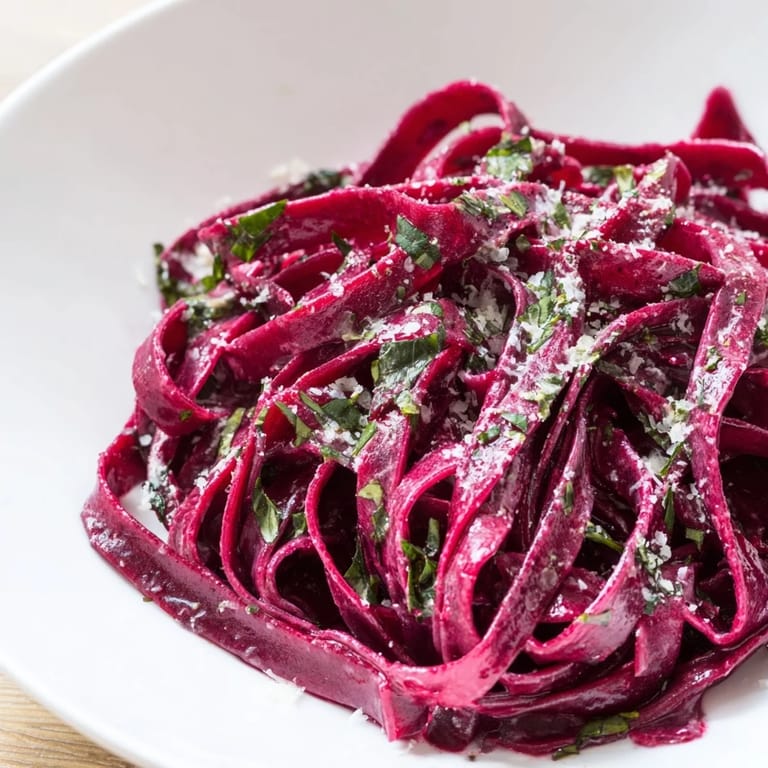
Save I'll never forget the moment my grandmother tasted this for the first time—she studied the plate like she was trying to solve a mystery, then smiled and said it was the most beautiful pasta she'd ever seen. She asked if I'd use her old wooden spoon to toss it (I did), and suddenly it wasn't just a recipe anymore; it was something that connected us across our different cooking generations.
The Magic of Natural Color
There's something deeply satisfying about making something beautiful without reaching for food coloring or artificial anything. The magenta hue you get from beets is genuine—it comes straight from the vegetable—and it's the kind of detail that makes people pause. That pause is where real food feels special, where it stops being just sustenance and becomes something worth talking about.
Flavor Balance and Pairing
Beet flavor in pasta is surprisingly subtle, which can feel like a gift or a puzzle depending on how you look at it. It's earthy and very slightly sweet, but it won't dominate your sauce—this pasta wants to play a supporting role. Brown butter with crispy sage is my favorite finish because the nutty, almost caramel notes of brown butter echo the beet's earthiness without competing.
Beyond the Basic Recipe
Once you've made this once, you'll start seeing possibilities everywhere. I've tossed it with creamy lemon sauce, scattered it across crispy vegetables, even dressed it simply with more beet greens (if your beet came with them) sautéed in garlic. The beauty is that this pasta stands out enough on its own, so simple preparations work best.
- For a vegan version, swap the eggs for 1/4 cup water plus 1 tablespoon olive oil, though the texture will be slightly less tender.
- If you want deeper beet flavor and color, increase the puree to 1/3 cup, but you'll need to add a bit more flour to compensate.
- Leftover uncooked pasta freezes beautifully on a sheet tray for up to three months.
 Save
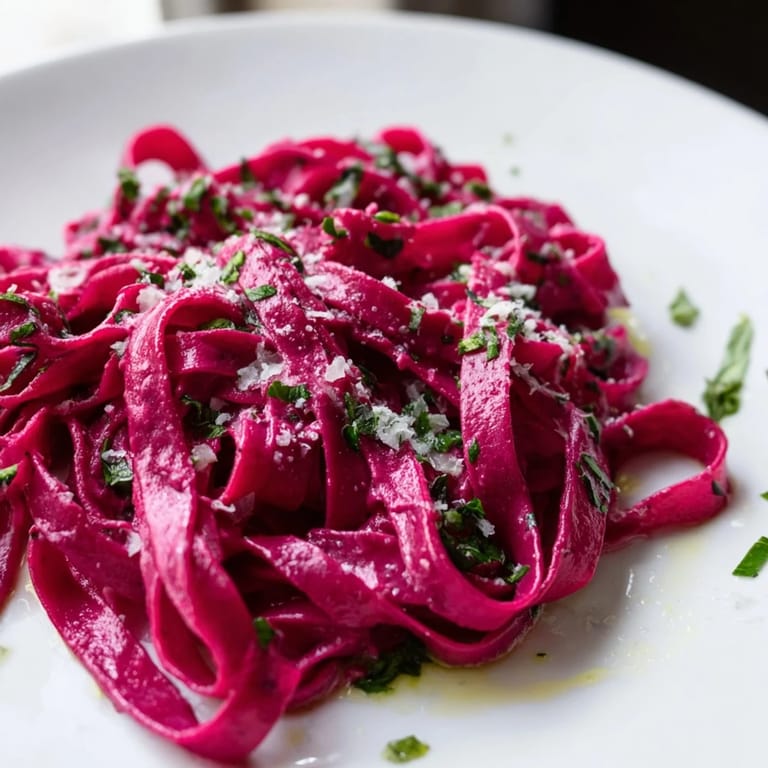
Save Making fresh pasta from scratch, especially something this visually striking, changes how you think about cooking. It's slower, more intentional, and somehow more rewarding—the kind of thing that makes an ordinary dinner feel like an occasion.
Recipe FAQ Section
- → How do I prepare the beet puree for the noodles?
Roast the beet wrapped in foil with olive oil and salt at 400°F until fork-tender. Peel and puree until smooth, then measure 1/4 cup to incorporate into the dough.
- → Can I make the noodles without eggs?
Yes, substitute 1/4 cup water and 1 tablespoon olive oil for the eggs to create a vegan-friendly dough.
- → What pasta shapes work best with this dough?
The dough is ideal for tagliatelle, fettuccine, or any preferred noodle shape rolled thin, approximately 1–2 mm thick.
- → How long should I cook the beet-infused noodles?
Cook the noodles in boiling salted water for 2–3 minutes until al dente, then drain carefully to preserve texture.
- → What toppings complement the beet noodles?
Butter or olive oil, fresh herbs like basil or parsley, and grated Parmesan or pecorino cheese enhance flavor and presentation.