 Save
Save One evening, I was standing in my tiny kitchen in Rome, watching my neighbor Maria through her window as she stirred a pot of brilliant red sauce, steam rising toward her vaulted ceiling. She'd invited me over for dinner but cancelled last minute, so I decided to recreate what I'd glimpsed—that fierce, garlicky arrabbiata that fills the whole apartment with smoke and promise. I tossed in some penne and cheese, threw it in the oven on a whim, and the result was something between her traditional recipe and my own impatient hunger: a baked pasta that tastes like Rome tastes at dusk, spicy and golden.
I made this for my friend Alex on a Thursday when he showed up unexpectedly, exhausted from work and done with takeout. Twenty minutes later, we were pulling a bubbling golden dish from the oven, and I watched his whole posture change as the smell hit him—shoulders dropping, the tension in his face softening. He ate three helpings and didn't say much, just kept shaking his head like he couldn't believe how good it was. That's when I knew this recipe had something real.
Ingredients
- Penne pasta (350 g): Buy the kind that feels slightly rough to the touch—it holds sauce better than the smooth stuff, and undercooking it by a couple minutes keeps it from turning to mush in the oven.
- Olive oil (2 tbsp): Good oil matters here because it's the foundation; use something you'd taste on its own, not the industrial stuff.
- Garlic (4 cloves), finely chopped: Mince it yourself rather than using pre-minced—the flavor stays brighter and you'll taste the difference.
- Crushed red pepper flakes (1–2 tsp): Start with one teaspoon and taste as you go; heat builds differently for everyone, and you can always add more but you can't take it back.
- Canned crushed tomatoes (800 g): San Marzano if you can find them, but honestly, a good brand matters more than the variety—read the label and pick one that lists only tomatoes and maybe salt.
- Sugar (1 tsp): This balances the acidity without making anything sweet; it's the quiet player that makes people wonder what your secret is.
- Dried oregano (1 tsp): Rub it between your palms before adding to wake it up and release the oils.
- Salt and black pepper (½ tsp and ¼ tsp): Taste constantly as you go—some pots need more, some less, and your palate is the only measuring tool that matters.
- Fresh basil (1 small bunch), chopped: Add half while the sauce simmers, then save the rest for garnish so it stays bright green and alive on the plate.
- Grated Parmesan (80 g): Grate it fresh if you can; the pre-grated stuff has anti-caking agents that make it grainy and weird in the oven.
- Shredded mozzarella (150 g): Don't buy the preshredded kind if you can avoid it—fresh mozzarella melts into those stretchy, delicious strings, while pre-shredded goes gluey.
Tired of Takeout? 🥡
Get 10 meals you can make faster than delivery arrives. Seriously.
One email. No spam. Unsubscribe anytime.
Instructions
- Heat your oven and prep:
- Get the oven to 200°C (400°F) and grease a large baking dish with olive oil or butter—you don't want your beautiful pasta stuck to the bottom later.
- Cook the pasta:
- Bring a large pot of salted water to a rolling boil, then add the penne and cook until just shy of al dente, about two minutes less than the box tells you. The pasta will finish cooking in the oven, so stop it early; overcooked penne turns to mush, and that ruins everything.
- Build the sauce foundation:
- While the pasta cooks, warm olive oil in a large skillet over medium heat. Add the garlic and red pepper flakes, stirring constantly for just 1–2 minutes until the kitchen smells incredible but nothing has browned; burnt garlic tastes bitter and wrecks the whole thing.
- Simmer the tomato sauce:
- Stir in the crushed tomatoes, sugar, oregano, salt, and pepper. Let it bubble gently for 10–12 minutes, stirring now and then, until it darkens slightly and thickens enough that a wooden spoon leaves a brief trail across the bottom of the pan.
- Finish the sauce:
- Remove from heat and stir in the reserved basil—the heat is enough to soften it without cooking away its brightness.
- Combine pasta and sauce:
- Drain the pasta and add it to the skillet, tossing everything together until every piece is coated in that fierce red sauce.
- Layer and cheese:
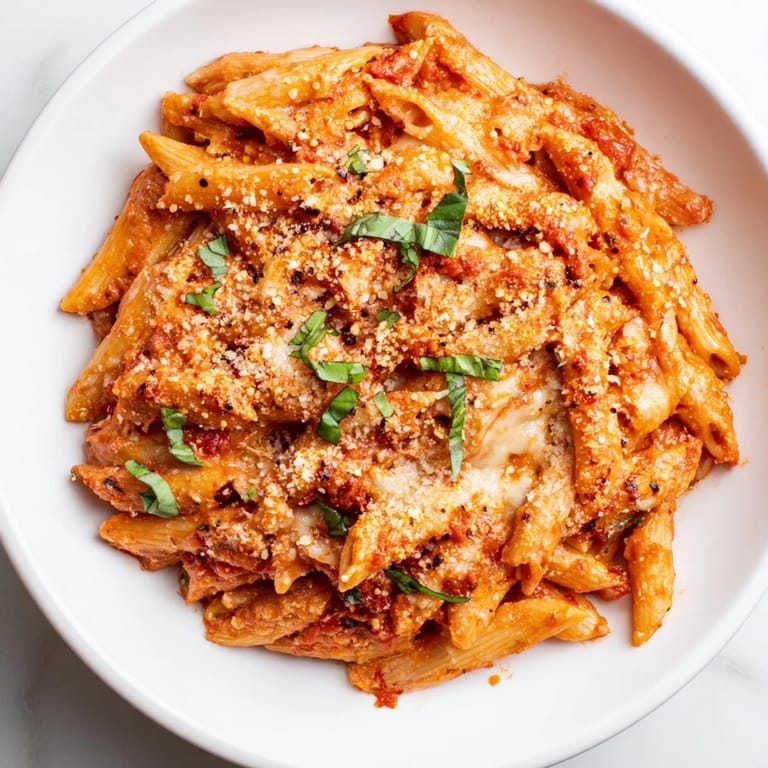
- Transfer half the pasta mixture to the prepared baking dish, sprinkle half the Parmesan and mozzarella over top, then layer the remaining pasta and finish with the rest of the cheeses. It should look slightly chaotic and very generous.
- Bake until golden:
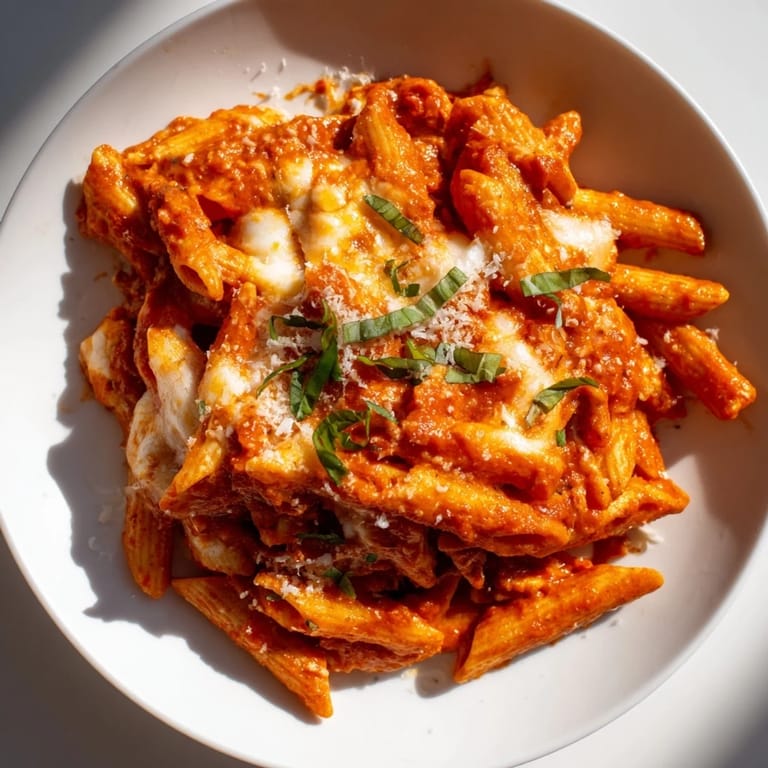
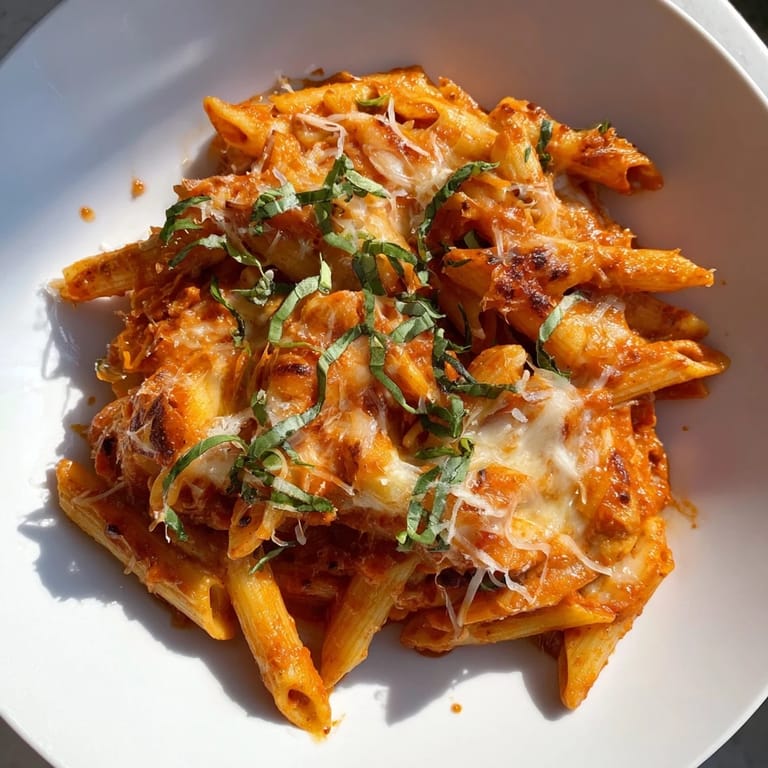
- Slide it into the oven for 18–20 minutes until the cheese on top has browned in spots and the sauce bubbles around the edges. The smell at this point will convince you that you've made something right.
- Rest and serve:
- Let it sit for five minutes—this keeps the layers together when you scoop—then sprinkle fresh basil on top and bring it to the table while it's still warm.
 Save
Save I've learned that there's something almost holy about watching someone taste this dish for the first time—the way their eyes widen when the heat hits, then relax into something like contentment when they realize the spice isn't mean, it's just honest. That moment, before they reach for another bite, is when I know the recipe has worked.
The Heat Factor
This dish is called arrabbiata, which means angry in Italian, and the anger comes from the chili—but don't let that intimidate you. Start with one teaspoon of red pepper flakes and taste the sauce before you add the pasta; if you want more heat, you can always stir in another pinch. I've found that people's tolerance for spice is so wildly different that I'd rather err on the mild side and let people adjust at the table than have someone pushing food around their plate out of politeness.
Why This Works as a Bake
Traditional arrabbiata is a quick stovetop sauce, usually tossed with thin spaghetti and finished in minutes. Baking it changes everything—the oven's gentle, surrounding heat allows the flavors to deepen and soften, the pasta absorbs sauce more evenly, and the cheese melts into the pasta instead of sitting on top. It becomes something warmer, rounder, more forgiving. You can make it an hour ahead and reheat it, which makes it perfect for feeding people when you're already tired.
Variations and Flexibility
This recipe is generous with improvisation, which is exactly how Italian grandmothers taught me to cook. If you want smokier depth, use provolone or fontina instead of mozzarella. If you have sautéed mushrooms or roasted bell peppers lingering in the fridge, toss them in—they'll disappear into the sauce and make it feel like a different dish without changing the base. Some people stir in a handful of fresh spinach or a few caramelized onions right before it goes in the oven, and honestly, every version I've tried tastes right.
- Add sautéed vegetables like mushrooms, bell peppers, or caramelized onions to the sauce before baking.
- Swap the mozzarella for provolone or fontina for a richer, deeper flavor profile.
- Stir in fresh spinach or other greens right before baking for extra color and substance.
 Save
Save This is the dish I make when I want people to feel loved without fussing all night. It's honest and warm and feeds the soul the way only carbs and cheese and a little bit of fire can.
Recipe FAQ Section
- → Can I adjust the heat level?
Yes, increase or decrease the crushed red pepper flakes to suit your preferred spice intensity.
- → What pasta works best for this dish?
Penne is ideal as it holds sauce well, but rigatoni or ziti can be good alternatives.
- → Can I use different cheeses?
Substitute mozzarella with provolone or fontina for a varied flavor profile.
- → How do I prevent pasta from overcooking?
Cook the pasta slightly less than package instructions so it finishes perfectly in the oven.
- → What side dishes pair well with this bake?
A crisp green salad or steamed vegetables and a glass of Chianti complement the richness nicely.