 Save
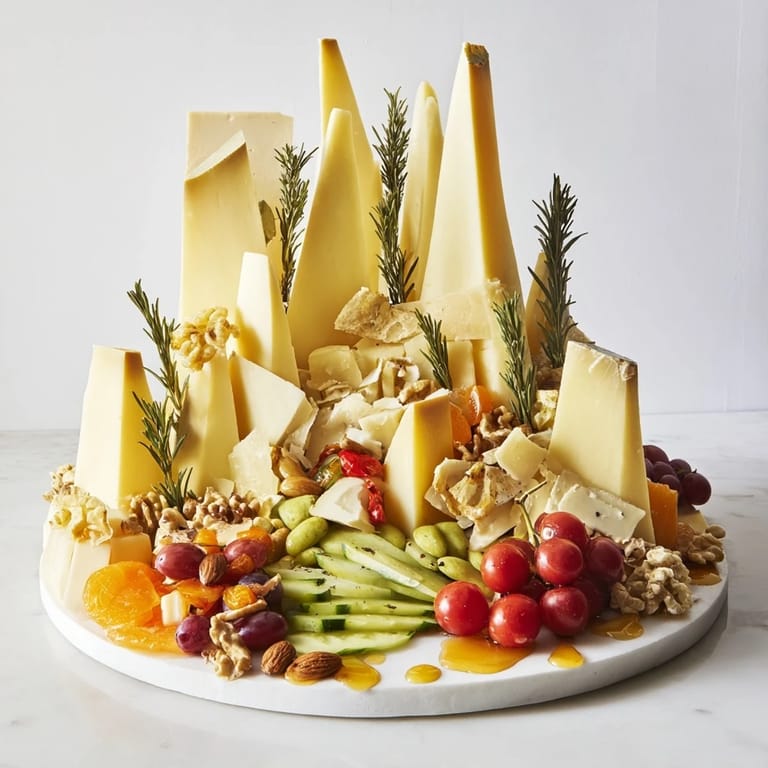
Save I still remember the first time I created a cheese board that made my guests actually gasp. It wasn't just about arranging cheese on a platter—it was that moment when my friend walked in and said, "Did you sculpt this?" That's when I realized that cheese could be more than sustenance; it could be art. Standing in my kitchen that afternoon, carefully positioning wedges of aged Manchego like jagged mountain peaks, I felt the same thrill I imagine an architect feels when seeing their vision take shape. This sculptural cheese landscape became my signature move, the thing people asked me to bring to every gathering.
I'll never forget hosting my book club for the first time with this board. One of my friends, who's usually quiet, spent ten minutes just studying the arrangement before building her first bite. She paired aged Cheddar with dried apricots and declared it life-changing. That's when I understood—a beautiful cheese board isn't just about hospitality, it's about inviting people into a moment where food becomes conversation and creativity.
Ingredients
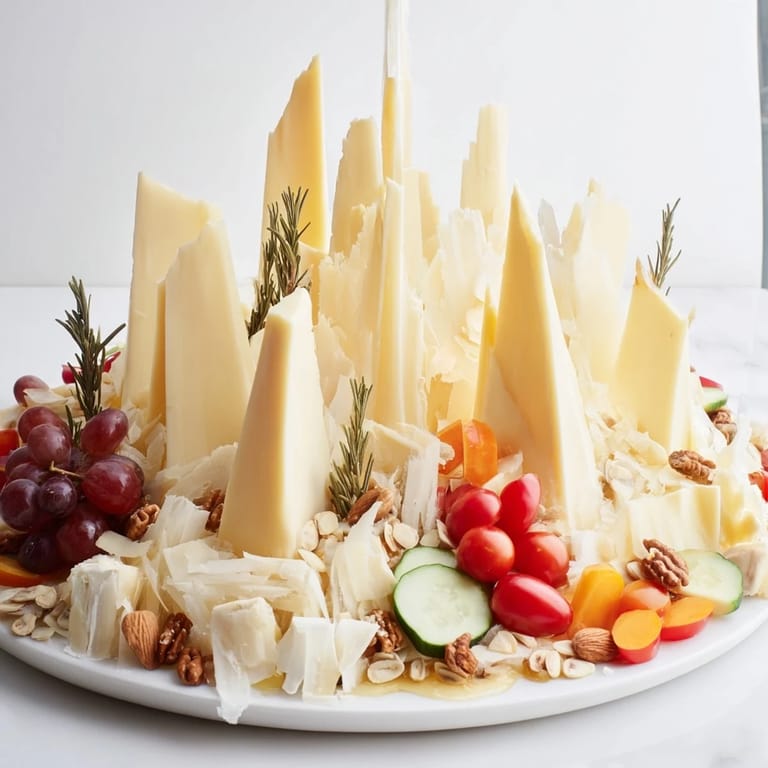
- Aged Manchego (150 g): Cut into tall, irregular chunks to form those dramatic peaks. This Spanish cheese has a subtle nuttiness and firm texture that holds its shape beautifully. I learned to cut it at slightly different angles—it catches the light differently and looks more naturally mountainous.
- Parmigiano-Reggiano (150 g): Break it into rugged shards rather than slicing neatly. The irregular edges feel more authentic to a landscape, and frankly, the natural breaks that cheese gives you are often more visually interesting than anything you could cut.
- Aged Cheddar (150 g): Slice into tall triangles. The depth of color in good aged cheddar acts as a natural anchor for your composition—it draws the eye and balances the lighter cheeses.
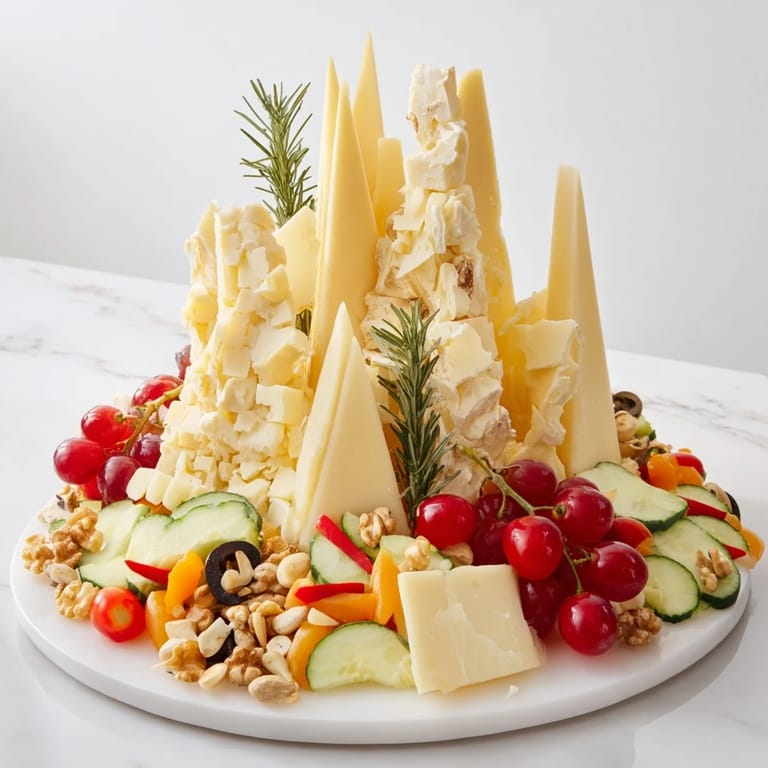
- Brie (100 g): Cut into thick wedges for the softer hills surrounding your mountains. The creamy contrast is essential both visually and in how it tastes against the hard cheeses.
- Gorgonzola (100 g): Break into rustic pieces. Its blue veining adds visual interest and a bold flavor that guests either love or use as a bridge to something milder.
- Red Grapes (1 cup, halved): They nestle into valleys perfectly and add that jewel-like color. Halving them lets them tuck into spaces better than whole grapes.
- Cherry Tomatoes (1 cup, halved): These add brightness and a slightly acidic freshness that cuts through rich cheese beautifully.
- Cucumber (1 small, sliced into rounds): The pale green and crisp texture offer visual relief and a cooling element between bites of intense cheese.
- Apple (1 small, thinly sliced): Choose a crisp variety like Granny Smith or Honeycrisp. The sweetness and acidity create magic with aged cheese, and thin slices look more refined on a board.
- Dried Apricots (1/2 cup): Their warm orange color creates little pockets of warmth throughout the landscape. They're chewy enough to hold their own against assertive cheeses.
- Roasted Almonds (1/2 cup): These are your boulders—scattered throughout to suggest rocky texture and add protein and crunch.
- Walnuts (1/2 cup): Earthier than almonds, they add visual variety and a slightly deeper flavor note.
- Baguette Slices (12): Thin slices work better than thick—they're the paths your guests walk along your landscape. Toast them lightly if your board will sit for more than 30 minutes, otherwise they soften.
- Assorted Crackers (12): Include at least two different varieties. Different shapes and textures let people choose what feels right for each cheese.
- Honey (2 tbsp): Drizzle it in small pools or over select cheeses. It adds sweetness, shine, and acts as an edible glue for nuts and herbs. Warm honey feels more luxurious than cold.
- Fresh Rosemary Sprigs: These are your trees and forest touches. They add fragrance and suggest a natural landscape.
Tired of Takeout? 🥡
Get 10 meals you can make faster than delivery arrives. Seriously.
One email. No spam. Unsubscribe anytime.
Instructions
- Build Your Mountains First:
- Start with those tall, hard cheese chunks—Manchego, Parmigiano-Reggiano, and Cheddar. Stand them vertically on your board, letting them be irregular and dramatic. Rotate each piece slightly so they catch light from different angles. Think of them as the main architecture of your landscape. I usually position them in a slightly asymmetrical way, clustered on one side rather than dead center—it feels more natural and inviting.
- Nestle the Softer Cheeses as Hills:
- Around the base of your hard cheese mountains, settle the Brie and Gorgonzola wedges. These should feel like they're supporting the peaks. Leave some space between pieces—negative space is as important as the food itself. As you're arranging, you'll naturally start seeing where gaps are, and that intuition is your guide.
- Fill the Valleys:
- Now for the most meditative part—filling the lower areas with grapes, tomatoes, cucumbers, apples, and apricots. Cluster them by type, but let colors blend at the edges. Halved grapes nestle into tight spaces better than whole ones. Position tomatoes where their red will pop against the pale Brie. Lay apple slices like they're catching afternoon light. This is where you can slow down and actually enjoy the creative process.
- Scatter Your Textures:
- Distribute almonds and walnuts across the landscape as if they're scattered boulders. Some should rest directly on cheese, some in open spaces. This adds depth and suggests a real landscape where rocks are embedded in earth and vegetation. A scattered handful looks better than a neat pile.
- Create Your Paths and Plateaus:
- Arrange baguette slices and crackers along the edges and in open areas. These form the paths your guests will travel as they explore. Lean some against the cheese mountains—they're meant to be both functional and decorative.
- Add the Final Touches:
- Warm your honey slightly if possible—it flows better and looks more luxurious. Drizzle it in small pools on open spaces or directly onto select cheeses where it will pool and shine. Tuck rosemary sprigs around the board as if a forest is growing up through your cheese landscape. They add fragrance, color variation, and that sense of natural abundance.
- Serve with Invitation:
- Step back and look at what you've created. You've made something guests won't want to immediately eat—they'll want to photograph it first, which feels right. Serve immediately and encourage people to explore and build their own combinations as they go. That's the real magic of this board—everyone becomes a creator.
 Save
Save There's a moment during every cheese board gathering when I watch someone take their first intentional bite, pausing to notice how the textures work together, how the sweetness of apricot balances the salt of Parmigiano. That's when I know this board has become what I hoped—not just food, but an experience that brings people closer together. That's the real architecture I'm building here.
Composition and Visual Balance
Think of your board like a landscape painter thinks of a canvas. You need height variation, color distribution, and purposeful negative space. The hard cheeses create the vertical drama, the soft cheeses provide creamy transitions, and the fruits and vegetables become the living elements. Color should flow throughout rather than clustering—imagine a little red grape here, a cluster of apricots there, never all one color in one spot. The most striking boards feel both abundant and intentionally placed, never random or cluttered.
Flavor Pairings That Actually Work
The beauty of this board is that every ingredient was chosen because it genuinely enhances at least one cheese. The sweetness of grapes and apricots mellows the intensity of Gorgonzola. Crisp cucumber offers relief between rich cheeses. Apple slices create magic with aged Cheddar—that sweet-sharp combination is something people have been enjoying for generations. The honey brings everything together, adding a luxurious sweetness that makes people pause and savor. When you understand why each element is there, you can confidently swap similar items if needed. Prefer pear to apple? Absolutely use it—the principle is the same.
Making This Board Your Own
This is a template that invites personalization. Your regional cheeses might be different—use what's excellent where you are. Add cured meats if you'd like—thin prosciutto draped over soft cheese is stunning. Edible flowers scattered throughout add color and make the landscape feel even more alive. The principle remains: create height with hard cheeses, softness with creamy ones, and fill the space with colors and textures that speak to you. You're not just following a recipe; you're composing something that reflects your taste and your table.
- Swap in local cheeses to make this board uniquely yours
- Add delicate cured meats for non-vegetarian versions without overwhelming the cheese flavors
- Edible flowers like pansies or nasturtiums add color and a touch of sophistication
 Save
Save This sculptural cheese landscape is one of those recipes that rewards you twice—once when you're building it, lost in the quiet pleasure of arranging something beautiful, and again when you watch your guests discover it. Make this the next time you want to feel both generous and creative at the same time.
Recipe FAQ Section
- → How can I create the mountain effect with cheeses?
Use tall, irregular chunks of hard cheeses like Manchego and Parmigiano-Reggiano, arranging them vertically on the board to mimic rugged peaks.
- → What fruits complement the cheese landscape?
Red grapes, cherry tomatoes, apple slices, and dried apricots add color and freshness, filling the lower areas for balance and contrast.
- → Which nuts are best for adding texture?
Roasted almonds and walnuts scattered throughout the board create satisfying crunch and depth resembling natural boulders.
- → How should I place bread and crackers?
Arrange baguette slices and assorted crackers along the edges to form paths and plateaus, providing easy access and structural variety.
- → What complementary accents enhance the presentation?
Drizzle honey in select areas and tuck fresh rosemary sprigs around the board for subtle sweetness and aromatic forest notes.
- → Can I customize the cheese selection?
Yes, feel free to swap cheeses based on personal preference or regional availability to suit different tastes.