 Save
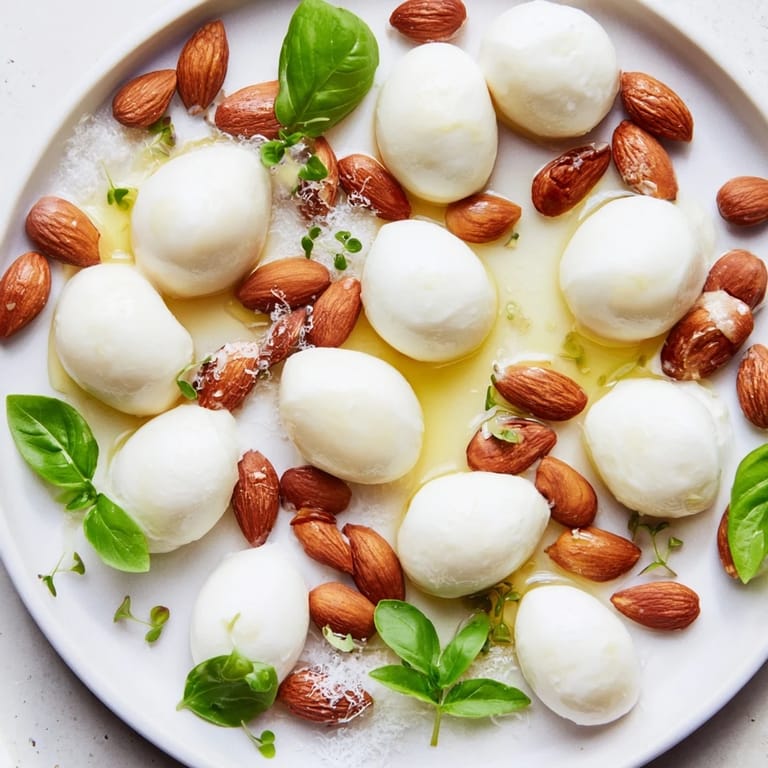
Save A friend once called my cheese board "too serious" — all the usual suspects arranged in neat rows. That comment stuck with me until I found myself staring at a stream bed during a walk, noticing how the smooth pebbles seemed to tumble together in the most natural, artless way. I came home and started playing with soft cheeses and roasted almonds, arranging them the way water had arranged those stones. The Polished Pebble was born that afternoon, and it became the appetizer I reach for whenever I want people to feel welcomed with a little playfulness on the table.
I remember making this for my sister's book club, and one guest actually gasped when she saw it — not because it was fancy, but because it felt alive somehow, like the board was telling a story. That reaction taught me something: people don't just eat with their mouths, they eat with their eyes first, and when you give them something unexpected and genuine, they notice.
Ingredients
- Oval-shaped mini mozzarella balls (200 g): These little spheres are your canvas; their smoothness mirrors actual pebbles and their mild flavor won't compete with what comes after.
- Oval goat cheese medallions (200 g): Cut your block into thick ovals if you can't find medallions — the creamy tang adds sophistication without pretension.
- Babybel cheese, peeled and halved (150 g): Their natural reddish wax coating gives you instant visual variety; I actually leave some whole for shape contrast.
- Whole raw almonds (100 g): Roasting these yourself transforms them from a supporting player into something golden and fragrant that steals attention.
- Olive oil (1 tbsp): A whisper of good oil catches the light and brings the whole arrangement together like lacquer on wood.
- Flaky sea salt (1 tsp): This is where texture comes in — use something chunky so people feel the salt crystals dissolve on their tongue.
- Fresh basil leaves: A small handful adds green without overwhelming; tear them gently just before serving so their oils release.
- Microgreens or edible flowers (optional): These are your final brushstrokes — use them sparingly to hint at a garden rather than shout about one.
Tired of Takeout? 🥡
Get 10 meals you can make faster than delivery arrives. Seriously.
One email. No spam. Unsubscribe anytime.
Instructions
- Roast the almonds until they sing:
- Preheat your oven to 180°C (350°F) and spread the almonds on a baking tray. After 5–7 minutes of roasting, you'll smell something almost floral wafting out — that's your signal they're done. Stir them once halfway through so they toast evenly, then let them cool completely on the tray.
- Dry the cheeses to a shine:
- Pat your mozzarella balls and goat cheese medallions thoroughly with paper towels until they look polished, almost jewel-like. Any moisture will dull their surface and make them stick together when you don't want them to.
- Build your stream bed:
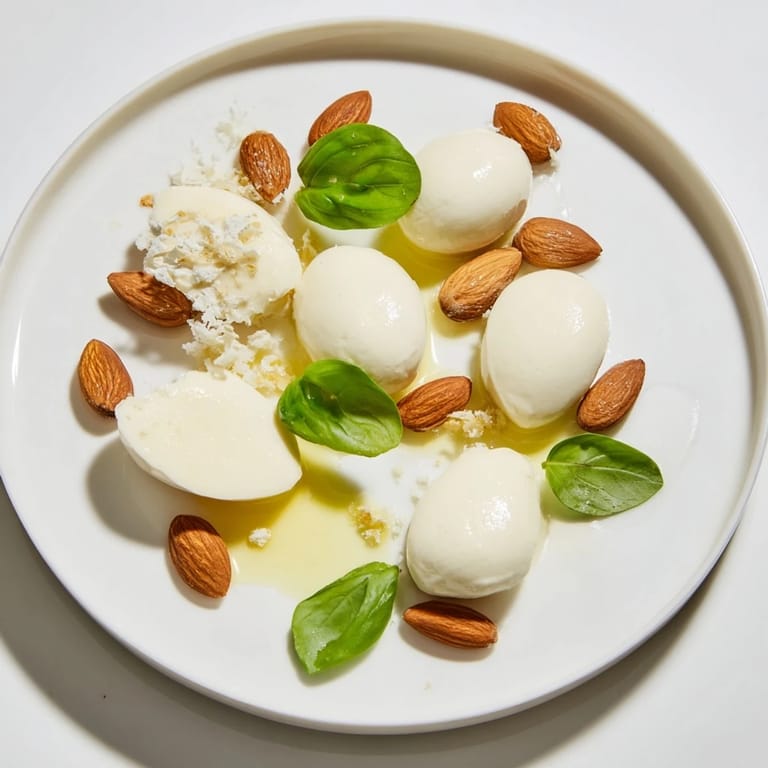
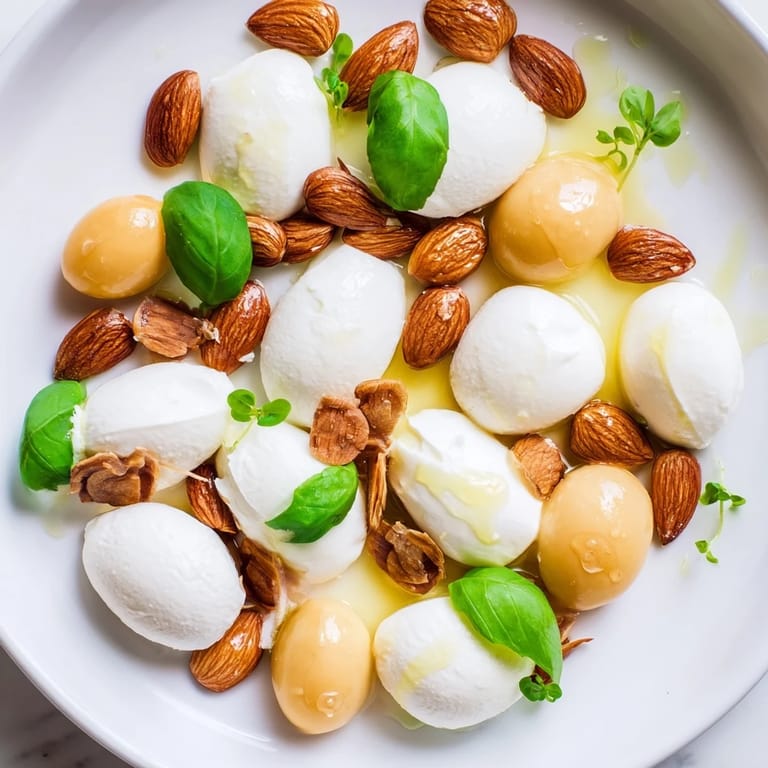
- On a large platter or wooden board, start arranging cheeses and almonds in a loose, meandering pattern as if they've naturally tumbled together. Alternate between cheese types and nuts, letting some overlap slightly while others rest in small gaps — think of how water flows around stones.
- Finish with oil and salt:
- Drizzle olive oil gently across the arrangement so it catches the light, then sprinkle flaky sea salt in a way that looks intentional but not fussy. The oil will also help keep the cheeses from drying out during serving.
- Crown it with greens and flowers:
- Scatter fresh basil leaves and any microgreens or edible flowers across the board just before guests arrive — they'll look fresher this way and the board will feel like something that just came together from a garden. Serve with small forks or cocktail picks so people can help themselves.
 Save
Save The magic moment came when my quiet uncle, who never says much about food, picked up a piece and just said, "This is smart." I realized then that beauty on a plate is just confidence in restraint — letting good ingredients speak for themselves instead of drowning them in unnecessary fuss.
The Art of Arrangement
Arranging this board is like building a small landscape. I think of the platter as a canvas divided into thirds — perhaps heavier on one side, lighter on the other, so your eye travels across it naturally instead of getting stuck in one spot. The key is to trust your instincts rather than trying to make it look "designed." When you arrange with your hands instead of your head, the result feels honest.
Cheese Selection and Swaps
The beauty of this recipe is that you can pivot based on what your cheese counter has on the day you shop. Bocconcini, ovolini, or even small rounds of aged gouda all work beautifully as long as they have that oval or round shape that catches light. I've found that mixing textures — something creamy, something firmer, something with a rind — keeps people coming back for more bites because each one feels slightly different.
Serving and Pairings
I serve this with a crisp white wine like Sauvignon Blanc, but I've also seen it paired beautifully with light beer or even sparkling water with a splash of elderflower. Some guests love it with a drizzle of honey or a small bowl of balsamic glaze on the side; others prefer crusty bread to build little bites. The elegance is that it doesn't demand anything — it's complete on its own, but flexible enough to work with whatever mood the meal calls for.
- Set out small forks or cocktail picks so people feel confident grabbing pieces without their hands getting greasy from the oil.
- If serving outdoors, assemble the board just before guests arrive since the afternoon sun will warm the cheeses faster than you'd expect.
- Leftover roasted almonds keep in an airtight container for three days and are dangerous to have around — I often find myself eating them straight from the jar while cooking dinner.
 Save
Save This appetizer became my answer to the question of how to make people feel welcome without spending hours in the kitchen. It's a reminder that the simplest dishes, when made with intention and a little playfulness, often leave the deepest impression.
Recipe FAQ Section
- → What cheeses are best for this dish?
Oval-shaped cheeses such as mini mozzarella balls, goat cheese medallions, and babybel work well for the polished pebble effect.
- → How should the almonds be prepared?
Roast whole raw almonds at 180°C (350°F) for 5–7 minutes until golden and fragrant, then let them cool before arranging.
- → Can I substitute the nuts used here?
Yes, smoked almonds or marcona almonds make flavorful alternatives that still complement the cheeses well.
- → How is the dish garnished for presentation?
Fresh basil leaves, microgreens, and edible flowers add a natural, garden-inspired accent to the arrangement.
- → What accompaniments pair well with this appetizer?
Serving with honey, balsamic glaze, crusty bread, or a crisp white wine like Sauvignon Blanc enhances the tasting experience.
- → Is this suitable for special diets?
It fits vegetarian and gluten-free diets but contains dairy and tree nuts, so check allergen info carefully.