 Save
Save I'll never forget the first time I visited that tiny contemporary gallery in Brooklyn where I saw a Pointillist exhibition. Standing before those massive canvases made entirely of tiny dots, each one essential to the whole, I felt inspired to bring that same artistic vision into my kitchen. That's when The Pointillism Dot Matrix was born—a dish that celebrates color, contrast, and the beautiful chaos of carefully placed elements that somehow make perfect sense together.
The moment that cemented this dish in my regular rotation was when I served it to my artist friend Maya. She'd been going through a rough creative block, and watching her face light up as she realized what inspired the plating—that moment of connection between art and food—reminded me why I cook. She came back the next week specifically asking me to make it again.
Ingredients
- Beetroot, cooked and pureed (80 g): This earthy, naturally sweet puree provides that deep crimson color and rich mineral flavor. I learned early on that roasting it first intensifies the sweetness—never skip that step if you have time.
- Carrot, cooked and pureed (80 g): Bright and naturally sweet, it bridges the gap between earthiness and brightness. A few drops of good olive oil makes it creamy without diluting the flavor.
- Green pea, cooked and pureed (80 g): This is your gentle voice in the composition—subtle, sweet, and reminds people that vegetables can be genuinely delicious. Fresh or frozen peas both work beautifully.
- Yellow bell pepper, roasted and pureed (80 g): Roasting is non-negotiable here. It transforms the pepper from merely bright to complex and slightly smoky. This was the ingredient that taught me patience pays off.
- Greek yogurt (60 g): Thick, tangy, and creamy without heaviness. It's your white canvas in the pointillist palette, grounding all the bold colors around it.
- Crème fraîche (40 g): Richer and more luxurious than yogurt, it adds sophistication. If you can't find it, Greek yogurt works, but you'll lose a bit of that refined edge.
- Basil pesto (1 tbsp): Use fresh basil if possible. This herbaceous element ties everything to spring and garden-fresh memories. A squeeze bottle makes dispensing tiny dots surprisingly meditative.
- Red pepper coulis (1 tbsp): Bright, acidic, and visually striking. This was the ingredient that made me realize how much flavor can live in a single tablespoon when you're intentional about placement.
- Balsamic reduction (1 tbsp): Sweet and slightly thick, it's the dark accent that makes all the other colors sing. Make your own by simmering balsamic vinegar until syrupy, or buy the good stuff.
- Pickled red onions, finely diced (20 g): Tangy and crunchy, they add textural contrast. I always make extra because they keep for weeks and transform simple dishes into something special.
- Microgreens (20 g): Choose varieties that appeal to you visually and flavor-wise. They're your final flourish, adding elegance and a peppery freshness.
- Toasted black sesame seeds (1 tbsp): Toast them yourself if you can—five minutes in a dry pan changes everything. They add a subtle nutty depth.
- Pomegranate seeds (1 tbsp): Jewel-like and tart-sweet, they catch the light and add bursts of flavor. Buy them ready-seeded if you're short on time; your hands will thank you.
- Edible flower petals (optional): Choose flowers you know are edible—pansies, nasturtiums, or borage add unexpected beauty. I skip these sometimes and the dish still sings.
- Sea salt flakes and freshly ground black pepper: The finishing touch that makes people taste everything more intentionally. Don't skip the sea salt flakes—they have a different texture and brightness than table salt.
Tired of Takeout? 🥡
Get 10 meals you can make faster than delivery arrives. Seriously.
One email. No spam. Unsubscribe anytime.
Instructions
- Prepare your vegetable purees:
- Blend each cooked vegetable separately with just a pinch of salt and a few drops of olive oil until completely smooth. This is where patience matters—blend longer than feels necessary until each puree is silky. Transfer each one into its own piping bag or squeeze bottle. The blender heat actually makes these easier to pipe, so do this step just before plating if you can.
- Ready your creams and sauces:
- Pour the yogurt and crème fraîche into separate piping bags. Place your pesto, coulis, and balsamic reduction in squeeze bottles. Squeeze bottles are your friend here—they give you control that piping bags can't match for these looser elements. Test each one on a plate edge first to get the pressure right.
- Create your pointillist composition:
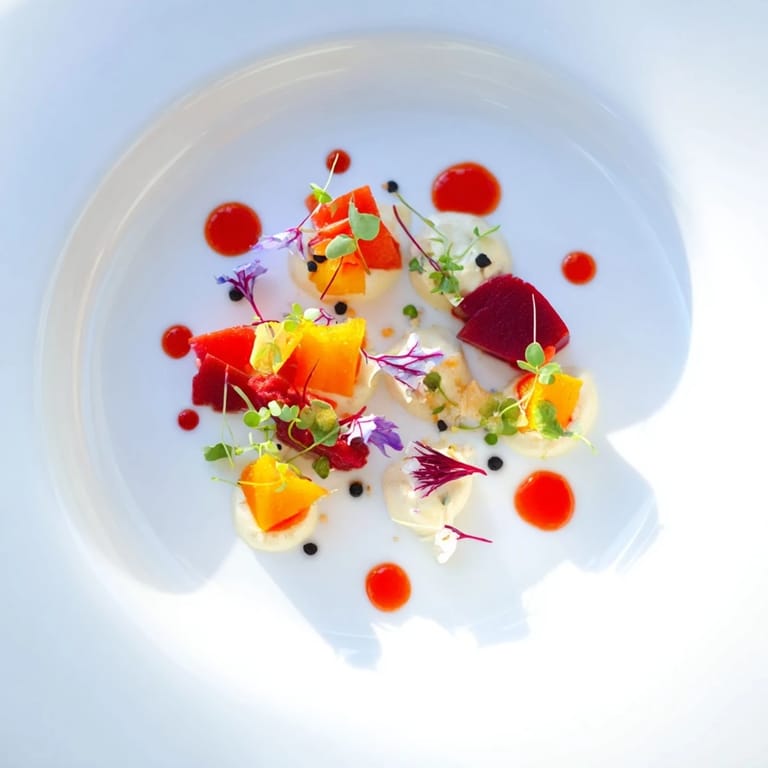
- Start with a clean white plate and begin dotting. Think like an artist, not a cook. Place dots and small mounds across the entire surface, never letting them touch, varying your dot sizes intentionally. Some should be pea-sized, others almond-sized. Use different purees in different areas. Stand back occasionally to see your composition emerge. This is the most meditative part.
- Layer in textural accents:
- Now comes the fun part. Scatter your pickled onions, microgreens, sesame seeds, and pomegranate seeds across the dots. Don't be random—be intentional. Place them where they'll contrast most beautifully. If using edible flowers, add them last, as they're delicate. Think about which colors you want to emphasize and which you want to rest.
- Season and serve with intention:
- Finish with a light sprinkle of sea salt flakes and a few grinds of black pepper across the composition. The salt should catch the light. Serve immediately—this dish is about visual impact as much as flavor, and letting it sit dulls both.
 Save
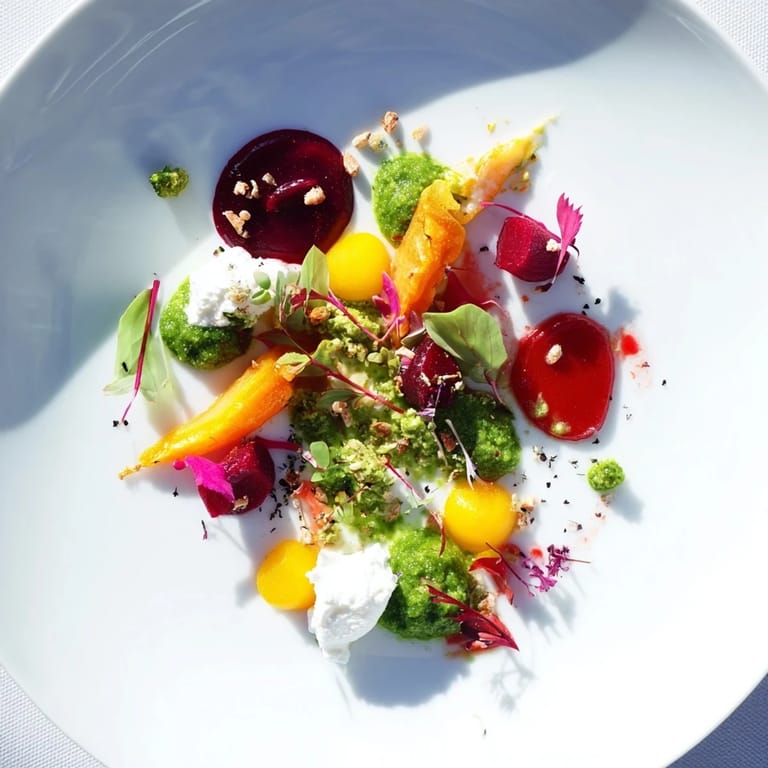
Save Last month, my young niece watched me plate this dish and said something that stuck with me: 'It looks like you're painting with food.' That's exactly what this is. It's a reminder that cooking can be art, that the presentation and the flavor are inseparable partners, and that sometimes the best recipes are the ones that make people smile before they even taste them.
Making This Your Own
This recipe is a framework, not a prison. I've made it with purple sweet potato puree, roasted garlic cream, and even a smoked paprika element when I wanted earthier tones. The magic isn't in the specific purees—it's in the contrast and the intentional placement. You can work with whatever produce you have, as long as you're thinking about color harmony and flavor balance. Some of my best versions came from 'what's in the vegetable drawer' improvisation, which is oddly freeing.
Equipment That Actually Matters
You don't need fancy tools, but a few things make this easier. Good piping bags or squeeze bottles let you control your dots precisely. A blender creates smoother purees than a food processor, though the processor works fine if that's what you have. Chef's tweezers are genuinely useful for placing delicate garnishes without smudging your composition, but tweezers from home work too. I've plated this with everything from professional equipment to improvised kitchen tools—the plate is the real canvas here.
- Invest in reusable piping bags rather than disposable ones—they're easier to control and better for the environment
- A squeeze bottle with a narrow tip gives you more precision than you'd expect for tiny dots
- Clean your piping bags immediately after use; dried puree is nearly impossible to wash out later
Wine and Serving Suggestions
A crisp Sauvignon Blanc is the natural partner here—the acidity cuts through the richness of the creams and echoes the brightness of the vegetables. A mineral-forward white or even a light rosé works beautifully. Serve this with crisp crackers or toasted sourdough on the side, letting guests choose how much carb they want with each bite. Sometimes I offer both and let people build their own flavor combinations. It's part of the interactive joy of the dish.
 Save
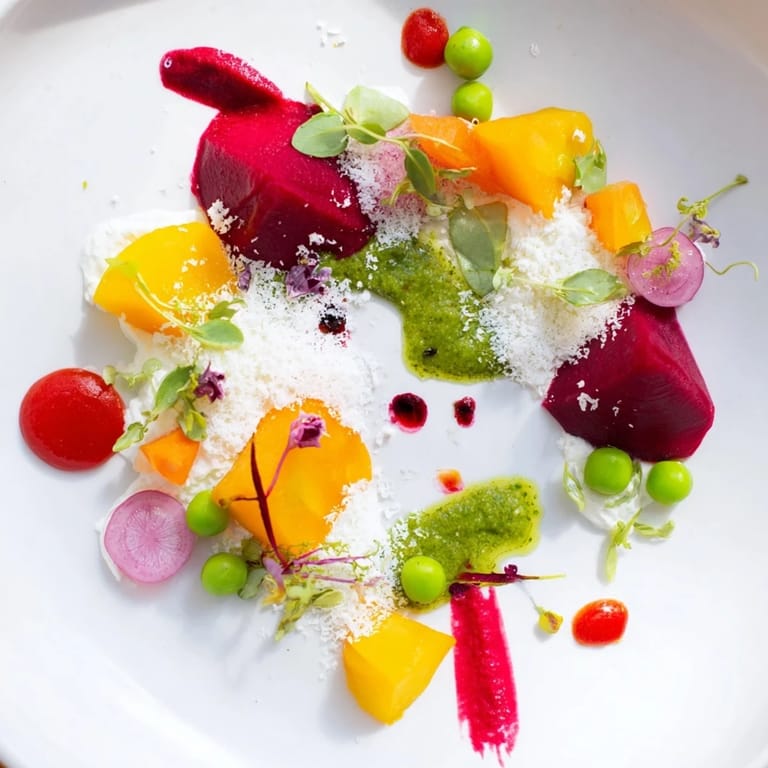
Save This dish taught me that cooking doesn't have to be complicated to be impressive, and that sometimes the most memorable meals are the ones that engage multiple senses—sight as much as taste. When you serve The Pointillism Dot Matrix, you're not just feeding people; you're giving them a moment to pause and appreciate.
Recipe FAQ Section
- → What vegetables are used for the purees?
Beetroot, carrot, green pea, and yellow bell pepper are cooked and pureed individually to create vibrant colors and flavors.
- → How do you achieve the dot matrix plating effect?
Use piping bags and squeeze bottles to carefully place various purees, creams, and sauces as small dots and mounds in a scattered pattern across the plate.
- → Can this dish accommodate dietary restrictions?
Yes, for a vegan version, substitute plant-based yogurt and omit the crème fraîche while maintaining all other elements.
- → What garnishes enhance the dish visually and texturally?
Pickled red onions, microgreens, toasted black sesame seeds, pomegranate seeds, and edible flower petals provide bright colors and varied textures.
- → What tools are recommended for plating?
Blender or food processor for purees, multiple piping bags or squeeze bottles, and optionally chefs tweezers for precise garnish placement.
- → How should this dish be served?
Serve immediately after plating to preserve the vibrant colors and fresh textures, accompanied optionally by crisp crackers or sourdough.