 Save
Save I still remember the afternoon I first encountered the concept of kinetic motion in plating—it was at a small gallery-adjacent restaurant where the chef described their food as visual art. That day, a plate arrived with vegetables arranged so deliberately, clustered on one side and gradually dispersing, that it felt like the ingredients themselves were moving across the white canvas. I sat there, fork suspended, just studying it for a moment before tasting. From that moment on, I became obsessed with recreating that sense of intentional movement at home. This dish—The Kinetic Motion Blur—is my love letter to that memory and my answer to anyone who thinks appetizers can't be show-stopping.
Last spring, I made this for a dinner party where I was still finding my footing as a host. I'd nervously assembled the platter while my guests arrived, and when I finally carried it out, the room went quiet for just a beat. Then someone said, 'Did you actually make this?' and suddenly everyone was leaning in, pointing out details, asking how I did it. That's when I realized this dish does something special—it makes people feel like they're in on a secret, like you've shared something that took real thought and care.
Ingredients
- Golden beet, thinly sliced: The sweetness here grounds everything; I've learned that golden beets are gentler than their red cousins, less earthy, more delicate. Use a mandoline if you have one—your knife hand will thank you
- Red beet, thinly sliced: For the deep jewel tones that make the platter sing visually. The slight mineral note plays beautifully against the goat cheese
- Watermelon radish, thinly sliced: This is the secret weapon. When you slice it, those pink and white stripes appear almost shocking—it's the detail people notice first and mention last when they're thinking back on the meal
- Persian cucumber, thinly sliced: The cooling element, the palate cleanser. I chose Persian over regular because the thinner skin feels more delicate against your teeth
- Baby carrots, sliced on a bias: The bias cut is everything here. It catches the light differently than a straight slice, adding to the sense of motion. Toast them lightly if you want, or keep them raw for maximum snap
- Creamy goat cheese, at room temperature: Room temperature matters—cold goat cheese is dense and difficult to dot gracefully. Let it sit out while you prep. The creaminess is your anchor, the thing that ties the raw vegetables together
- Toasted hazelnuts, roughly chopped: Toast them yourself if possible, even in a dry skillet for five minutes. That warmth and aroma changes everything. The rough chop means texture variation—some larger pieces, some finer
- Black sesame seeds: These are purely about drama. They sink into crevices, catch light, and hint at something sophisticated. Use them sparingly or generously depending on your mood
- Microgreens: Arugula or radish work beautifully. They're the final whisper of freshness and the visual feathering that completes the blur effect
- Fresh dill, fronds only: Don't chop this—just pluck the delicate tops. It should feel like something you could blow away, which is exactly what we're after
- Extra virgin olive oil: Use one you actually like drinking. This isn't a cooking oil; it's nearly a condiment here, and its flavor matters
- Fresh lemon juice: Squeezed moments before. Bottled lemon juice will taste thin and hollow by comparison
- Honey: Just a touch, enough to round the edges of the acid without announcing itself
- Salt and freshly ground black pepper: Season to taste, but remember you'll taste everything more intensely on a raw vegetable than in a cooked dish
Tired of Takeout? 🥡
Get 10 meals you can make faster than delivery arrives. Seriously.
One email. No spam. Unsubscribe anytime.
Instructions
- Make your dressing first:
- Whisk together the olive oil, lemon juice, honey, salt, and pepper in a small bowl. Taste it—really taste it. Does it make your mouth water a little? Does the sweetness balance the acid? This dressing is doing most of the work flavor-wise, so take a moment here. Set it aside while you prep everything else
- Slice everything, and do it with intention:
- Use a sharp knife or mandoline to slice your vegetables as thin as you can manage without tearing them. Uniformity matters here—it's what creates that visual rhythm. As you slice, arrange each vegetable on a clean plate so you can see what you're working with. The act of slicing and preparing is meditation; don't rush it
- Begin the kinetic arrangement:
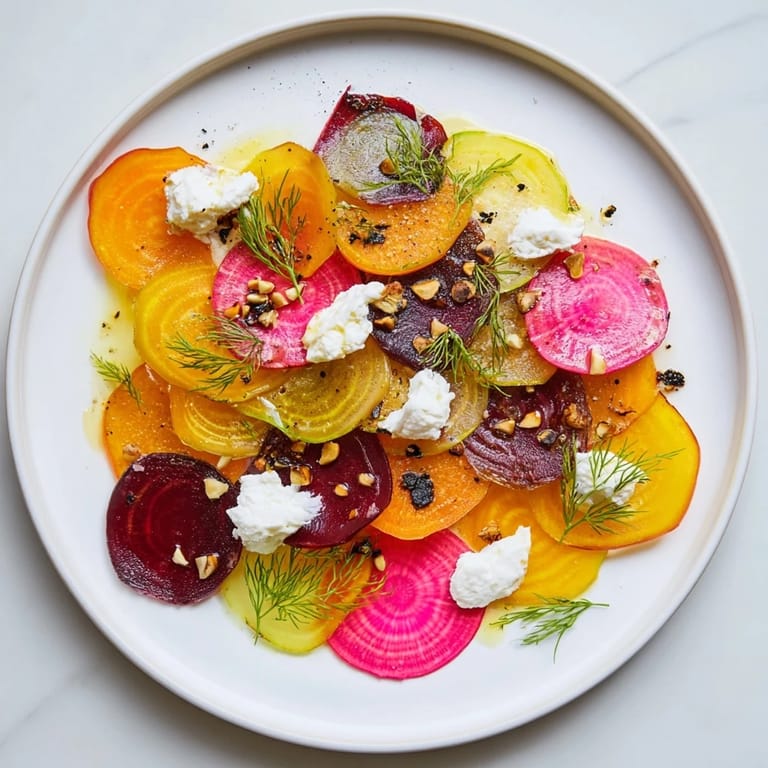
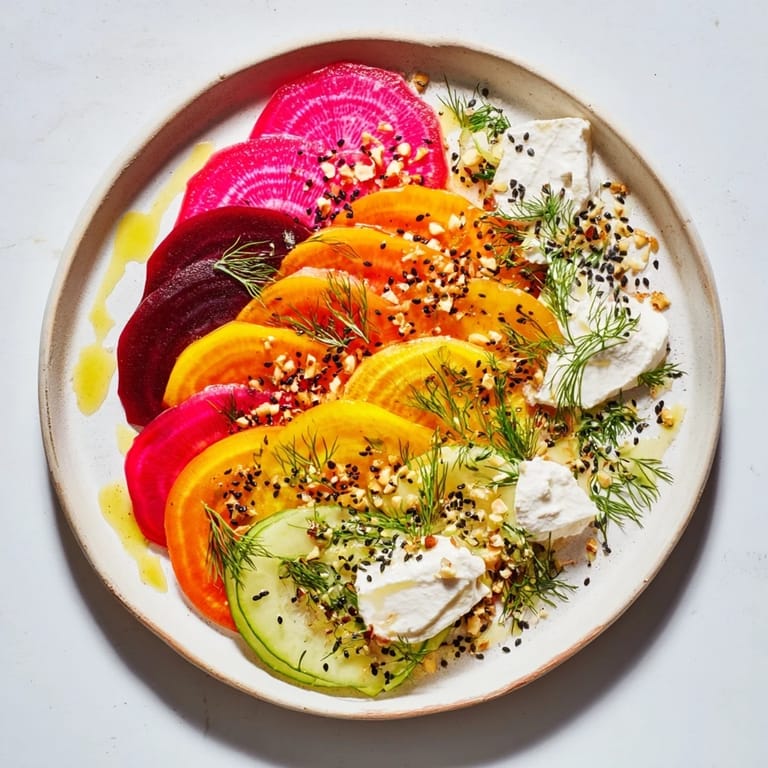
- On your serving platter or individual plates, start on one side with the vegetables overlapping densely—nearly shingling them, each slice just barely covering the one before. This is your motion's origin point, your visual starting line. This might take 10 to 15 minutes, and that's exactly right. Thoughtfulness shows
- Gradually introduce space:
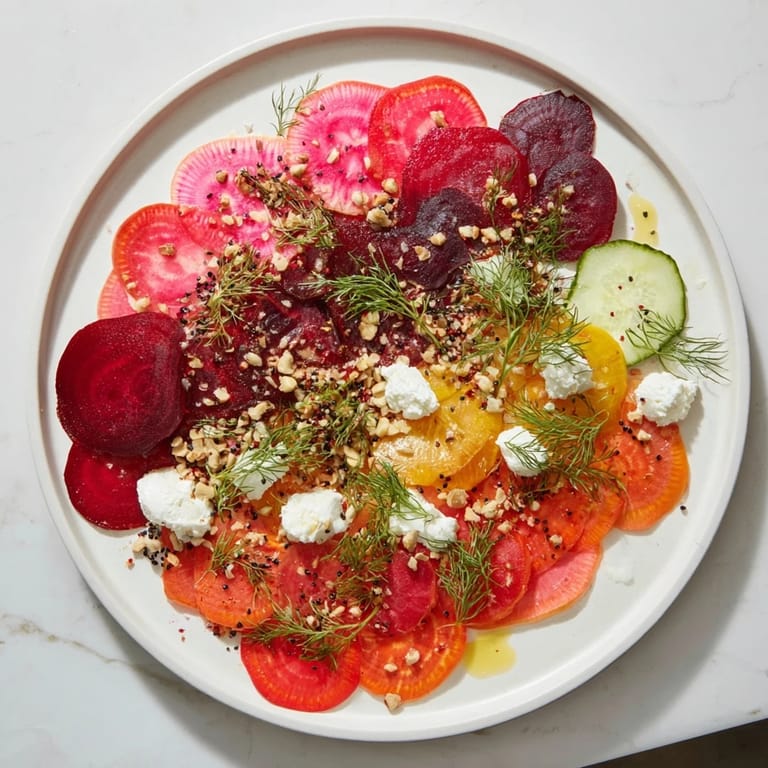
- As you move across the platter toward the opposite edge, slowly increase the space between each vegetable slice. By the time you reach the edge, some slices should be alone, isolated, as if they've traveled far from the cluster. This gradual transition is what creates the sense of blur and movement
- Dot the goat cheese with purpose:
- Use a small spoon to place tiny dollops of goat cheese among the densest cluster—nestle them into the crevices of those overlapping slices. As you move toward the sparse side, use fewer dollops, eventually fading to none. The cheese anchors the visual, and its creaminess will cut through the raw vegetables
- Scatter nuts and seeds with direction:
- Toast your hazelnuts in a dry skillet until fragrant—just five minutes—then roughly chop them. Sprinkle them heavily on the dense side, fading toward the sparse area. Do the same with the black sesame seeds. These elements add texture and catch light, deepening the sense of motion
- Finish with greens and herbs:
- Scatter your microgreens and dill fronds last, again concentrating them on the dense side and letting them trail off. These delicate elements are your final flourish—they should feel light, almost accidental, though of course nothing here is
- Dress with restraint:
- Drizzle your dressing across the platter, using less toward the sparse side. The dressing adds moisture and brightness, but too much will make everything slip and lose that careful architecture you've built. A gentle drizzle is more elegant than a pour
- Serve immediately:
- The moment you finish dressing is the moment to bring this to the table. The vegetables are at their crispest, the goat cheese at its softest, the visual impact at its strongest. Don't let it sit waiting
 Save
Save There's a quiet satisfaction in making something that demands attention not because it's loud or heavy, but because someone took time with it. I remember my mother-in-law studying the platter for so long that everyone else grew quiet too, and then she said softly, 'This is beautiful.' It wasn't about the taste in that moment—though the taste is excellent—it was about the care made visible. That's what this dish does. It transforms ingredients into an offering.
Choosing Your Vegetables
The vegetables I've listed are suggestions, not commands. What matters is that they're fresh, colorful, and sliceable. In spring, I reach for radishes and baby vegetables. In summer, add thin slices of heirloom tomato or stone fruit. In fall, watermelon radish and goldenrod beets shine. In winter, try thinly sliced Brussels sprout leaves—raw, they're almost delicate. The principle remains the same: choose vegetables that are beautiful to look at and that you genuinely want to eat raw. Avoid anything mushy or past its prime.
Variations and Occasions
For a vegan version, replace the goat cheese with a creamy cashew cheese or hummus—something thick and flavorful that serves the same anchoring function. For a pescatarian twist, add very thin slices of smoked salmon or trout along the dense cluster; the smoke plays beautifully with the raw vegetables and the acidic dressing. For a richer appetizer, top the goat cheese with a quail egg yolk. In winter, a few pomegranate seeds scattered across the platter add both color and a bright pop. Consider your audience, your season, your mood—and adjust accordingly.
Pairing and Presentation
This is an appetizer that demands a moment of attention before people eat it. Bring it to the table and let it sit for just a breath—let people see it, comment on it, feel the effort behind it. Pair it with a crisp Sauvignon Blanc, a dry sparkling wine, or even a very light rosé. The acidity in these wines echoes the brightness of your dressing and keeps your palate fresh between bites. The presentation is part of the experience, so take your time, and don't be shy about the artistry.
- If plating individually, allow 10 extra minutes and embrace it as a meditative ritual rather than a chore
- The platter can be assembled 30 minutes ahead, then dressed just before serving—this gives you flexibility if timing matters
- Use a white or neutral plate so the vegetables' colors become the entire focus
 Save
Save This dish reminds me why I cook: not because I must feed people, but because sometimes the act of arranging, of placing one small beautiful thing next to another, becomes a conversation in itself. I hope this becomes yours too.
Recipe FAQ Section
- → How do I create the kinetic motion blur effect?
Arrange thin vegetable slices densely on one side, gradually spacing them out toward the other side to simulate motion fading visually.
- → Can I substitute the goat cheese for a dairy-free option?
Yes, plant-based cheese alternatives work well to maintain creaminess and complement the vegetables.
- → What nuts enhance the texture in this dish?
Toasted hazelnuts provide a crunchy contrast and a warm nutty flavor that pairs well with the fresh ingredients.
- → Which herbs are best to use for freshness?
Microgreens such as arugula or radish and fresh dill fronds add a bright, fresh taste that balances the flavors.
- → What is a suitable dressing for this arrangement?
A simple blend of extra virgin olive oil, lemon juice, honey, salt, and black pepper enhances all components without overpowering.
- → How should this dish be served for best impact?
Serve immediately after dressing to preserve freshness and maintain the crisp textures and striking visual appeal.