 Save
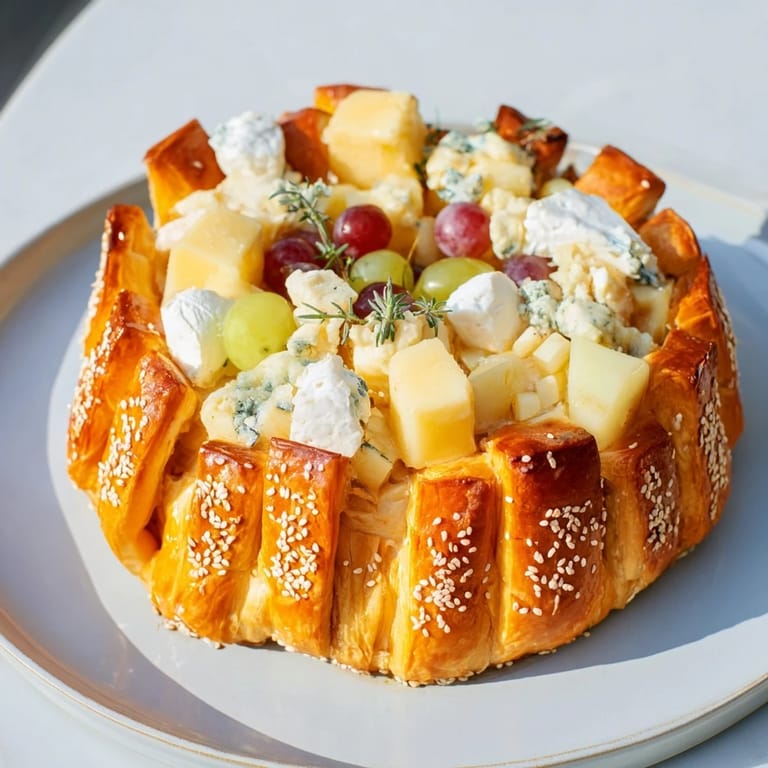
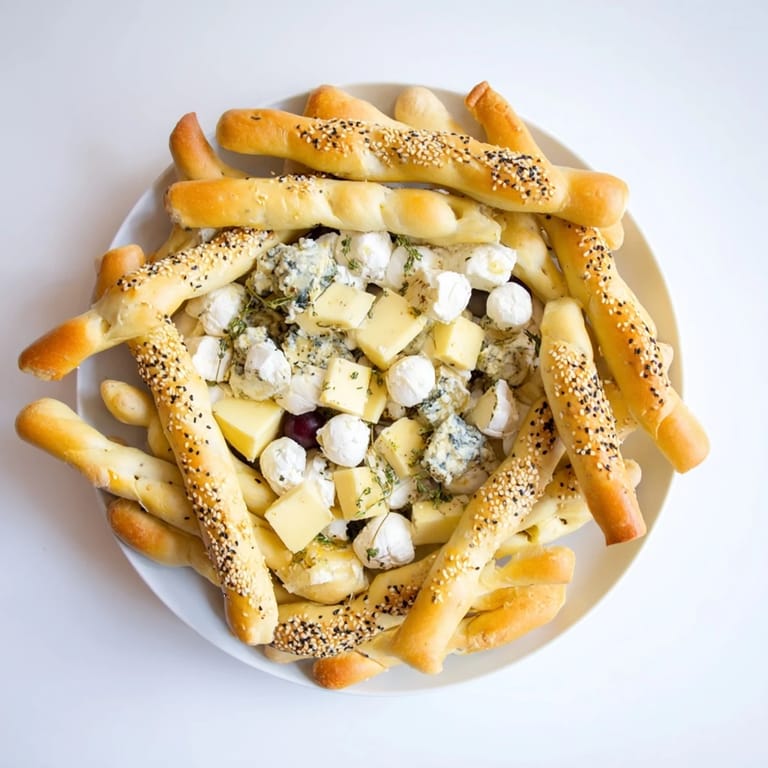
Save The first time I assembled The Gilded Cage, I was nervous in a way that surprised me. It wasn't just about feeding people well—it was about creating a moment they'd remember. My hands were slightly trembling as I balanced those golden breadsticks over a mound of cheese, watching them catch the lamplight like they were defying gravity. That's when I realized this dish isn't really about precision or technique. It's about that magical pause when your guests arrive, see something unexpected and beautiful on your table, and suddenly feel like they're somewhere special. This recipe became my favorite way to say, without words, that someone matters enough for the extra care.
I remember my sister asking if the breadsticks were going to fall, and honestly, I wasn't entirely sure until that first one stayed. That nervous laugh we shared when the dome held together felt like winning a small, delicious victory. Now she requests it every time she visits, and we've turned assembly into a ritual—she arranges the cheeses while I crisp the breadsticks, and somehow it became our thing. What started as an ambitious appetizer idea turned into a tangible reminder that the best meals are the ones you actually enjoy making.
Ingredients
- All-purpose flour (2 cups): This is your foundation—nothing fancy needed, just reliable flour that will develop gluten and give your breadsticks their snap and flexibility.
- Instant dry yeast (1 tsp): Don't skip the instant variety; it works faster and more predictably than active dry, which matters when you're on a timeline.
- Sugar and salt (1 tsp and 1/2 tsp): These aren't just flavoring—they feed the yeast and balance the dough so every breadstick tastes complete.
- Lukewarm water and olive oil (150 ml and 2 tbsp): The water wakes up your yeast, and the oil makes the dough silky and prevents them from drying out too quickly in the oven.
- Egg yolk glaze and sesame seeds: The glaze turns them golden and slightly glossy; the seeds add a subtle nuttiness and visual intrigue.
- Triple-cream Brie: Its silky, almost liquid center is a revelation against the crisp breadstick—this is luxury you can actually taste.
- Aged Comté: A nutty, caramel-tinged cheese that's complex enough to stand beside showier varieties without apologizing.
- Truffled goat cheese: The truffle brings an earthy whisper that elevates the entire composition; without it, the selection feels incomplete.
- Blue cheese like Roquefort: This is your textural and flavor anchor—crumbly, punchy, undeniable.
- Parmigiano Reggiano shavings: Their brittleness provides contrast and a salty finish that makes everything else taste better.
- Red grapes, honey, and fresh herbs: These aren't garnish—they're the supporting cast that makes the cheese selection feel intentional and thoughtful.
Tired of Takeout? 🥡
Get 10 meals you can make faster than delivery arrives. Seriously.
One email. No spam. Unsubscribe anytime.
Instructions
- Mix your dough foundation:
- Combine flour, yeast, sugar, and salt in a large bowl, then add lukewarm water and olive oil. Mix until everything comes together—it'll look shaggy and imperfect at first, which is exactly right. Knead for 8–10 minutes until the dough becomes smooth and elastic, shifting from sticky to silky as the gluten develops under your hands.
- Give it time to breathe:
- Cover the bowl and let the dough rise in a warm, draft-free spot for about 30 minutes until it roughly doubles in size. Your kitchen should feel almost tropical—a window in the sun works beautifully, or set it near (not on) a warm appliance.
- Prepare your workspace:
- Preheat the oven to 200°C (390°F) and line a baking tray with parchment paper so your breadsticks won't stick and will lift off easily when golden.
- Shape your sticks:
- Divide the dough into 18–20 small pieces and roll each one gently into a thin stick about 3 mm thick and 25 cm long. They'll look delicate and a bit crooked—that's the charm; perfectly uniform ones look mass-produced.
- Glaze and garnish:
- Place the shaped breadsticks on your prepared tray and brush each one lightly with egg yolk for that glossy finish. Scatter sesame seeds over them if you want—they'll toast and add a subtle crunch and visual warmth.
- Bake until golden:
- Bake for 15–18 minutes, turning them once halfway through so they color evenly and crisp all the way through. You'll know they're ready when they smell toasted and sound hollow when tapped.
- Cool and prepare your stage:
- Let the breadsticks cool completely on the tray—this is when they truly become crisp. While they cool, arrange your cheese selection as a mound on a serving platter, scattered with grapes, drizzled with honey or jam, and finished with fresh herbs.
- Build your edible architecture:
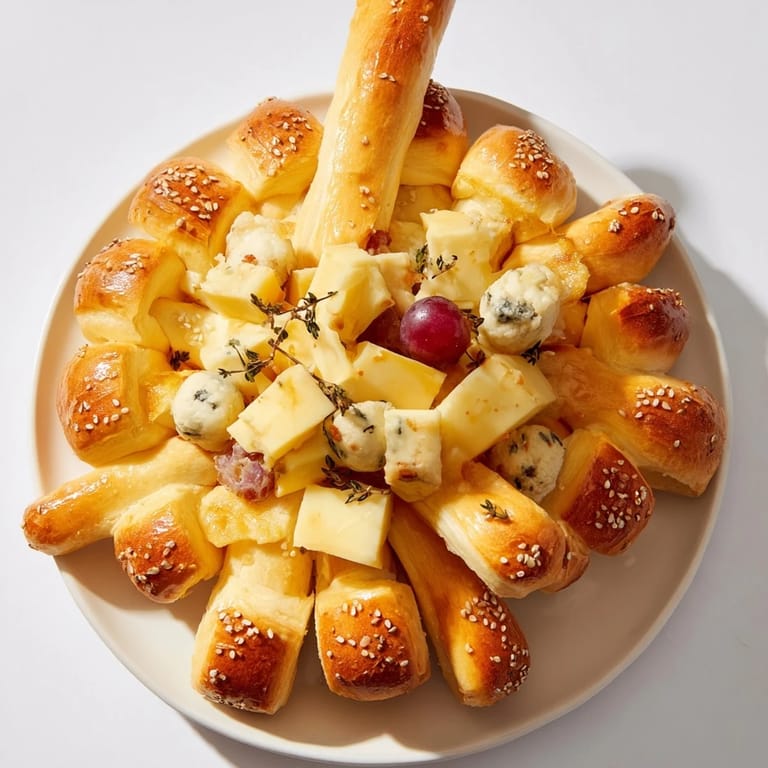
- Carefully lean and balance the breadsticks over the cheese pile, using the cheeses and the breadsticks themselves for support as they nestle together. If you need extra stability, use a small bowl as a temporary base mold while assembling, then gently remove it before serving—this creates a hollow core that feels intentional and elegant.
 Save
Save There's a particular magic in watching someone realize they can eat the vessel holding their appetizer. A friend's eyes went wide when she broke off a breadstick and discovered it was warm, salted, and somehow even better with a cube of Brie. That moment—when food becomes playful and surprising instead of just nourishment—is when a dish transcends being impressive and becomes genuinely memorable.
The Cheese Selection Strategy
Choosing your five cheeses is less about following rules and more about creating a conversation. Each one should offer something distinctly different: a soft luxury, a firm nuttiness, an unexpected whisper of truffle, a bold punch, and a crystalline finish. I learned this after assembling a dome with all similar cheeses and realizing halfway through that every bite felt redundant. Now I think of the selection as a small orchestra where each instrument plays a different part. If triple-cream Brie isn't your style, any soft-ripened cheese with character works. If blue cheese intimidates you, a sharper aged cheddar or Manchego brings the same textural contrast. The key is contrast—soft against firm, mild against bold, familiar against surprising.
Timing and Temperature
This dish rewards gentle preparation and patience, not rushing. The breadstick dough needs its full 30-minute rise to develop enough structure to stay upright; skipping time here won't save you anything. The baking time of 15–18 minutes is firm because underbaked breadsticks will feel tender and won't hold their shape, while overbaking dries them into something brittle and slightly bitter. I discovered the importance of letting everything cool to room temperature the hard way—warm breadsticks are floppy, cold cheese is too firm, and the whole composition becomes a puzzle that doesn't quite fit. Build this dish at least 30 minutes before serving so all components reach that perfect middle temperature where they're agreeable and forgiving.
Making It Your Own
The beauty of The Gilded Cage is how personal it becomes once you understand the structure. You can swap every single cheese and the dish still works perfectly. You can play with the breadstick recipe—adding rosemary, black pepper, or a touch of garlic powder brings subtle shifts in flavor. You can dress it up with edible gold leaf, or scale it down for an intimate dinner for two. I've made it with honey in fall, fig jam in spring, and once with a drizzle of aged balsamic just because I was curious. Every version felt like mine because I'd made conscious choices instead of blindly following instructions.
- Try aged cheddar, Manchego, or Taleggio if you want to build a entirely different flavor profile.
- For gluten-free guests, swap the breadstick dough for a trusted gluten-free recipe and proceed identically.
- Edible gold leaf pressed gently onto the warm, glossy breadsticks creates an undeniably luxurious effect that guests always photograph.
 Save
Save This dish asks you to slow down for a moment and create something that's both simple and extraordinary. Serve it with the knowledge that you've made something people will remember.
Recipe FAQ Section
- → How do I shape the breadsticks for the dome?
Divide dough into small pieces and roll each into thin sticks about 3 mm thick and 25 cm long, ensuring uniform size for easy assembly.
- → What cheeses work best for this combination?
Triple-cream Brie, aged Comté, truffled goat cheese, blue cheese, and Parmigiano Reggiano provide a balance of textures and flavors.
- → Can the breadsticks be made ahead of time?
Yes, bake and cool the breadsticks completely in advance, then assemble just before serving to maintain crispness.
- → Are there suggestions for garnishes?
Sesame seeds on breadsticks, fresh thyme or rosemary, and a drizzle of honey or fig jam complement the flavors beautifully.
- → How can I ensure the dome stays stable?
Gently press breadsticks into the cheese mound or use a small bowl as a mold while assembling, then remove after construction.