 Save
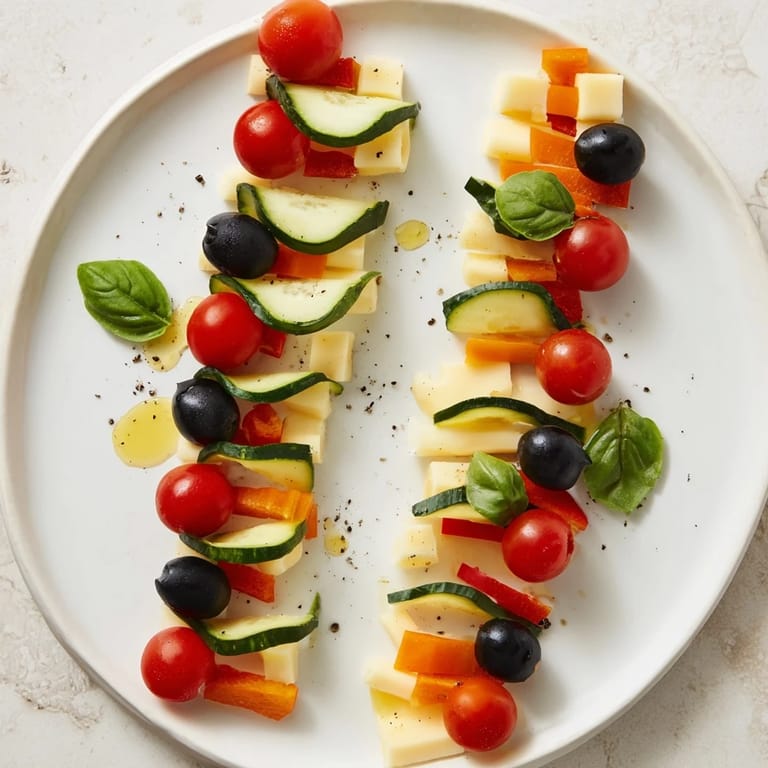
Save I'll never forget the moment my colleague Sarah brought this Double Helix platter to our office science symposium. Here I was, a self-proclaimed amateur chef with a love for biochemistry, watching grown adults gather around a cutting board like it was the most sophisticated piece of lab equipment. The idea struck me instantly: food could be art, conversation could happen around vegetables, and yes, DNA could be delicious. That afternoon, I realized that the most memorable dishes aren't always the ones that taste the best—they're the ones that tell a story before you even take a bite.
The real magic happened when I served this at my niece's high school biology project party. She was studying genetics, and her friends thought it was the coolest thing—a recipe that actually looked like what they were learning in class. Watching teenagers cluster around the platter, debating which strand was which base pair while munching on mozzarella, reminded me that food bridges the gap between education and joy in ways that textbooks never can.
Ingredients
- Black olives, pitted and sliced (100 g): These form one of your primary strands and provide that glossy, deep color that makes the helix unmistakable—they're the visual anchor of the whole piece. I always use Kalamata or good quality oil-cured olives because they're meatier and less likely to slip around on the board.
- Cherry tomatoes, halved (100 g): The bright red creates the perfect contrast against the black olives on your first strand. They're naturally sweet, and their slight firmness keeps them from getting squished when people pick them up—something I learned after a few soft, mushy attempts.
- Cucumber, cut into thin half-moons (100 g): This brings a refreshing crunch and pale green that fills in the middle sections beautifully. I slice mine on a mandoline to keep them consistently thin and professional-looking.
- Roasted red peppers, sliced (100 g): Whether from a jar or roasted fresh, these add both sweetness and a silky texture that contrasts with the crispness of the cucumber. They're also incredibly forgiving and hold their shape beautifully.
- Smoked salmon or marinated tofu strips (100 g, optional): This is where you can add protein and depth—smoked salmon if you want elegance, marinated tofu if you're keeping it vegetarian. Either option adds a sophisticated flavor layer that makes people pause and really taste what they're eating.
- Mozzarella cheese, cut into thin strips or small cubes (150 g): These are your rungs—the connectors that hold the whole DNA structure together. Keep them at room temperature so they're pliable enough to arrange without cracking or tearing.
- Cheddar cheese, cut into thin strips or small cubes (100 g): I use cheddar for its firmer texture and richer color—it contrasts with the white mozzarella and adds visual interest. Some people skip the second cheese, but I've found that the visual layering of two cheeses really sells the DNA concept.
- Fresh basil leaves (50 g): These tuck into the design as you build, adding flashes of bright green that make the whole thing look intentional and garden-fresh. They're also edible decoration, so don't hold back.
- Crackers or gluten-free crackers (50 g, optional): Have these on the side for people who want something to anchor the toppings—it keeps the experience tidy and prevents cheese fingers.
- Olive oil (1 tbsp): A light drizzle at the very end catches the light and adds that final restaurant-quality shine. Don't overdo it or the vegetables will slip around.
- Freshly ground black pepper, to taste: A generous grind of pepper at the end elevates everything and ties the flavors together in a way that salt alone never could.
Tired of Takeout? 🥡
Get 10 meals you can make faster than delivery arrives. Seriously.
One email. No spam. Unsubscribe anytime.
Instructions
- Set your stage:
- Start with a large, clean serving board or platter—I prefer a pale wood or white ceramic because it makes the colors absolutely pop. Make sure you have good lighting where you'll be serving, because half the appeal of this dish is visual. Take a breath and imagine where your two parallel lines will travel across the board.
- Lay the first strand:
- Starting at the top left of your board, create the first long line using alternating colors—I typically go black olives, then move slightly down and create a gentle wave. Think of it as a loosely drawn line of ink, not a ruler-straight stripe. The gentle curves are what make it look like a real helix, not a geometric exercise.
- Build the second strand:
- About 3-4 inches away, parallel to your first line, create a second line using contrasting ingredients—cherry tomato halves work beautifully opposite the olives. Mirror the gentle curves of the first strand as closely as you can manage. Step back and look at both lines together. Do they feel balanced? If one is drifting too far, adjust before you move forward.
- Add dimension with middle layers:
- Now fill in the space between your two main strands with your other vegetables—cucumber slices create a pale, cohesive middle layer, while roasted red peppers add richness. Don't feel pressured to use every ingredient evenly; use your eye to create visual balance. If one side looks too dark, add more pale vegetables.
- Create the connectors:
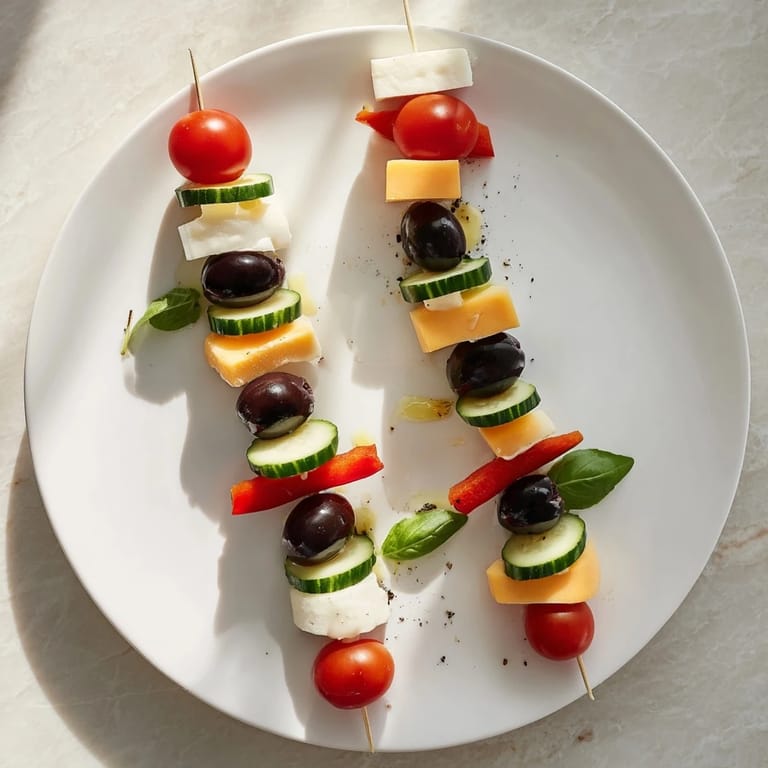
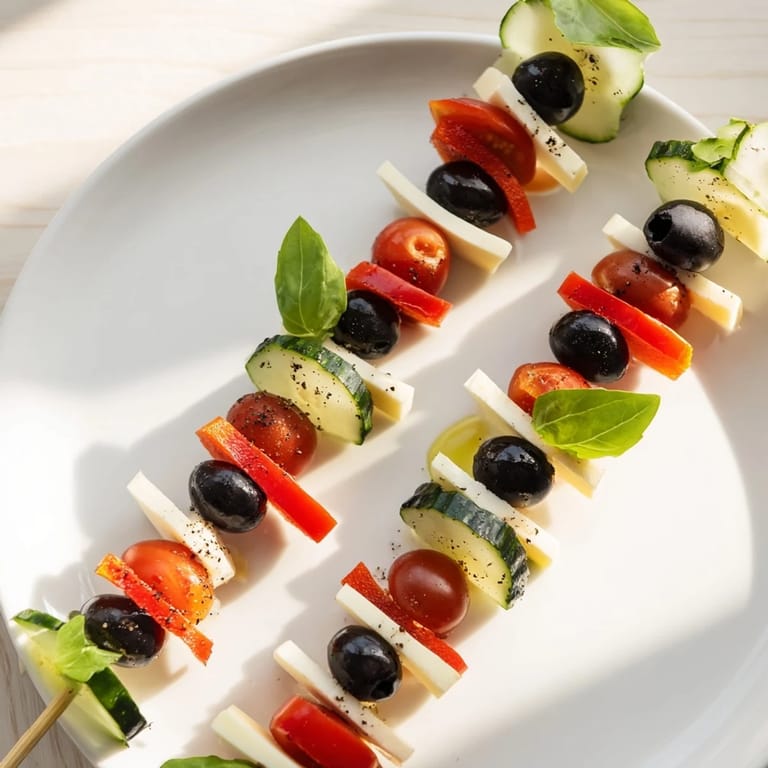
- This is where the magic actually happens. Take your mozzarella strips and cheddar cubes and arrange them perpendicularly between the two strands, connecting them like the base pairs of actual DNA. Space them maybe 2-3 inches apart along the length of your helix—not too close (it looks crowded) or too far (it looks disconnected). Alternate your cheeses for visual interest: mozzarella, cheddar, mozzarella, cheddar.
- Tuck in the green:
- Take fresh basil leaves and gently nestle them among the ingredients, tucking them into little gaps. They act like the missing puzzle pieces that make the whole thing feel intentional rather than random. This step is when people usually realize you're a kitchen genius, even though you're really just playing with your food.
- The final flourish:
- Drizzle very lightly with quality olive oil—I use a light hand here because we're not making a salad, just catching light and adding a whisper of flavor. Then give it a generous grind of fresh black pepper across the entire piece. The pepper adds depth and shows this was thoughtfully seasoned, not just thrown together.
 Save
Save My favorite moment came when my friend Marcus, who's colorblind, asked me to describe which line was which and then said, "You know, I can taste the difference anyway. One side is brighter flavors, one side is deeper. You designed it with all your senses, didn't you?" That's when I understood this recipe isn't really about DNA at all—it's about thoughtfulness, attention to detail, and making people feel like they matter.
The Beauty of Preparation
One thing I've learned through making this repeatedly is that proper knife skills matter here. Your vegetables need to be cut consistently—thin enough to look elegant, substantial enough to not seem flimsy. Take your time with the slicing. This isn't a race. I actually find the cutting meditative, especially when I'm prepping for a gathering. The repetition of thin, even slices becomes almost therapeutic, and by the time I'm ready to assemble, I'm in exactly the right headspace to create something beautiful.
Playing with Color and Contrast
The genius of this recipe is that you can adapt it completely based on what you have available and what color story you want to tell. Use purple onions instead of tomatoes, swap artichoke hearts for peppers, try different colored cheeses. I once made it with white mozzarella and aged Gouda, and the golden-brown rungs were unexpectedly stunning against pale vegetables. The framework stays exactly the same—two strands, perpendicular connectors—but your creativity determines whether this becomes your signature dish or just another appetizer.
Serving Strategies and Timing
I've learned that this dish benefits from being the centerpiece of the table rather than competing for attention on a crowded spread. When people arrive and see this before anything else, they comment on it, photograph it, and that builds anticipation for actually eating it. The crackers on the side keep things practical—some people will make little open-faced sandwiches, others will pick ingredients directly. Both approaches work perfectly fine, and honestly, watching different people interact with the same dish teaches you something about their personalities.
- Assemble this within 30 minutes of serving to keep vegetables crisp and avoid any wilting around the edges.
- If you're transporting this to a party, assemble it on a board that can stay intact, or bring pre-cut ingredients and assemble on-site—it only takes 10 minutes and guarantees freshness.
- Consider your guests' dietary needs when deciding whether to include salmon or use plant-based cheese, and always have options clearly labeled in case of allergies.
 Save
Save This recipe taught me that sometimes the most memorable dishes are the ones that make people think, smile, and feel clever for eating something beautiful. Every time I make the Double Helix, I'm reminded that cooking is conversation, and presentation is part of the story.
Recipe FAQ Section
- → What ingredients create the double helix effect?
Alternating lines of black olives, cherry tomatoes, cucumber, roasted peppers, and optionally smoked salmon or tofu are connected by mozzarella and cheddar cheese strips to mimic a DNA helix.
- → Can this appetizer be made vegan?
Yes, by substituting cheese with plant-based alternatives and using marinated tofu instead of smoked salmon, it can be made vegan-friendly.
- → How should this dish be served?
Arrange on a large platter with crackers or gluten-free crackers on the side, drizzle with olive oil, and add freshly ground black pepper for seasoning.
- → What makes this appetizer suitable for gluten-free diets?
Using gluten-free crackers or omitting crackers altogether ensures it remains gluten-free while keeping all other ingredients naturally free of gluten.
- → Are there any suggested beverage pairings?
This appetizer pairs well with crisp white wines or sparkling water with lemon, complementing its fresh and vibrant flavors.