 Save
Save I'll never forget the afternoon I wandered into a modern art gallery in the city, my stomach growling louder than I'd like to admit. As I stood mesmerized by a Picasso exhibit, I realized the cubist fragmentation happening on the canvas could translate beautifully to the plate. That evening, I came home and started cutting vegetables into impossible angles, arranging them like abstract art, and discovered something magical: when you slow down to appreciate the geometry of food, every bite becomes intentional, playful, and utterly unforgettable.
I made this for a dinner party where everyone was skeptical about a vegetable-focused appetizer. The moment I set the platter down, the room fell silent. Not the uncomfortable kind, but the kind where people are genuinely delighted before they even taste it. One guest said it looked too beautiful to eat, then went back for three more pieces. That's when I knew this recipe was special.
Ingredients
- Cucumber: The subtle, watery crispness is your palate's best friend here. Peel it to keep the presentation clean and the bite refreshing.
- Golden beet: I learned the hard way that roasting your own beet gives you better control over texture than pre-cooked ones. Cook it until a fork slides through easily, then let it cool completely before cutting.
- Watermelon radish: This is the showstopper ingredient that makes people gasp. Its pink interior against the white flesh is naturally cubist. Choose one that feels heavy for its size.
- Avocado: Select one that yields slightly to pressure but isn't mushy. Cut it just before assembly so it doesn't oxidize and turn an unappealing shade.
- Feta cheese: Use a block, not crumbles. A good quality feta holds its shape beautifully when cut into geometric forms and adds a salty, tangy anchor to the sweetness of the produce.
- Mango: Look for one with a fruity aroma near the stem. The sweetness against salty feta is what makes people reach for another piece.
- Extra virgin olive oil: This is not the place to skimp. A quality oil brings everything together with its fruity, peppery notes.
- Lemon juice: Freshly squeezed matters. It brightens everything and prevents the avocado from oxidizing.
- Flaky sea salt and black pepper: These are your final brushstrokes. Don't use pre-ground pepper if you can help it.
- Microgreens or fresh herbs: This is where you add personal flair. I like basil for sweetness or cilantro for a subtle bite.
Tired of Takeout? 🥡
Get 10 meals you can make faster than delivery arrives. Seriously.
One email. No spam. Unsubscribe anytime.
Instructions
- Gather your tools and set up your workspace:
- Lay out a clean cutting board and have your large platter nearby. This isn't just about being organized; it's about respecting the ingredients enough to work deliberately. Pour yourself a drink if you like. This should feel meditative, not rushed.
- Cut the cucumber into geometric shapes:
- Peel it first, then slice lengthwise into long planks. Now here's where the art comes in: rotate each plank and cut it into triangles, parallelograms, or whatever angles call to you. They don't all need to match. Aim for pieces about one centimeter thick so they hold their shape but stay tender.
- Prepare the beet with care:
- Your cooked beet should be completely cool. Slice it into similar geometric shapes as the cucumber. The earthiness of the beet will anchor everything visually and flavor-wise.
- Slice the watermelon radish dramatically:
- This is my favorite step. Cut thin slices first so you see those gorgeous pink chambers inside, then cut each slice into interesting shapes. Don't overthink it. The radish's natural pattern does half the work for you.
- Cube the avocado with precision:
- Cut the avocado in half, remove the pit, then score the flesh in your preferred geometric pattern before scooping it out. This keeps it intact and looking intentional rather than mushy.
- Cut the feta into structured forms:
- Use a sharp knife to cut clean, straight lines. Geometric feta cubes or prisms echo the theme perfectly. Each piece should look deliberate and architectural.
- Slice the mango into geometric perfection:
- This requires a steady hand. Slice thin, then cut into your chosen shapes. The bright golden color should make you smile.
- Arrange your edible art:
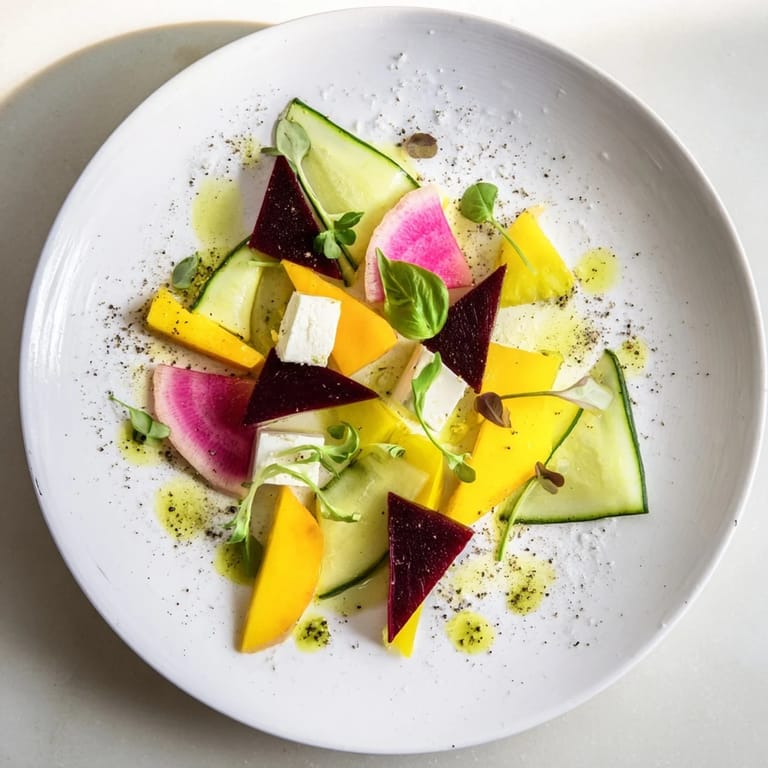
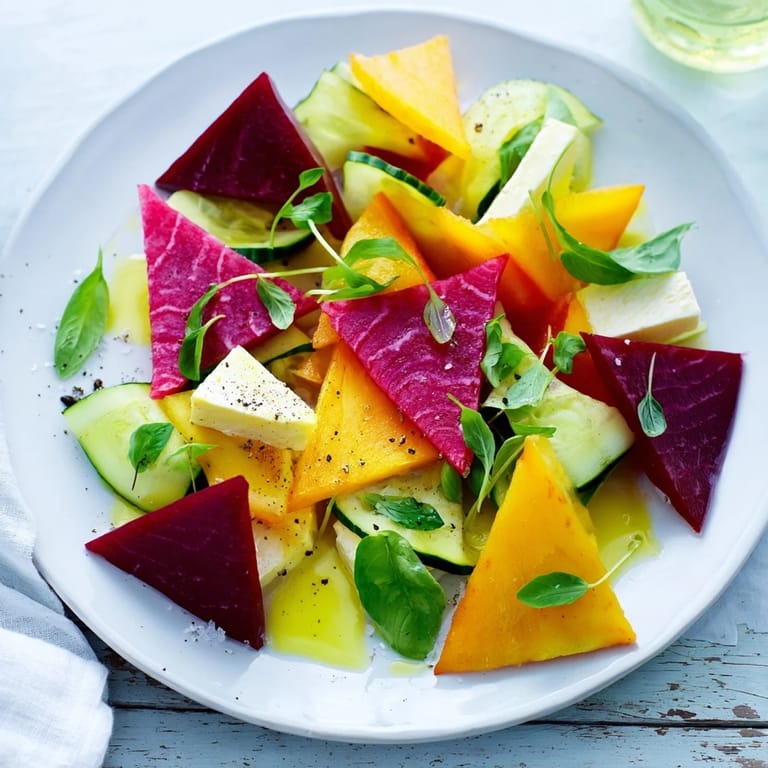
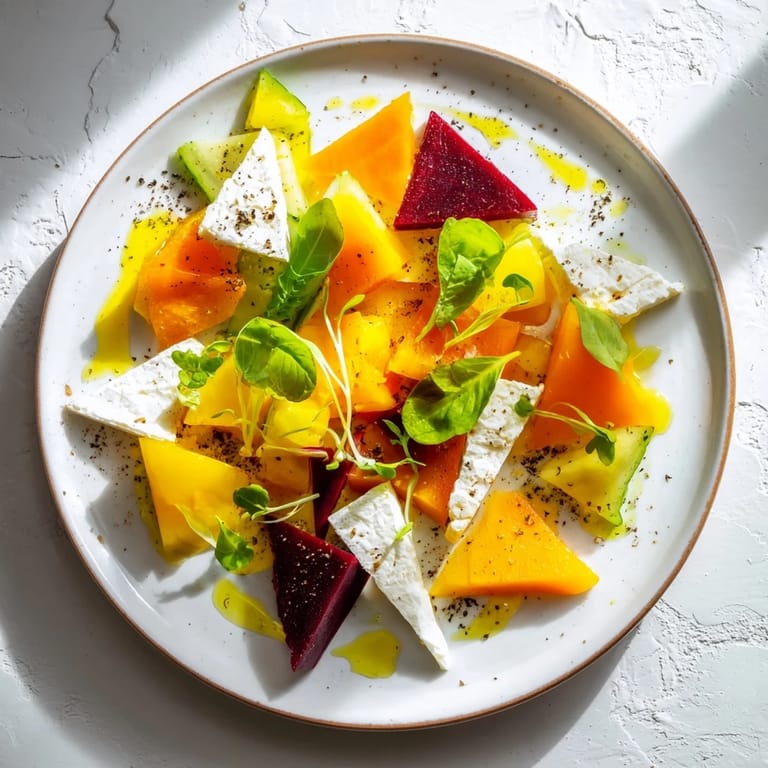
- This is the magic moment. On your large platter, place each piece close together, almost touching but not overlapping. Think of it like a Cubist painting: the composition matters as much as the ingredients. Let colors balance each other. The golden beet next to the pink radish. The pale cucumber contrasting with the rich green avocado. Step back and squint. Does it feel balanced? Does it make you want to reach for your camera? Good.
- Dress with intention:
- Drizzle the olive oil evenly, letting it catch the light. Follow with the lemon juice. You're not drowning these pieces; you're kissing them with flavor.
- Season and garnish:
- Sprinkle sea salt across the whole arrangement. Crack fresh black pepper over top. Finally, scatter your microgreens or herbs. They should look like brushstrokes on a finished canvas.
- Serve immediately:
- This is important. The longer it sits, the more the avocado oxidizes and the oil settles. Serve it within a few minutes of finishing so every person who eats it experiences the fresh, bright version you created.
 Save
Save What struck me most about this dish wasn't just that it was beautiful, but that it made people slow down. In a world of rushed meals and phone scrolling, this forced everyone to pause and really look at what they were eating. One guest asked if I'd gone to culinary school. I told her the truth: all I did was listen to what the vegetables were telling me about geometry and color.
The Art of Arrangement
This is where technique meets intuition. There's no single right way to arrange these pieces, which is the whole point. Think of your platter as a canvas and each ingredient as a color in your palette. I often start with the most visually stunning ingredient (usually the watermelon radish) and build outward from there. Consider how colors interact: warm golden beets against cool pale cucumbers. Create balance without making it symmetric. Asymmetry is what makes it feel modern and intentional. Sometimes I organize by ingredient, sometimes by color, sometimes by pure instinct. The arrangement tells as much of the story as the eating does.
Variations That Feel Fresh
Once you understand the principle of this dish, you can play endlessly. I've made versions with purple carrots, yellow bell peppers, and even thin apple slices in autumn. Purple cabbage adds a striking color and a satisfying crunch. If you're cooking vegan, firm tofu cut into the same geometric style swaps perfectly for feta. I've even experimented with different cheeses: goat cheese for tanginess, halloumi for a different texture. The magic isn't in following a recipe exactly; it's in understanding that you're creating a visual and flavor experience, and every ingredient should earn its place on the plate.
Wine Pairings and Serving Ideas
The crispness and acidity of a Sauvignon Blanc was made for this dish. The wine's green notes echo the fresh herbs and cucumbers, while its acidity cuts through the richness of olive oil and feta. If white wine isn't your thing, try a light rosé or even a crisp sparkling wine. For serving, I love putting small cocktail picks nearby so guests can spear pieces if they like, though honestly, most people just use their hands and pretend not to get oil on their fingers. This is the kind of dish that works beautifully as the opening act to a larger meal, or as the star of a gathering where the focus is on nibbling and conversation. That's part of its charm: it slows you down and brings people together.
- Serve within minutes of plating for maximum freshness and visual impact.
- If you must plate ahead, cover loosely with plastic wrap and store in the coolest part of your kitchen.
- Double the recipe easily for larger crowds, arranging on a long rectangular platter for dramatic effect.
 Save
Save This recipe taught me that food is conversation, visual art, and flavor all at once. It's a reminder that the most sophisticated meals don't always require hours at the stove, just presence and intention in the kitchen.
Recipe FAQ Section
- → What are the best vegetables to use for this dish?
Choose firm, colorful vegetables like cucumber, golden beet, and watermelon radish for crisp textures and vibrant hues that stand out when cut geometrically.
- → How should the feta be prepared for this presentation?
Cut feta into uniform cubes or prism shapes to match the geometric theme and allow easy arrangement alongside the vegetables and fruit.
- → Can I substitute any ingredients for dietary preferences?
For a vegan option, replace feta with firm tofu and consider using a variety of fresh vegetables to enhance color and texture.
- → What type of knife or tool is ideal for shaping the ingredients?
A sharp chef's knife works well for slicing, while small cookie cutters can create precise geometric shapes for a more uniform appearance.
- → How should this dish be served to maintain its visual appeal?
Arrange ingredients closely on a large flat platter without overlapping, drizzle with olive oil and lemon juice evenly, season lightly, and garnish with fresh herbs immediately before serving.
- → What flavors can pairing with this dish enhance?
Bright citrus notes from lemon juice and the slight creaminess of feta complement the fresh crispness of the vegetables, while olive oil adds richness and herbs provide aromatic freshness.