 Save
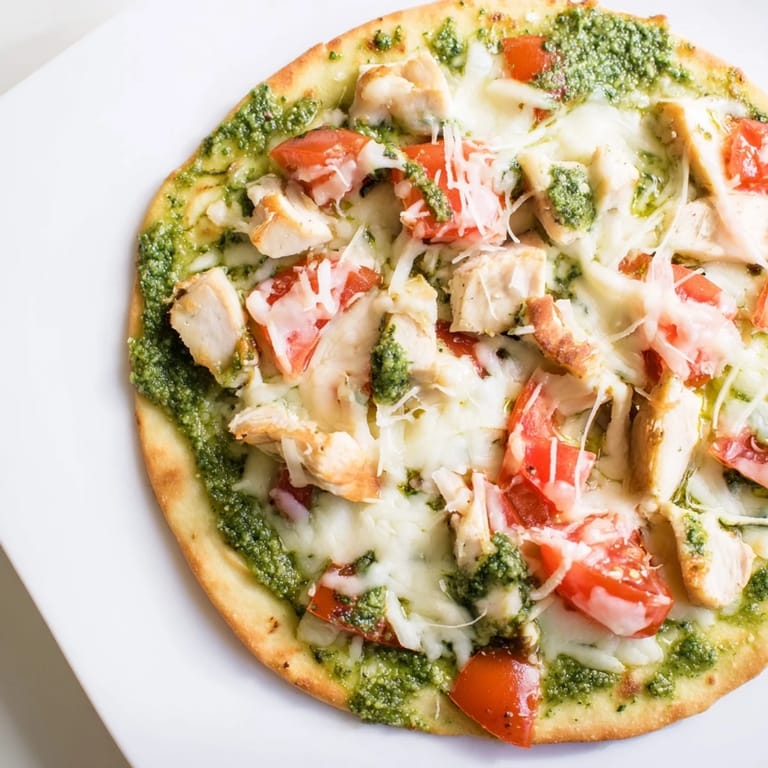
Save My neighbor slid a slice under my nose one Saturday afternoon, still hot from her oven, the scent of basil so loud I forgot what I was saying mid-sentence. That first bite—crisp crust, creamy pesto, tender chicken—ruined every frozen pizza for me forever. I went home, pulled out my own dough, and tried to recreate it that same night. It wasn't perfect, but it was close enough that my kids asked for it again the next weekend. Now it's our go-to when we're tired of the same old tomato sauce routine.
The first time I made this for my sister, she stood at the counter eating straight from the pan, refusing to wait for a plate. She kept saying it tasted like something from a restaurant, which made me laugh because I'd just thrown it together with leftovers. That's the thing about this pizza: it looks fancy, but it's really just smart layering. The pesto clings to everything, the cheese melts into all the right spots, and the chicken stays juicy because you're not overcooking it. It's become my trick for impressing people without actually breaking a sweat.
Ingredients
- Thin pizza crust (12 inches): A thinner crust crisps up faster and lets the toppings shine without getting soggy; I like to brush the edges with a little olive oil before baking for extra color.
- Cooked chicken breast (1 cup, diced or shredded): Rotisserie chicken is your friend here—it's already seasoned and saves you from cooking and cooling another protein.
- Olive oil (1 tablespoon): This coats the chicken so it doesn't dry out in the oven and helps the seasonings stick.
- Salt (1/2 teaspoon) and black pepper (1/4 teaspoon): Simple seasoning that lets the pesto take center stage without competing flavors.
- Basil pesto (1/3 cup): The heart of this pizza; homemade is incredible, but a good jarred version works beautifully and cuts your prep time in half.
- Shredded mozzarella cheese (1 1/4 cups): Low-moisture mozzarella melts evenly and doesn't make your pizza watery, which is key for a crisp crust.
- Ripe tomato (1 medium, thinly sliced): Fresh tomatoes add juicy bursts of acidity that cut through the richness; pat them dry with a paper towel if they're extra wet.
- Grated Parmesan cheese (2 tablespoons): A salty, nutty finish that browns beautifully and adds depth to every bite.
- Fresh basil leaves (optional, for garnish): A handful of torn basil at the end makes it look restaurant-worthy and smells amazing.
Tired of Takeout? 🥡
Get 10 meals you can make faster than delivery arrives. Seriously.
One email. No spam. Unsubscribe anytime.
Instructions
- Heat the oven high:
- Preheat your oven to 475°F (245°C) and if you have a pizza stone, let it heat up inside so your crust gets that perfect crispy bottom. A screaming hot oven is the secret to pizzeria-style results at home.
- Season the chicken:
- Toss your cooked chicken with olive oil, salt, and pepper in a small bowl until every piece is lightly coated. This quick step keeps the chicken moist and flavorful instead of dry and bland.
- Prep your base:
- Lay your pizza crust on a parchment-lined baking sheet or pizza peel, making sure it's flat and even. Parchment makes transferring and cleanup so much easier, especially if you're using a stone.
- Spread the pesto:
- Spoon the basil pesto onto the crust and spread it evenly with the back of a spoon, leaving about half an inch around the edges for the crust to puff up. Don't go too heavy or it'll overpower everything else.
- Add the chicken:
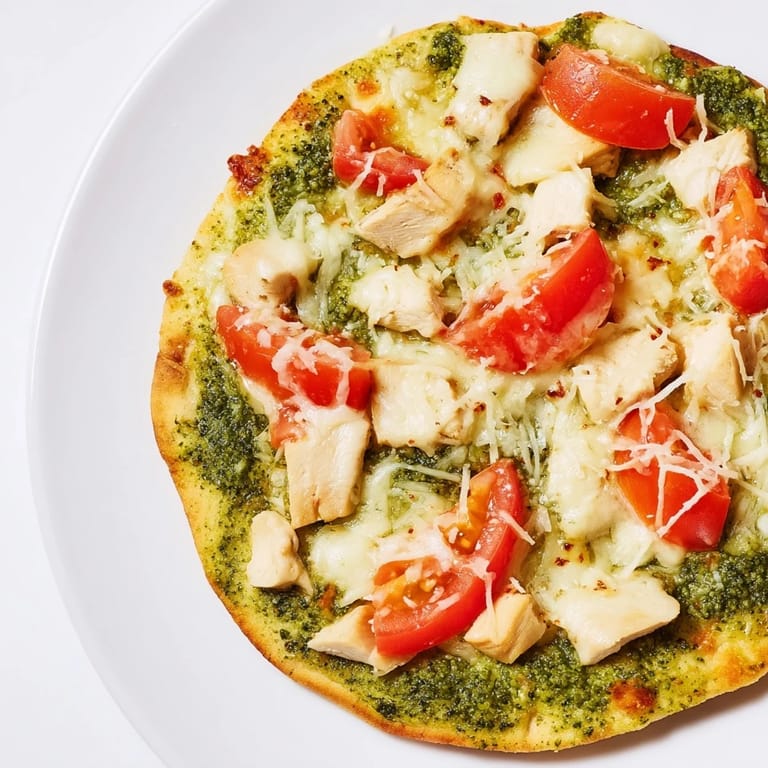
- Scatter the seasoned chicken pieces evenly over the pesto, making sure every slice will get some protein. Even distribution means every bite is just as good as the last.
- Layer the cheese:
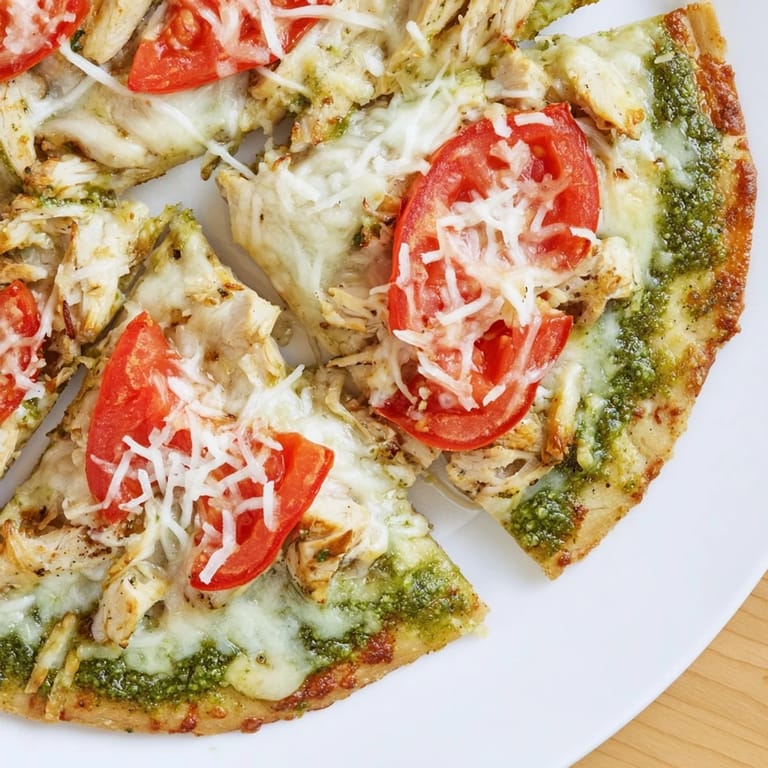
- Sprinkle the mozzarella evenly across the pizza, then lay the tomato slices on top, spacing them out so they don't create soggy spots. Finish with a dusting of Parmesan for that extra salty, golden layer.
- Bake until golden:
- Slide the pizza into your hot oven and bake for 12 to 15 minutes, watching for the cheese to bubble and the crust edges to turn deep golden brown. If the cheese browns too fast, lower the heat slightly next time.
- Garnish and slice:
- Let the pizza rest for a minute so the cheese sets slightly, then tear fresh basil over the top if you're using it. Slice with a sharp knife or pizza cutter and serve while it's still hot and fragrant.
 Save
Save One evening, my husband came home late and reheated a slice of this in the toaster oven. The smell woke me up, and I found him eating it in the dark, grinning like he'd discovered treasure. He said it tasted even better the second time, which I didn't believe until I tried it myself. Now we make extra on purpose, because cold pesto pizza for breakfast is a secret joy we don't talk about outside the house.
Choosing Your Crust
I've used everything from store-bought flatbreads to homemade dough, and honestly, the crust matters less than how you treat it. Thin crusts get crispy fast, which is perfect for pesto pizzas because you don't want the toppings to steam. If you're using thicker dough, par-bake it for five minutes before adding anything so the bottom sets up and doesn't turn gummy. I keep a few store-bought crusts in the freezer for nights when I can't be bothered to roll out dough, and no one has ever complained.
Swapping Proteins
Chicken is classic here, but I've swapped it for shrimp, leftover turkey, and even crumbled Italian sausage when I had it on hand. Shrimp cooks so fast that I just toss raw ones with a little garlic and olive oil, then scatter them on the pizza before baking. Sausage adds a spicy, savory punch that pairs beautifully with the sweetness of fresh tomatoes. The trick is to keep the protein pre-cooked or quick-cooking so everything finishes at the same time without drying out the toppings.
Storing and Reheating
Leftover slices keep in an airtight container in the fridge for up to three days, though they rarely last that long in my house. Reheat them in a hot skillet over medium heat with a lid on for a couple of minutes—the bottom crisps back up and the cheese melts again without turning rubbery. Microwaving works in a pinch, but you lose that satisfying crunch.
- Freeze unbaked assembled pizzas on a baking sheet, then wrap tightly in plastic and foil for up to two months.
- Bake frozen pizzas straight from the freezer, adding an extra five minutes to the baking time.
- Always let baked pizza cool completely before wrapping it, or condensation will make the crust soggy.
 Save
Save This pizza has become the thing I make when I want to feel like I'm treating myself without spending an hour in the kitchen. It's bright, satisfying, and always tastes like I tried harder than I actually did.
Recipe FAQ Section
- → Can I use store-bought pesto instead of homemade?
Yes, store-bought basil pesto works wonderfully and saves time. Just spread 1/3 cup evenly over your crust before adding other toppings. Check the label for allergens like nuts and dairy.
- → What type of chicken works best?
Cooked chicken breast is ideal for this pizza. You can use rotisserie chicken for convenience, or cook and dice fresh chicken breast seasoned with salt and pepper.
- → How do I prevent a soggy crust?
Use parchment paper on your baking sheet, spread pesto as your base layer to create a moisture barrier, and avoid overloading wet ingredients. A preheated pizza stone also helps achieve crispness.
- → Can I make this gluten-free?
Absolutely. Simply substitute a gluten-free pizza crust for the regular one. The rest of the ingredients remain the same. Verify that your store-bought pesto is gluten-free if needed.
- → What are good variations to try?
Consider sun-dried tomatoes instead of fresh for deeper flavor, add roasted garlic cloves, use spinach alongside the pesto, or try a blend of mozzarella and fresh ricotta for extra creaminess.
- → How long does this pizza stay fresh?
Enjoy fresh from the oven for best results. Leftovers keep refrigerated for up to 2 days. Reheat in a 350°F oven for 5 minutes to restore crispness.