 Save
Save I'll never forget the afternoon I spent wandering through a modern art museum, completely mesmerized by a Jackson Pollock painting—all wild splashes and unexpected color collisions. I left that museum hungry, but not just for food. I wanted to create something that captured that same untamed energy, that beautiful chaos. That evening, I threw together whatever vibrant vegetables I had in my kitchen, arranged them without a plan, and drizzled them with vinaigrette like I was painting. My family stared at the plate before digging in, and suddenly everyone was smiling. That's when I realized: the best meals are the ones that make you feel something first, taste second.
I made this for a dinner party where my friend Sarah, an actual painter, was coming over. I was nervous—would she think I was being too clever? But when she saw it, her face lit up in a way that had nothing to do with being polite. She said it was the first time she'd ever wanted to frame her food before eating it. We laughed as everyone mixed their own version, creating different flavor combinations with each bite. That's when I knew this salad was really about inviting people to be creative too.
Ingredients
- Cherry tomatoes (red and yellow), 1 cup halved: The jewels of this salad—use the sweetest ones you can find, and halving them instead of quartering lets them roll naturally across the plate
- Golden beet, 1 small peeled and shaved: The earthiness here grounds all that brightness; use a vegetable peeler or mandoline to get delicate ribbons that catch the light
- Cucumber, 1 small sliced into ribbons: Creates those elegant strands that add freshness and a whisper of crunch
- Red radishes, 1/2 cup thinly sliced: Their peppery snap and shocking pink color are non-negotiable—they're the wild brushstroke element
- Watermelon, 1 cup cut into irregular cubes: The secret weapon that no one expects; its juicy sweetness against feta is pure magic
- Avocado, 1 ripe cubed: Richness and creaminess that makes every bite luxurious; add just before serving so it doesn't oxidize
- Mixed baby greens (arugula, baby spinach, frisée), 1 cup: The foundation that holds everything together without overwhelming the other flavors
- Fresh mint leaves, 2 tbsp torn: That bright note that makes people say 'what is that?' before you tell them
- Toasted pumpkin seeds, 1/4 cup: The toasting matters—it deepens their flavor and adds that satisfying crunch
- Pomegranate seeds, 1/4 cup: Jewel-like bursts of tartness that cut through the richness beautifully
- Crumbled feta cheese, 1/4 cup: The salty, tangy element that somehow makes every other ingredient taste more like itself
- Extra-virgin olive oil, 3 tbsp: Use one you actually love the taste of—it's a supporting actor here, not background noise
- White balsamic vinegar, 1 tbsp: Gentler than regular balsamic, it brightens without darkening your beautiful colors
- Honey, 1 tsp: Just a kiss of sweetness to balance the tartness and help everything emulsify
- Dijon mustard, 1/2 tsp: The secret emulsifier that keeps the dressing from separating and adds a subtle sophistication
- Salt and freshly ground black pepper, to taste: Always taste as you go—these humble seasonings are what make you say 'wow, what is in this?'
Tired of Takeout? 🥡
Get 10 meals you can make faster than delivery arrives. Seriously.
One email. No spam. Unsubscribe anytime.
Instructions
- Prep Like You're Setting Up Your Palette:
- Gather all your vegetables and fruits in separate bowls. This isn't just about organization—it's about taking a moment to appreciate each color, each texture. You're about to create something, and rushing through prep steals that joy.
- Build Your Canvas:
- Take your large platter and scatter the baby greens and torn mint across it in loose, organic clumps. Don't worry about coverage; those empty spaces are part of the design. This is where the magic starts.
- Paint with Vegetables:
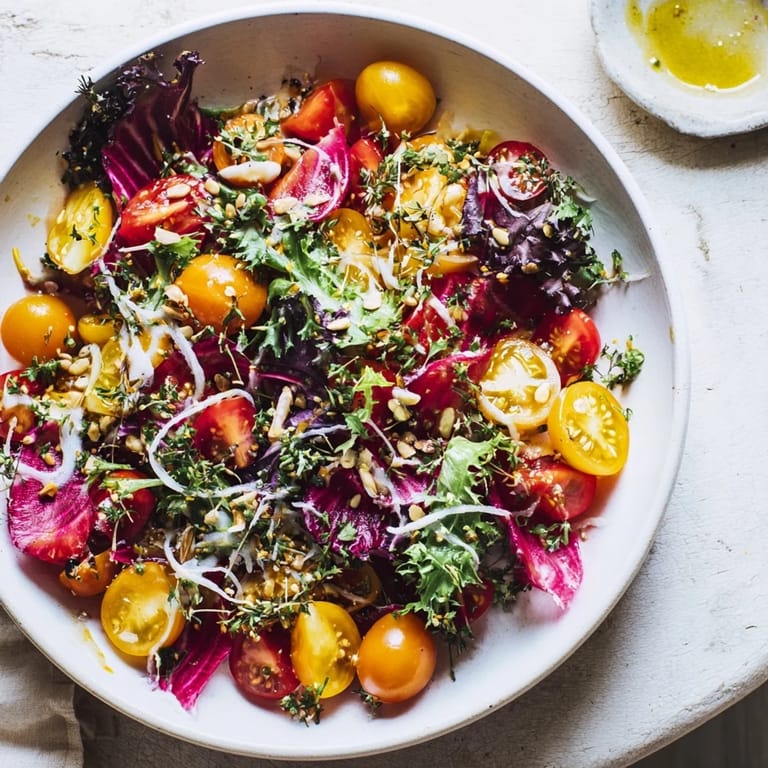
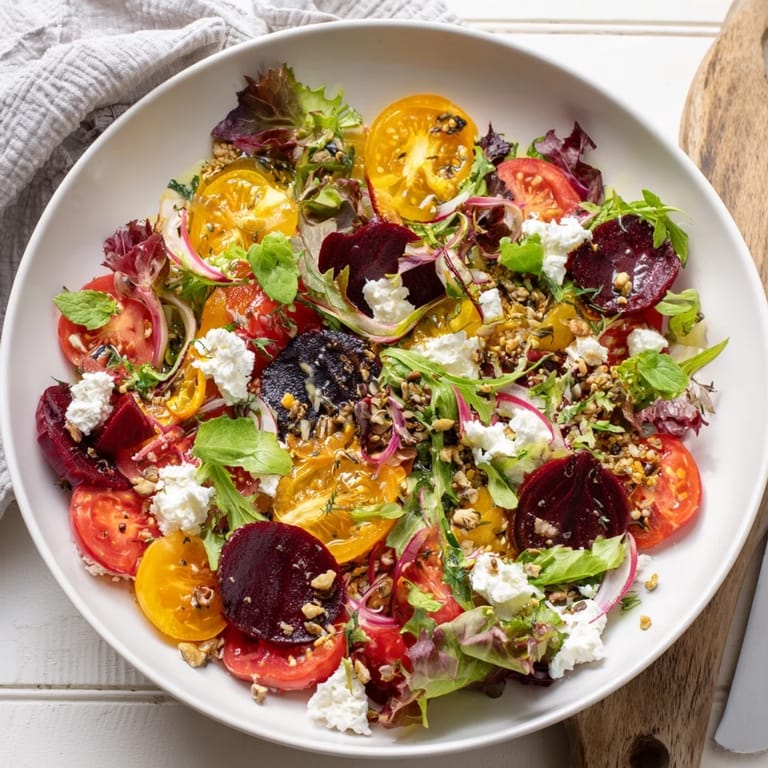
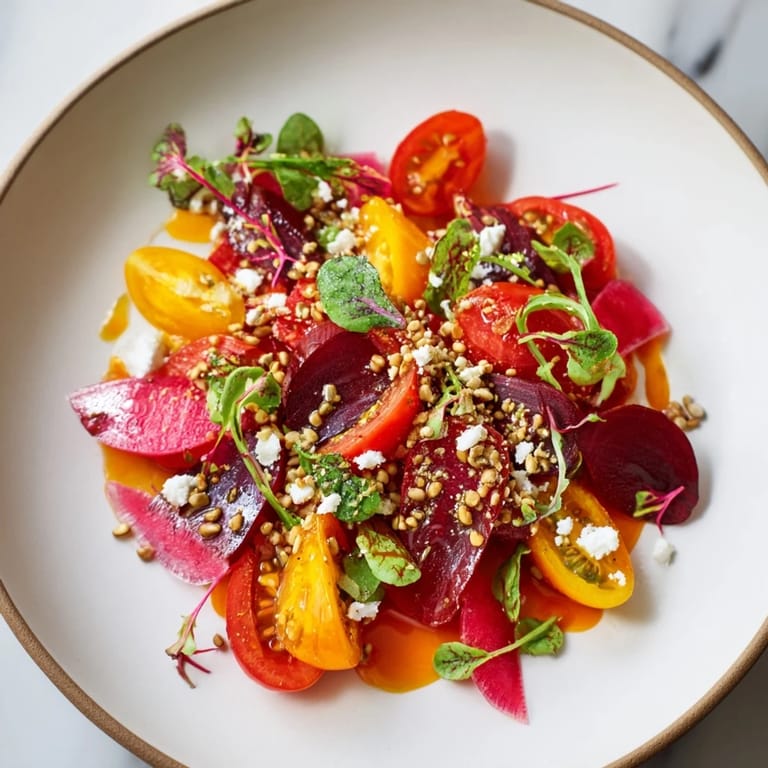
- Now here's where you let loose. Take each vegetable and fruit and scatter them artfully—some tomatoes here, a cluster of beet shavings there, cucumber ribbons draped like brushstrokes. Let colors overlap and create visual conversations. Watermelon cubes should nestle against tomatoes. Avocado should sit where it catches light. There's no 'wrong,' only composition.
- Scatter Your Finishing Textures:
- Sprinkle the toasted pumpkin seeds, pomegranate seeds, and feta cheese across the top in an intentionally irregular pattern. They should land like paint splatters, creating unexpected discoveries for those who eat it.
- Whisk Your Dressing Like You Mean It:
- In a small bowl, combine your olive oil, white balsamic vinegar, honey, Dijon mustard, salt, and pepper. Whisk until the mixture becomes slightly creamy and emulsified—this is the moment it transforms from separate ingredients into something cohesive and beautiful.
- Add the Final Brushstrokes:
- Drizzle the dressing generously across your creation in zigzags and splatters, exactly like Jackson Pollock would. Let it pool in some places, streak across others. The dressing isn't just flavor—it's the final artistic statement.
- Serve and Celebrate:
- Bring it to the table immediately while all those colors are singing. Let your guests admire it for a moment. Then invite them to mix it themselves, creating their own flavor story with each bite.
 Save
Save My daughter came home from school one day and asked why food had to be boring. I showed her this salad, and she helped me arrange it, making her own creative choices about where each element belonged. She was so proud of what we'd created together. When we served it that night, she sat a little straighter, knowing she'd made something that mattered. That's when I understood: this recipe isn't really about vegetables. It's about permission to play, to create, to be messy and intentional at the same time.
The Story Behind Imperfect Perfection
There's something liberating about cooking without a template, without symmetry. In a world where so much asks us to match, to conform, to arrange things neatly in rows, this salad says 'no.' It says your chaos is beautiful. It says the unexpected color combination you just created might be exactly right. That philosophy came straight from my kitchen failures—all those years of trying to make things 'perfect' until I realized perfection was the enemy of actually enjoying what I was making. This salad taught me that the best meals happen when you stop apologizing for them and start celebrating them.
Playing with Color Theory on Your Plate
The watermelon against the red tomatoes creates this shocking harmony that shouldn't work but does. The golden beet shavings catch light differently than the darker greens beneath them. The pomegranate seeds are small rubies that draw your eye exactly where you want it to go. I learned this by accident, not by studying art theory, but by watching how people looked at the plate before they tasted it. If your eyes smile first, your mouth will follow. Choose your colors intentionally, even as you arrange them wildly.
Making It Your Own
This salad is a conversation starter, not a rulebook. Some seasons I add roasted purple sweet potatoes for earthiness. Other times, edible flowers—pansies, nasturtiums, calendula—become part of the composition. In summer, I've swapped the white balsamic for a touch of fresh citrus juice. Replace the feta with vegan cheese and suddenly it's celebrating a different kind of table. The dressing stays the same, but everything else is permission to interpret, to adjust, to make it speak your language. That's the real art of it.
- Add micro-greens or sprouts for an extra layer of living texture
- Seasonal vegetables work beautifully—roasted beets in winter, fresh strawberries in spring
- If someone at your table avoids dairy, feta swaps seamlessly with vegan cheese or simply omits without loss
 Save
Save Every time I make this salad, I'm reminded that the most memorable meals aren't always the ones requiring hours at the stove. Sometimes they're the ones where you give yourself permission to play, to be bold, to trust that chaos can be delicious. Serve this and watch what happens.
Recipe FAQ Section
- → How do the ingredients reflect abstract expressionism?
The salad's vibrant layers and contrasting colors mimic the spontaneous, bold strokes characteristic of abstract expressionism's artistic style.
- → What texture contrasts can I expect?
Crunchy pumpkin seeds, juicy watermelon, creamy avocado, and crisp radishes combine to create dynamic textures throughout.
- → Can I substitute any ingredients for dietary needs?
Yes, feta can be replaced with vegan cheese for dairy-free options, and ingredients remain gluten-free when certified.
- → How is the dressing prepared and applied?
The dressing is whisked from olive oil, white balsamic, honey, and Dijon mustard, then drizzled artfully across the salad to mimic brushstrokes.
- → What herbs enhance the flavor profile?
Fresh mint leaves add a refreshing note, while baby spinach, arugula, and frisée bring mild, peppery green flavors.
- → What tools aid in preparation?
A sharp knife and vegetable peeler or mandoline help create thin slices and ribbons for the vegetables and fruits.