 Save
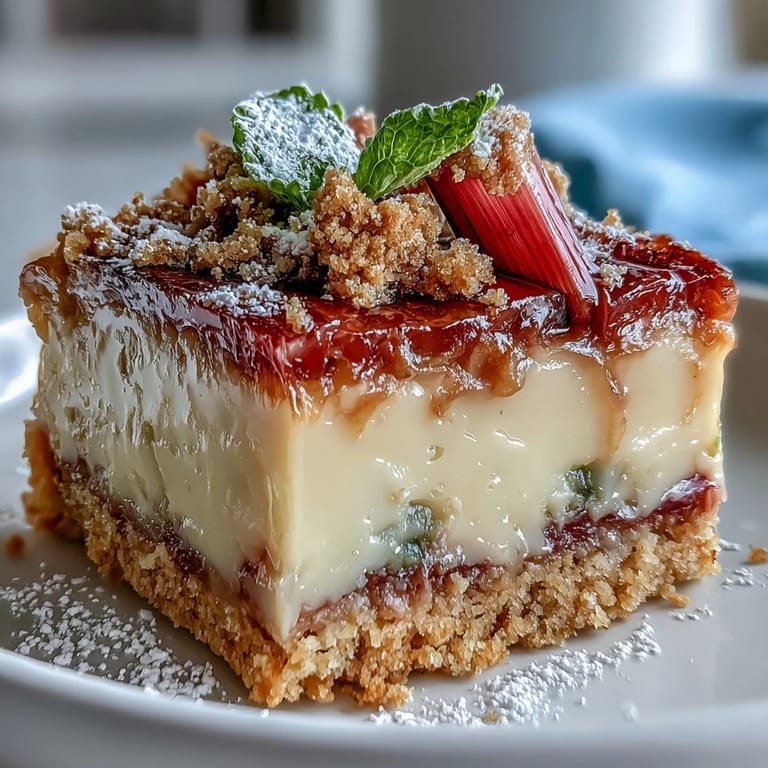
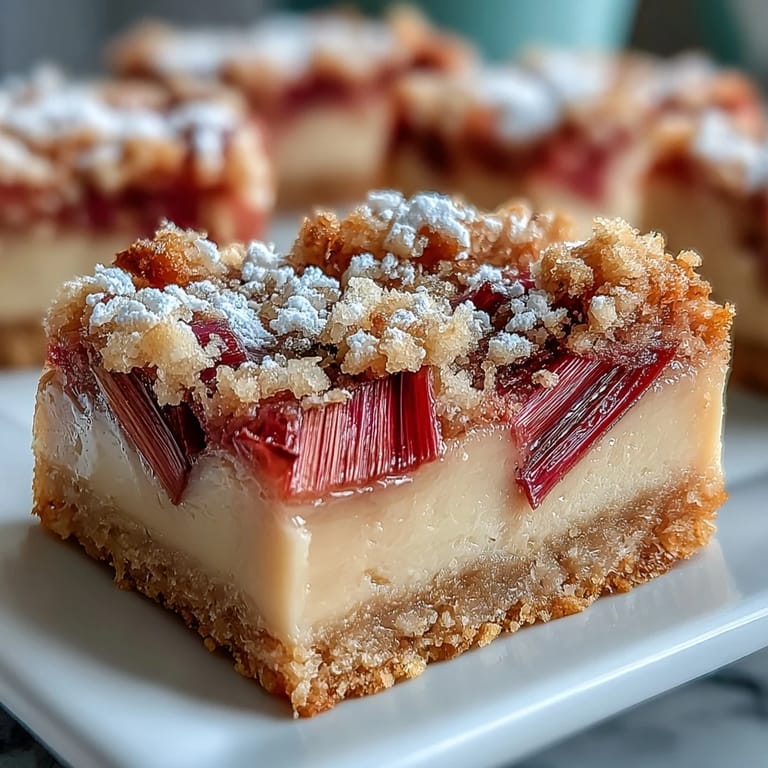
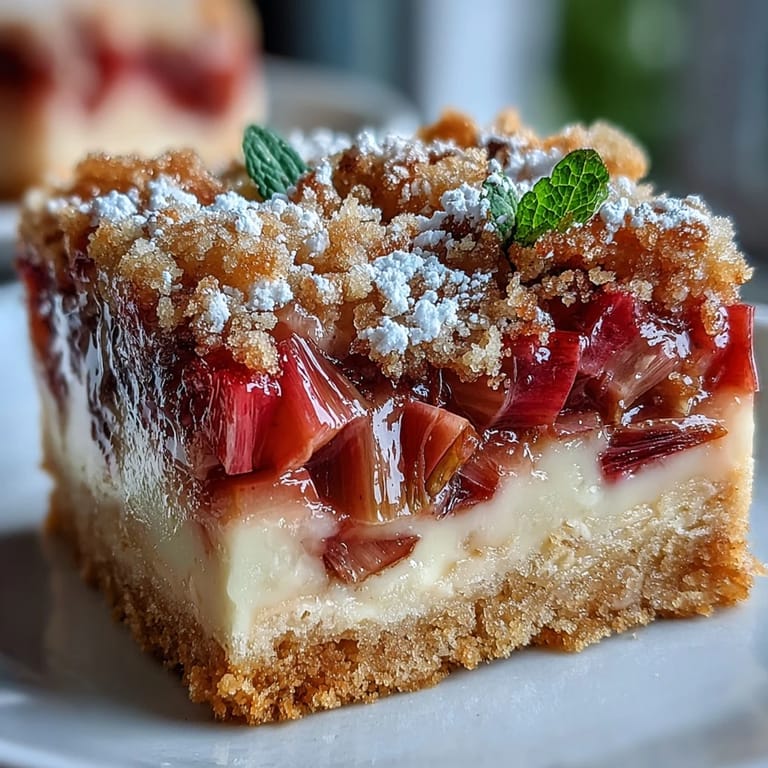
Save Last May, when rhubarb was piling up at the market, the idea for these bars arrived not in a flash of inspiration but after bumping a stalk off the counter and watching a pink juice trail bloom on my kitchen floor. Something about that color and tart scent made me crave a dessert with both fresh zing and creamy comfort. These Rhubarb Custard Bars are a gentle contradiction—firm, buttery shortbread, a lively rhubarb layer, and smooth custard all in one slice. They’re the kind of spring treat that feels both spontaneous and sure-footed. Sometimes, a mess really can spark something worth repeating.
I brought a pan of these to a Sunday brunch once and, just as the kettle started to sing, watched my friends’ faces shift from polite expectation to delighted surprise after the first bite. Someone asked for the recipe before their fork hit the plate. Sharing that moment—warm bars paired with laughter—now feels stitched into the recipe for me, as much as butter or rhubarb.
Ingredients
- Unsalted butter: Using butter at room temperature makes the crust creamy and easy to mix—if it’s too cold, it won’t work in as smoothly.
- Granulated sugar: Adds sweetness and helps the shortbread achieve that delicate crisp along the edges.
- All-purpose flour: Don’t pack it down when measuring or the base turns tough—loosely spooning is key.
- Salt: Just a pinch balances all that richness in the crust and custard.
- Fresh rhubarb: The core spring ingredient—choosing stalks that are firm and not woody keeps the layer vibrant and tart.
- Eggs: Room-temperature eggs blend more smoothly into the custard for a silkier finish.
- Heavy cream: This is your ticket to dreamy, soft-set custard; don’t sub with milk or it’ll lose its lushness.
- Pure vanilla extract: Rounds out bitterness and lifts the custard’s flavor; skip imitation vanilla if you can.
- Powdered sugar (optional): A snow-like dust at the end makes these bars look as special as they taste, but isn’t essential.
Tired of Takeout? 🥡
Get 10 meals you can make faster than delivery arrives. Seriously.
One email. No spam. Unsubscribe anytime.
Instructions
- Prep the pan and oven:
- Set your oven to 350°F (175°C) and line a 9x13-inch pan with parchment after greasing; this makes lifting the bars out a breeze.
- Make the shortbread dough:
- Cream the butter and sugar together with a mixer or wooden spoon—listen for the soft, steady slap when it’s ready, then gently work in flour and salt until just combined.
- Par-bake the crust:
- Use your fingers or a spatula to press the dough into the pan, aiming for even thickness, and bake until the edges just start to brown, about 18–20 minutes.
- Prepare the rhubarb:
- Toss the chopped rhubarb with sugar in a bowl—the sound of sugar hitting tart stalks always reminds me of early spring, and you’ll see the juices start to bead up.
- Whisk the custard:
- In another bowl, whisk eggs and sugar until blended, then add flour, cream, vanilla, and salt; keep going until mixture runs smoothly off the whisk.
- Assemble the layers:
- Scatter the sugared rhubarb evenly over the hot crust, then pour custard on top—the scent will hint at what’s to come.
- Bake to set:
- Return the pan to the oven for 35–40 minutes; when finished, the custard should jiggle just barely and look slightly golden.
- Cool and garnish:
- Let the bars cool completely before dusting with powdered sugar and slicing; cutting before they’re set will make the layers run.
 Save
Save The time my niece helped sprinkle powdered sugar over the finished bars, she left tiny handprints by accident. We both laughed, and now I find myself sneaking extra sugar in the shape of a swirl on top every time—I think of her when I do.
How to Make the Most of Rhubarb Season
I’ve learned to freeze extra chopped rhubarb so these bars don’t just have to be a spring ritual. Defrosted rhubarb releases more juice, so I often drain it briefly before using to avoid a soggy crust.
Serving Ideas for Any Crowd
These bars shine at brunches, picnic tables, and last-minute afternoon tea. Serving them chilled brings out the custard’s silkiness, while room temperature lets the rhubarb tang peek through a bit more boldly.
Getting Shortbread Perfect Every Time
Shortbread rewards a light touch—press firmly enough to fill the pan, but not so hard that the base compacts. If you notice cracks as it bakes, don’t panic; the filling will seal them and everything comes together in the final slice.
- Line your pan with parchment for stress-free lifting later.
- Use a flat-bottomed cup to evenly press the dough, avoiding sticky hands.
- Don’t skip cooling time—patience makes for beautiful bars.
 Save
Save Whether you’re serving these bars outdoors in the bright sun or at the table on a drizzly day, they always feel like a little celebration of spring. I hope you find as many sweet excuses to bake them as I have.
Recipe FAQ Section
- → Can I use frozen rhubarb?
Yes. Thaw and drain frozen rhubarb well to remove excess liquid before tossing with sugar; excess moisture can make the filling too loose.
- → How do I know the custard is done?
The custard should be set but slightly jiggly in the center; it will continue to firm as it cools. The edges should be lightly golden.
- → Any tips for a crisp shortbread crust?
Press the dough evenly into the pan and pre-bake until the edges just turn golden. Chill the dough briefly before pressing if it feels too soft.
- → Can I substitute other fruit for rhubarb?
Yes—swap half the rhubarb with strawberries for a sweeter profile, or use tart summer berries for similar texture and balance.
- → How should I store leftovers?
Cover and refrigerate leftovers for up to 4 days. For firmer slices, chill before cutting; bring to room temperature briefly before serving if desired.
- → Can I add nuts for texture?
Absolutely. Fold about 1/2 cup chopped nuts into the crust dough for extra crunch and flavor—walnuts or pecans work well.